
Dark and moody bedrooms get a bad rap for feeling heavy, but when they are done right they feel like a boutique hotel suite you never want to leave. The secret is simple: deep color plus intentional contrast. You are not trying to paint everything black and hope for the best. You are building a layered little night cocoon that still feels breathable.
I have pulled off moody palettes in rentals, tiny rooms, and awkward layouts, and the “don’t make it a cave” rule always comes down to the same few moves: pick the right undertone, control where the darkness goes, and add light back in through textiles, metals, and warm lighting.
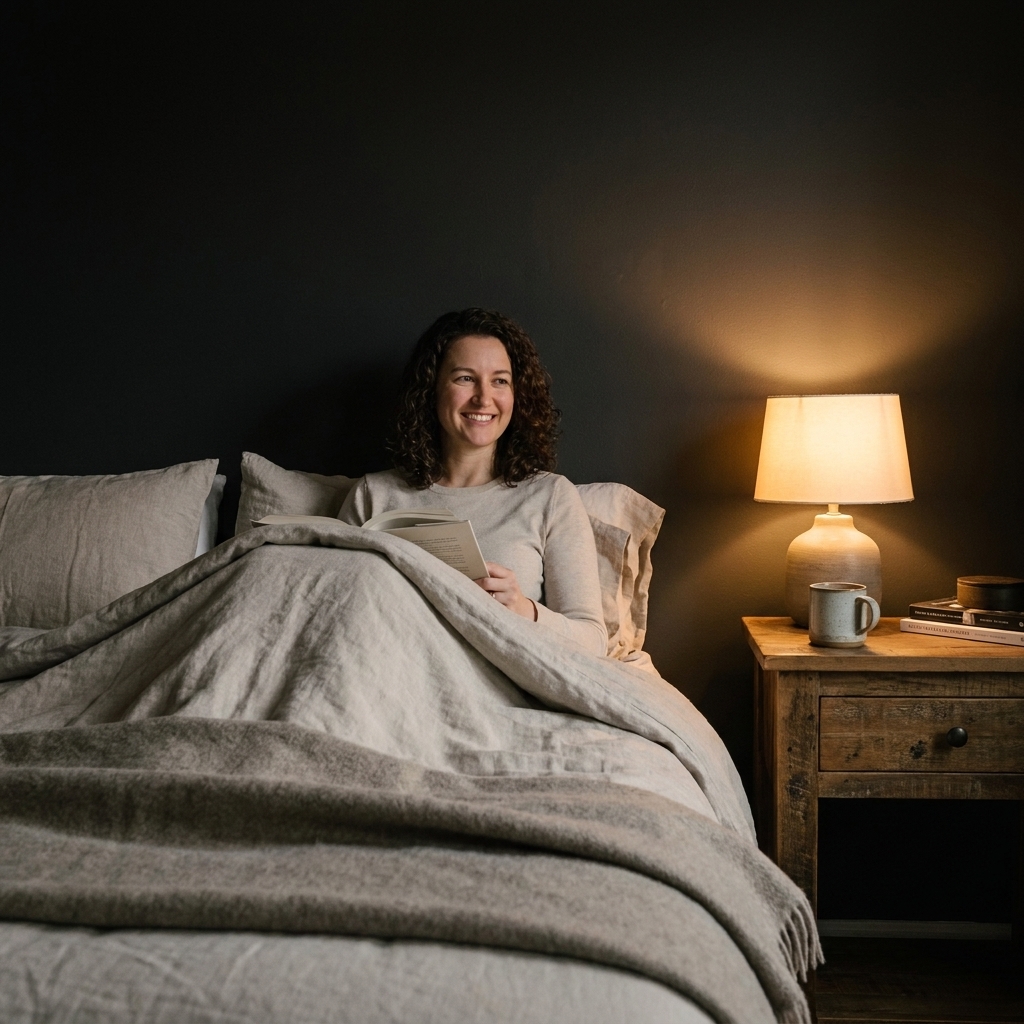
Step 1: Choose your mood color
Not all dark paint is created equal. Undertone is what separates “rich and calming” from “why does my room look muddy at noon?” Before you commit, decide which family you want to live with every day.
- Charcoal: Modern, grounding, and surprisingly versatile. Look for a charcoal with a soft brown or warm gray base if you want inviting, or a blue base if you want crisp.
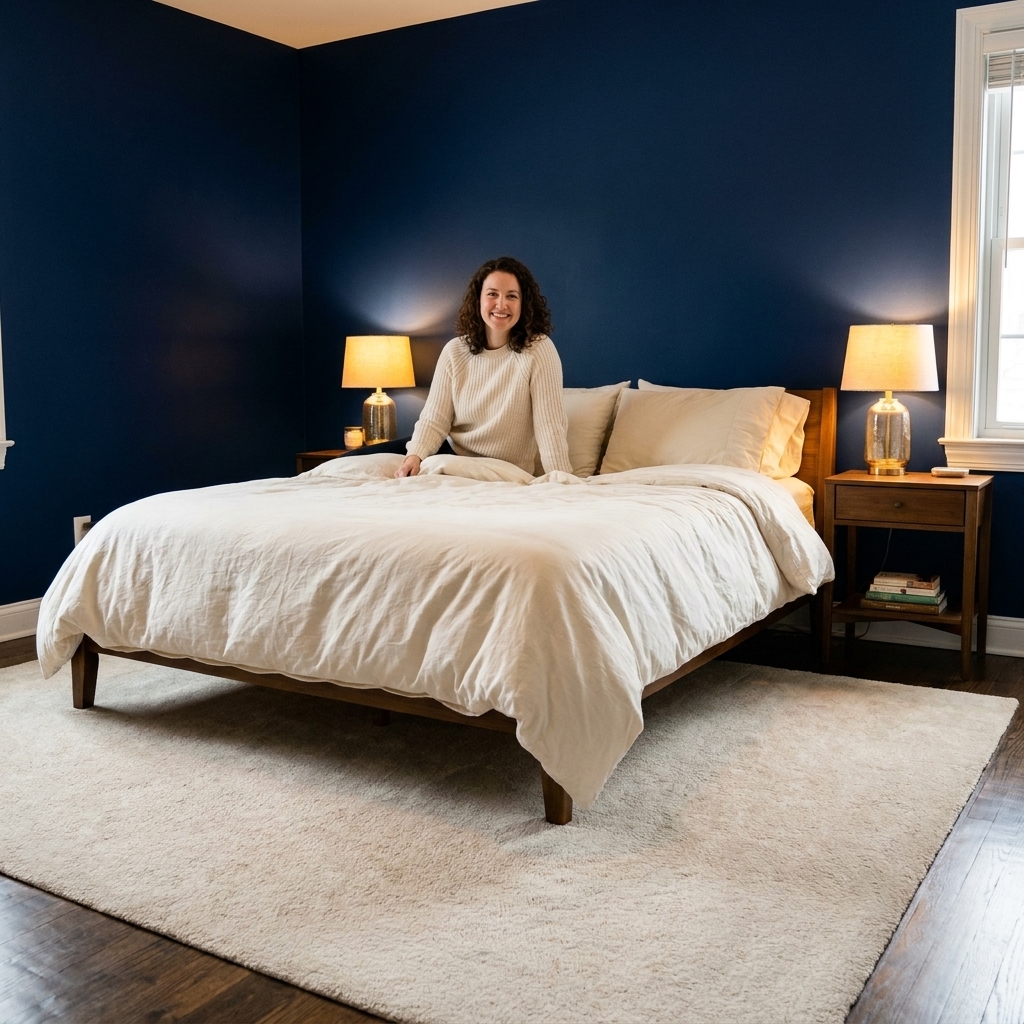
- Navy: Classic and flattering in most light. Navy reads calm at night and clean in the morning, especially with warm bulbs.
- Forest green: The coziest of the bunch. It plays beautifully with brass, warm woods, and creamy whites.
- Deep plum or espresso (optional): If you love drama, these can be stunning, but they demand great lighting and thoughtful contrast.
My quick test: Tape up two or three large paint swatches (or poster boards painted with samples). Look at them in the morning, mid-day, and at night with your lamps on. The one that still feels “soft” at night is your winner.
Step 2: Choose your coverage
You do not have to paint the entire room dark to get the moody effect. In fact, most bedrooms feel better when the darkness has boundaries.
Option A: One accent wall
Paint the wall behind the bed. It creates instant depth, makes the headboard look more expensive, and keeps the room from feeling like it is closing in.
Option B: Two walls
Do the bed wall plus the wall it meets at a corner. This gives that enveloped feeling while leaving two walls to bounce light around.
Option C: Full room
Full dark walls can be gorgeous, but it only works if you commit to contrast: lighter bedding, warm lighting, and at least a couple reflective surfaces.
Ceiling tip: If your room is small or has low ceilings, keep the ceiling a soft white or a warm off-white. A dark ceiling can be stunning, but it is the move that most often pushes a room into “cave.”
Step 3: Fix the lighting
Dark paint does not ruin a room. Bad lighting ruins a room. Moody bedrooms need layers of warm light so the space feels intentional, not dull.
Use the three-light rule
- Ambient: A ceiling fixture, semi-flush mount, or a plug-in pendant if you rent.
- Task: Bedside lamps or sconces for reading.
- Accent: A small table lamp on a dresser, an LED picture light over art, or a soft floor lamp in a corner.
Pick the right bulb
Go warm. For bedrooms, I like 2700K for a cozy glow. If you want it extra candlelit, 2200K to 2400K can be dreamy, especially with navy or forest green. Use dimmers whenever possible. Plug-in dimmers are an easy workaround for rentals.
Small but important caveat: Warmth is shade- and bulb-dependent. A cream fabric shade will read warmer than a white glass globe, and LED quality varies by brand. If you can, look for LEDs with a high CRI for truer color and a softer feel.
Shade matters: White or cream fabric shades make the light feel soft and flattering. Dark shades can look chic, but they reduce bounce and can make corners feel heavy.
Rental safety note
If you are using plug-in pendants, sconces, or dimmers, keep cords tight to the wall with paint-safe clips, and double-check what your lease allows before installing anything that requires anchors. Neat cord management makes the whole setup look intentional.
Step 4: Add contrast with bedding
If your walls are dark, your bed should not disappear into them. The bed is your biggest surface, so it is your biggest chance to bring light back in.
A foolproof bedding formula
- Sheets: Crisp white, creamy ivory, or pale oatmeal.
- Duvet or quilt: Light to mid-tone (ivory, stone, taupe, warm gray). If you want a dark duvet, keep the sheets light and add a lighter throw at the foot.
- Throw: Add texture in a mid-tone, like camel, rust, warm gray, or even a muted plaid.
- Pillows: Mix 2 to 4 tones. Try one patterned pillow to break up solids.
Texture is your best friend: Linen, matelassé, washed cotton, velvet, chunky knits, and a little faux fur instantly make a dark palette feel plush instead of flat.
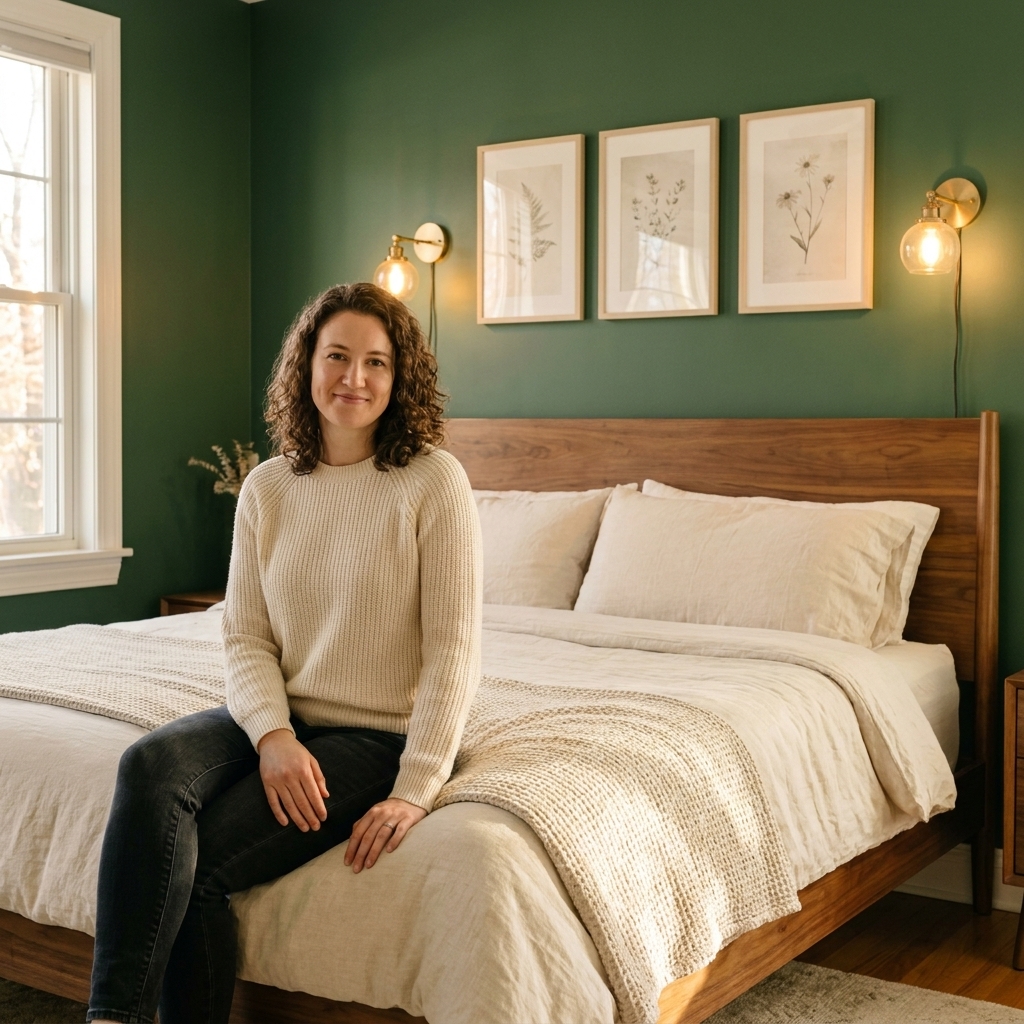
Step 5: Add warm materials
Deep colors love a warm counterbalance. If you have been collecting thrift-store frames, vintage lamps, and mismatched nightstands, this is your moment.
Materials that love dark walls
- Warm woods: Walnut, oak, teak, or even honey pine. A wood bed or nightstands keep the room from feeling cold.
- Brass and antique gold: Adds glow without being flashy. Think knobs, frames, sconces, or a mirror.
- Black metal: Works best when you also include warm elements (wood and warm bulbs) so it does not turn harsh.
- Glass and ceramics: A translucent lamp base or glossy ceramic adds that little hit of reflected light.
My thrift tip: If your frames are all different finishes, unify them with one quick coat of warm gold or soft black spray paint. Hang them as a tight grouping to look intentional.
Step 6: Keep one big thing light
If everything is dark, the room can feel visually dense. I like to choose one large element that stays light to create breathing room.
- Rug: A light rug (ivory, beige, muted pattern) is the fastest fix for a too-dark room.
- Window treatments: Light linen-look curtains soften dark walls. Hang them high and wide to make the window feel larger.
- Headboard: Upholstered in cream, oatmeal, or caramel. This is especially helpful with charcoal walls.
- Art: A large piece with lighter negative space keeps the room from feeling like one solid block of color.
Step 7: Control daylight
The fastest way to keep a moody room from feeling gloomy during the day is to manage the window like a pro. If you want morning light, go with light-filtering panels. If you want a true sleep cave at night, add blackout lining or a blackout roller shade behind your curtains. You get the best of both worlds: soft daylight when you want it, and real darkness when you need it.
Step 8: Use pattern on purpose
Pattern is what makes a dark palette feel styled instead of one-note. The trick is to keep the scale intentional.
Easy pattern combos
- Pinstripe or thin plaid on pillow shams plus a solid duvet.
- Moody floral (think dusky roses or olive leaves) on one accent pillow.
- Vintage-inspired rug with faded creams and muted reds to warm up navy or charcoal.
- Textured “pattern” like a herringbone throw or quilted coverlet if you are pattern-shy.
Step 9: Paint clean and crisp
Deep colors highlight messy lines. Clean edges are what make dark walls feel luxe, even on a budget.
- Use painter’s tape only when the paint is dry enough to handle, and follow the can’s recoat and cure-time guidance. Pull tape back slowly at an angle.
- Cut in carefully around trim. A good angled brush matters here.
- Consider painting trim a crisp warm white for a tailored look, or match trim to wall color for a modern, cocoon effect.
Pick the right sheen
Walls: Eggshell is usually the sweet spot. It wipes better than flat but does not reflect like satin.
Ceiling: Flat is typically best because it hides imperfections and keeps glare down.
Trim and doors: Satin or semi-gloss is classic for durability and easy cleaning, especially around door frames and baseboards.
Matte note: Matte can be gorgeous for mood, and many modern washable mattes hold up better than they used to. If you love the look, choose a scrubbable formula and save it for lower-touch walls.
Step 10: Go moody without paint
If you cannot paint, you can still get the vibe with a few strategic swaps.
- Peel-and-stick wallpaper: Look for dark linen textures, tiny prints, or subtle murals behind the bed.
- Removable wall decals: A deep color block or arch behind the headboard can mimic an accent wall.
- Dark curtains: Navy or deep green curtains add drama, especially if your walls are a light warm neutral.
- Bedding-led mood: A dark quilt, velvet pillows, and a patterned rug can deliver “moody” without a single paint drop.
Three palettes that work
If you want a shortcut, start with one of these combinations and then personalize with thrifted art and textiles.
Charcoal + cream + walnut
- Walls: charcoal
- Bedding: cream and oatmeal
- Accents: walnut wood, black metal, a touch of warm tan leather
Navy + white + brass
- Walls: deep navy
- Bedding: white with a light gray or blue stripe
- Accents: brass lamps, natural woven basket, vintage framed art
Forest green + ivory + warm neutrals
- Walls: forest or dark olive
- Bedding: ivory duvet, camel throw
- Accents: antique gold frames, warm wood, a terracotta or rust pillow
Common mistakes and fixes
Mistake: It feels tighter than expected
Fix: Add a lighter rug and lighter bedding. Swap bulbs to 2700K and add a second light source. A mirror across from a window helps bounce daylight.
Mistake: The wall color looks flat
Fix: Bring in texture. Think linen curtains, a quilted coverlet, velvet pillows, or a woven headboard. Flatness is usually a textile problem, not a paint problem.
Mistake: It looks gloomy in the daytime
Fix: Use lighter window treatments, or hang curtains wider so more glass is exposed. Add one reflective piece like a mirror, glossy lamp, or metallic frame. If you need privacy, try a light-filtering shade instead of heavy dark drapes.
Mistake: It feels cool, not cozy
Fix: Add warm wood, brass, and warm neutrals. Charcoal and navy especially need at least one warm element so the room does not skew icy.
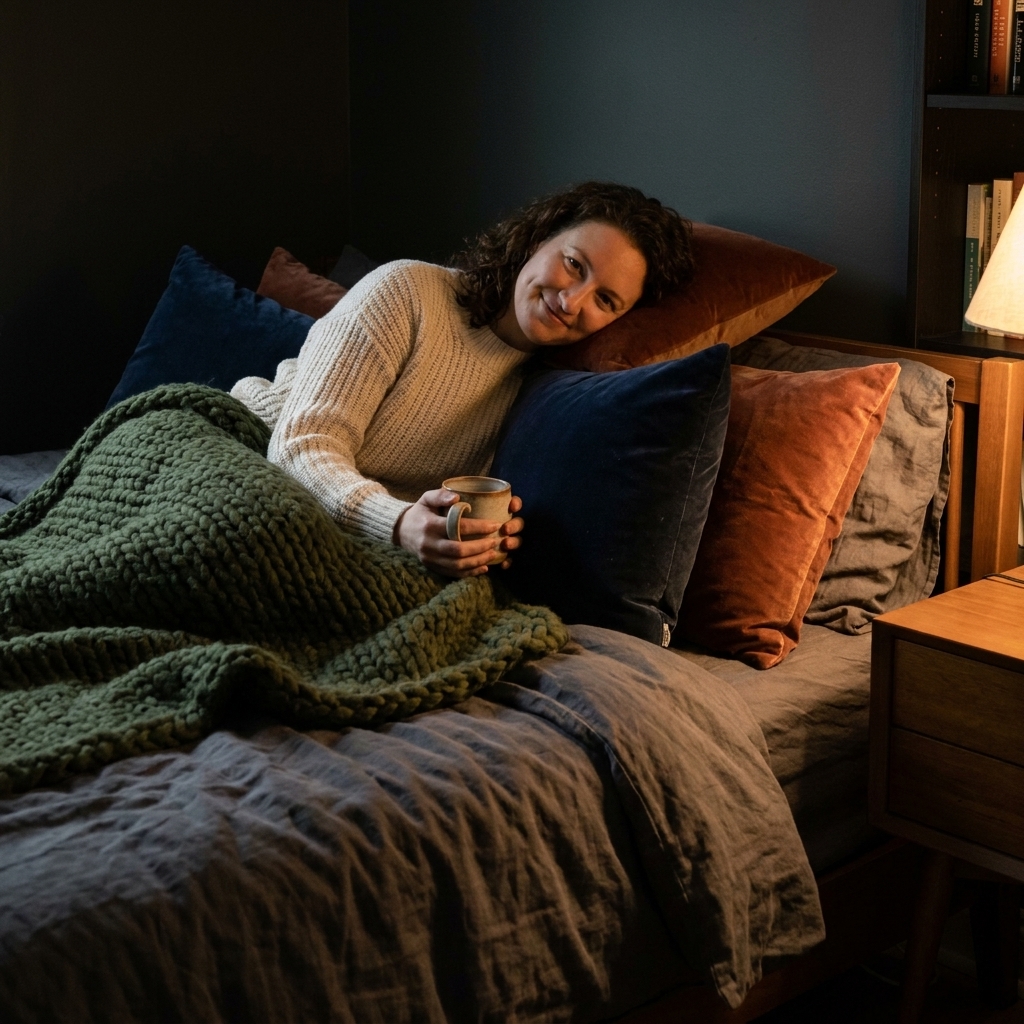
My moody bedroom checklist
- I have at least two warm light sources (three is better).
- My bedding includes light tones and texture.
- At least one large element is light: rug, curtains, headboard, or art.
- I added something with a little shine: mirror, brass, glass, or glossy ceramic.
- The room still feels good at night with lamps only.
If you hit those five points, you can absolutely go deep with charcoal, navy, or forest green and still keep the room feeling calm, snug, and very much not cave-like.
FAQ
Is a dark bedroom bad for sleep?
A darker-looking room can feel more restful, but sleep quality depends more on light control, routine, and comfort than the paint color itself. If you want your bedroom to support sleep, prioritize blackout options (if you need them) and warm, dimmable lighting at night.
What trim color works best?
For a classic look, go with a warm white trim. For a modern cocoon, match the trim to the wall color. If you are nervous, start with white trim and add warmth through wood and textiles.
Can I do moody colors in a small bedroom?
Yes. Use an accent wall or two walls, keep the ceiling light, and lean into lighter bedding and a light rug. Small rooms can look especially inviting with dark colors when the lighting is layered.
Do dark walls show dust and marks more?
They can, especially in older matte finishes. Choose a durable eggshell, wipe marks gently, and keep high-touch areas (like around the light switch) clean. If you love a matte look, pick a washable matte made for scuff resistance.