
Monochromatic bedrooms have a certain hush to them. Everything feels intentional, calm, and just a little bit expensive, in that boutique-hotel way where you want to cancel your plans and climb back into bed.
The secret is that a monochromatic room is not about matching everything perfectly. It is about layering many shades of one color, then building depth with texture, finish, and lighting so it never looks flat. I have done this in tiny rentals, awkwardly shaped rooms, and bedrooms with zero natural light. It works reliably when you follow a simple order of operations.
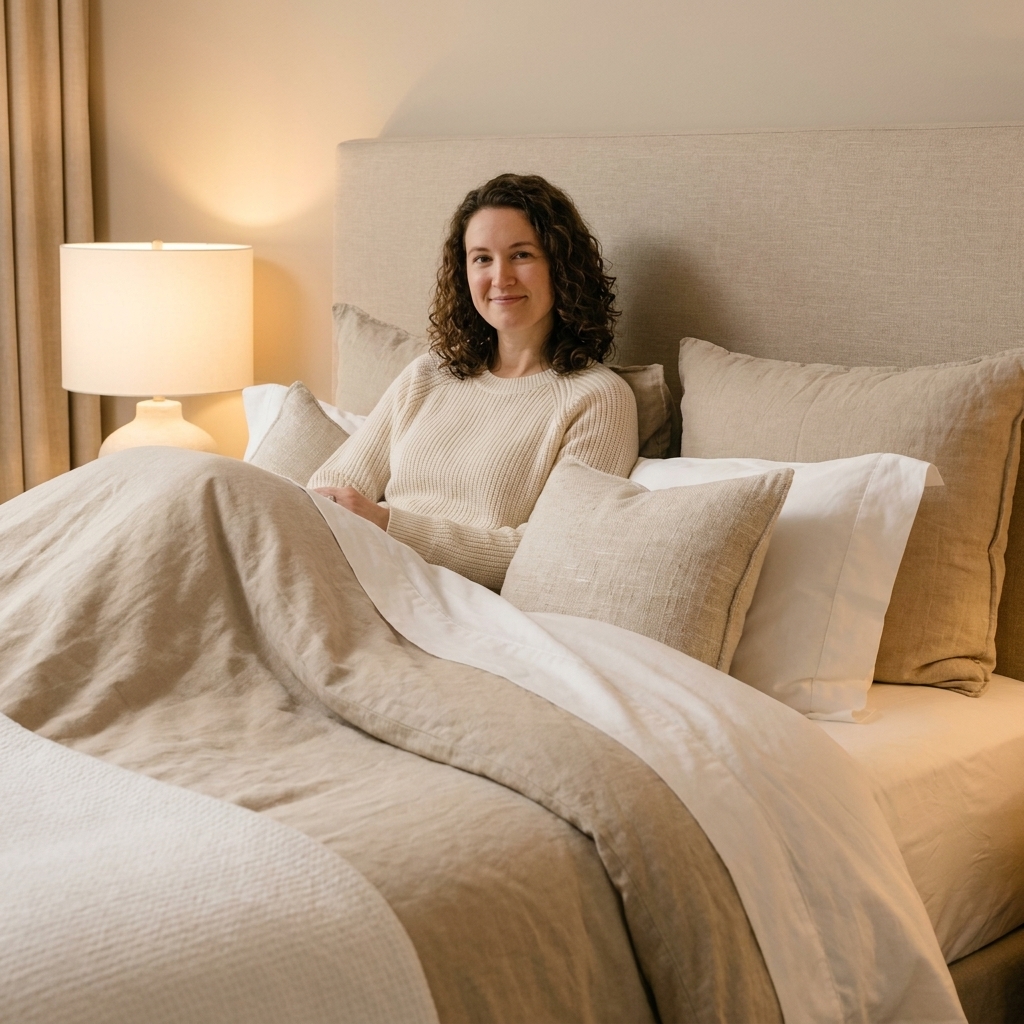
What monochromatic means
Monochromatic styling uses one main color family across the room, but in multiple variations. Think: ivory, oatmeal, sand, camel, cocoa, and espresso all living happily together in a beige bedroom. Or mist, dove, slate, and charcoal in a gray one.
You can still use neutrals in the mix. In fact, you should. Whites, off-whites, and black accents help your chosen color read as deliberate and not like you only owned one paint chip.
What makes it feel suite-like
- Contrast in value: light, mid, and deep shades so your eye has somewhere to land.
- Texture: linen, velvet, boucle, wool, wood grain, ribbed ceramics.
- Layered lighting: a warm glow at multiple heights, not one overhead spotlight.
Step 1: Pick an anchor shade
Start with one shade you love enough to see every day. Then decide what vibe you want, because the same color can feel wildly different depending on undertone and depth.
Quick mood guide
- Soft and airy: pale shades plus creamy whites (think spa suite).
- Cozy and cocooning: medium shades and warm undertones (think cashmere throw energy).
- Moody and dramatic: deeper shades with matte finishes (think luxury city hotel).
My tiny-space tip: If your room is small or you rent and cannot paint, choose your anchor shade through textiles first. A duvet cover, curtain panels, or a large area rug sets the tone fast.
Step 2: Build a shade ladder
This is the move that keeps monochrome from looking like a flat wash of color. You want at least three levels of the same color family:
- Light shade: walls, sheers, base bedding, or a pale rug.
- Mid shade: headboard, duvet, main curtain color, or a feature chair.
- Deep shade: nightstands, picture frames, lampshades, pillow trim, or a throw.
If you are a visual person, take a photo of your room and turn it to black and white. If everything blends into one identical gray blob, you need more contrast. That can come from a deeper accent, sharper lighting, or a bigger texture change, not just a darker anchor shade.
Easy shade ladder combos
- Green: sage, olive, forest
- Blue: powder blue, denim, navy
- Beige: ivory, sand, camel
- Gray: dove, stone, charcoal
- Pink: blush, dusty rose, berry
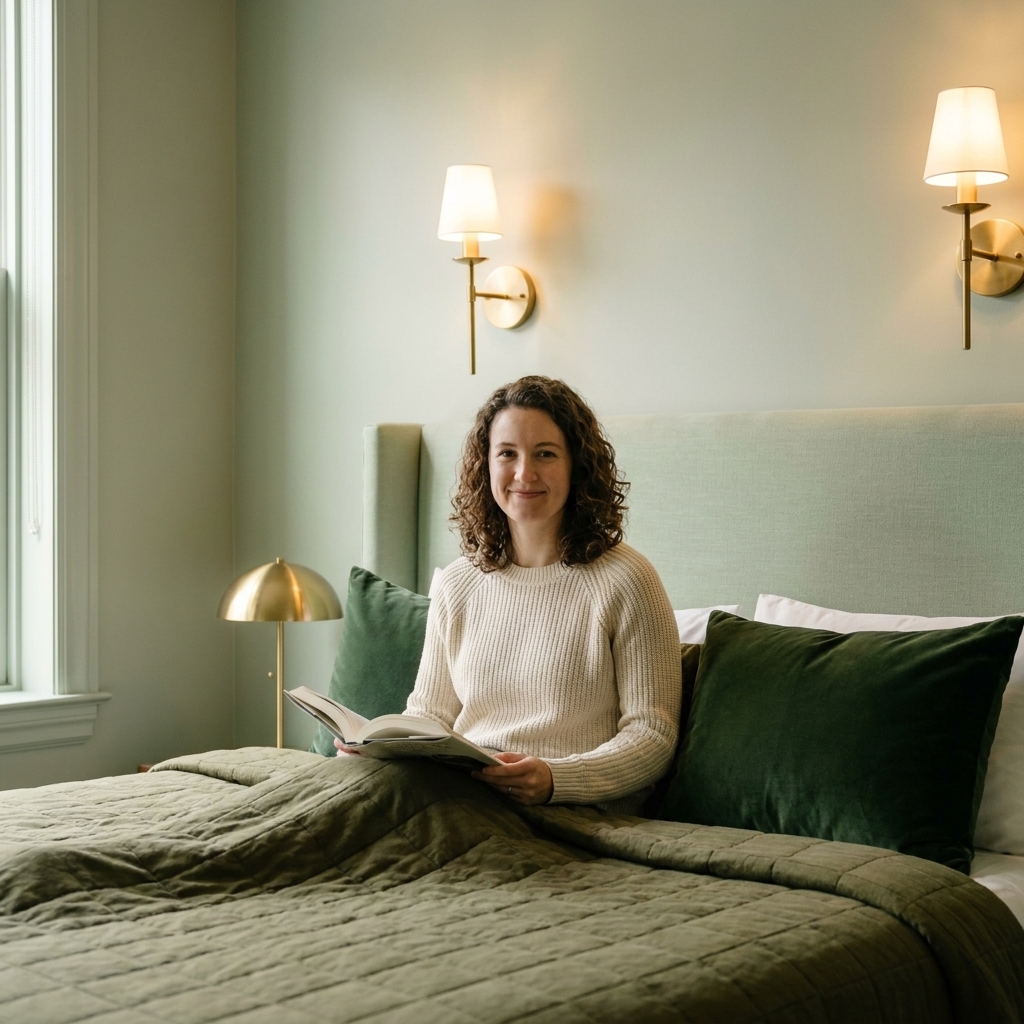
Step 3: Layer the bed
If you want that hotel vibe, start with the bed. It is the biggest surface in the room, and it sets the entire tone. I like to think of bedding in layers you can add over time.
The foolproof bedding stack
- Base: crisp sheets in a light neutral that supports your color (white, ivory, or a very pale version of your shade).
- Middle: a quilt or coverlet in your mid-tone for structure.
- Top: a duvet in a slightly different mid-tone, or a deeper shade for contrast.
- Finish: a throw at the foot of the bed in the deepest shade, or in a chunky texture.
Pillow formula that looks done
- 2 sleeping pillows in light shams
- 2 euro pillows in a mid-tone (or textured neutral)
- 1 to 2 accent pillows in the deepest shade, or with subtle pattern-on-pattern
Thrift trick: If you find a great pair of pillow covers in your color family, buy them even if they are not perfect. Dyeing or swapping inserts is easy. I have built entire monochrome schemes around one thrifted velvet sham.

Step 4: Add texture
When everything is roughly the same color, texture becomes your pattern. It gives dimension without breaking the calm.
Textures that read high-end
- Linen: casual-luxe, slightly rumpled in the best way
- Velvet: instant richness on a headboard or accent pillow
- Boucle: soft and modern, great for a bench or chair
- Chunky knits: cozy contrast at the foot of the bed
- Matte ceramics: sculptural and quiet on nightstands
- Natural wood grain: keeps monochrome from feeling sterile
Small room note: In tight spaces, go heavier on texture and lighter on objects. One gorgeous ribbed lamp base and a nubby throw can do more than a cluttered gallery of decor.

Step 5: Mix finishes
Finish is the quiet detail that makes a monochrome bedroom feel thoughtfully designed. Mixing finishes keeps the room from looking like you bought everything from one aisle.
A balanced finish mix
- Matte: walls, pottery, painted furniture
- Soft sheen: sateen bedding, glazed ceramics, subtle shimmer in a pillow
- Warm metal: aged brass, champagne gold, or bronze for a hospitality glow
- Black accents: picture frames or hardware to sharpen the edges
If your color is warm, warm metals tend to look seamless. If your color is cool, brushed nickel or black can feel cleaner. But rules are made to be bent. I have a warm beige room with black frames and antique brass lamps and it looks tailored, not confused, because the tones repeat.
Step 6: Get the lighting right
Overhead lights are not banned, but they cannot be your only plan. Hotels feel good because the lighting is layered and warm.
Your lighting checklist
- Two bedside lamps (or wall sconces) at roughly the same height
- Warm bulbs in the 2700K to 3000K range (or warmer if you love amber light)
- A dimmer, or at least a few lower-lumen bulbs
- One extra glow source: a small table lamp on a dresser, a paper lantern, or a plug-in picture light
Rental-friendly win: Plug-in sconces and battery picture lights add instant polish without wiring. Stick with reputable brands, follow the manufacturer instructions, and keep any light source clear of fabric and bedding.
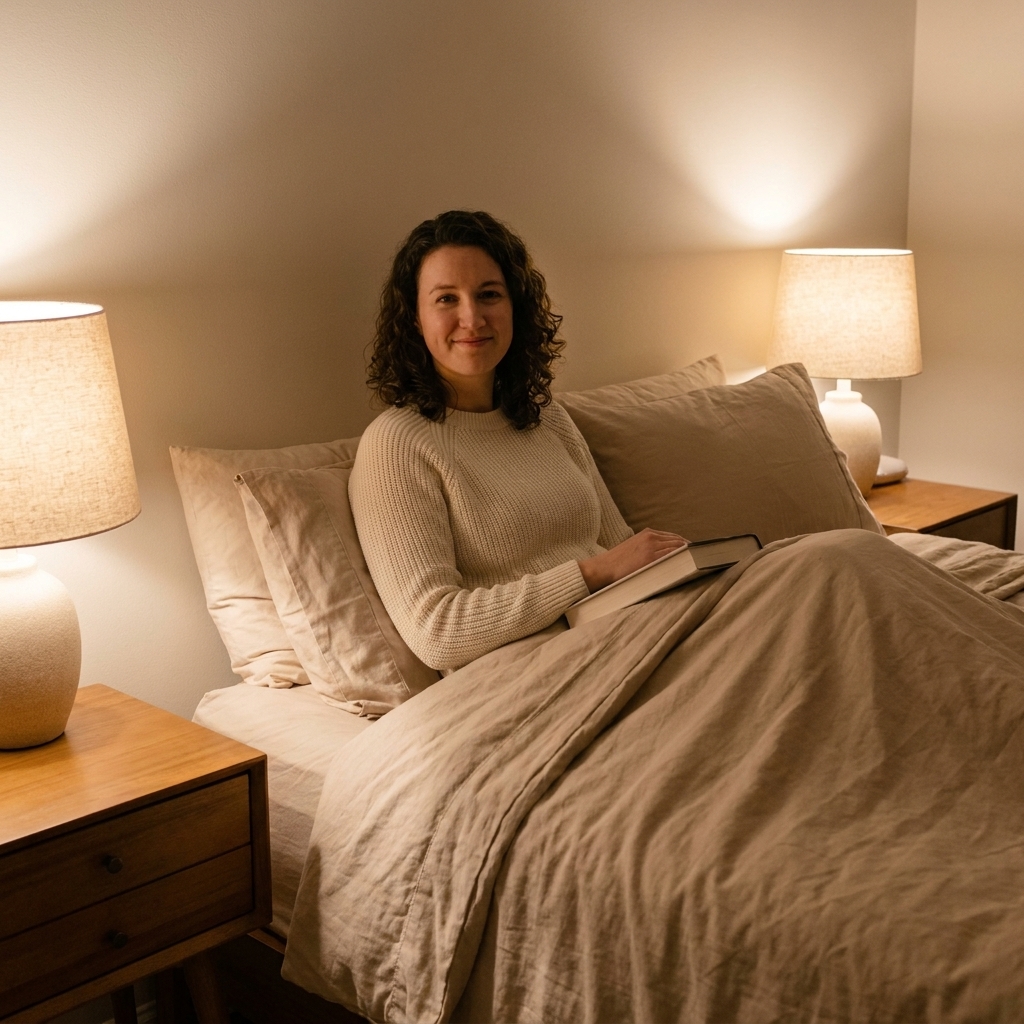
Step 7: Keep patterns subtle
You do not have to avoid pattern. In fact, a little pattern is often what makes monochromatic styling feel high-end rather than plain.
Patterns that stay calm
- Pinstripes on a duvet or pillow
- Tone-on-tone florals
- Jacquard or matelassé bedding
- Herringbone, ribbing, or subtle checks
- Textured rugs with low-contrast motifs
The rule I follow: if the pattern reads clearly from across the room, it is probably too high-contrast for a calm monochrome look. If it whispers, you are golden.
Step 8: Style with restraint
Monochrome rooms look best when the styling is edited. Too many small items can turn "luxe hotel" into "gift shop shelf."
Nightstand styling
- A lamp
- A tray (wood, stone, or lacquer) to corral the little things
- One practical item (book, hand cream, water carafe)
- One soft item (small vase, candle, or a lidded box)
Repetition is your friend. Repeat your deep shade at least three times around the room: pillow trim, a frame, a vase, a lamp shade. That repetition is what makes monochrome look designed, not accidental.
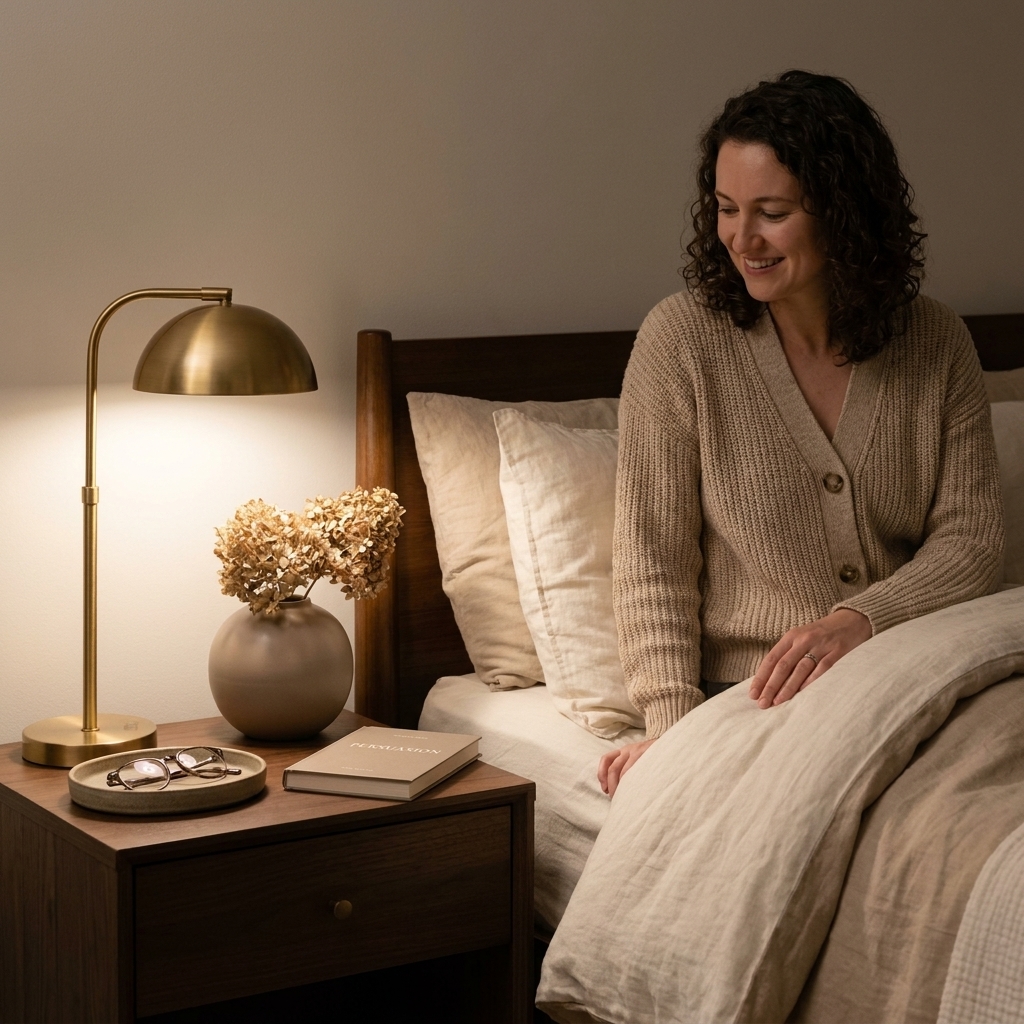
Undertones and paint
This is where monochrome can get tricky, especially with neutrals. A beige that looks creamy in the store can lean pink at night, or a "clean" gray can turn slightly green under certain bulbs. The fix is simple: test in your real light.
- Sample first: paint a large swatch or use sample sheets and check it morning, afternoon, and night.
- Match the bulb to the mood: warmer bulbs (lower Kelvin) pull warmth forward, while cooler bulbs can emphasize blue or green undertones.
- Choose one undertone lane: if your anchor is warm (creamy, sandy, camel), keep most supporting pieces warm too. If it is cool (slate, icy blue, true charcoal), stay mostly cool and add warmth through wood and lighting.
Wood mixing made easy
Monochrome does not mean everything has to be the same wood tone. Mixing woods often makes a room feel more collected, not less cohesive.
- Pick a lead wood: light oak, medium walnut, or espresso, then repeat it at least twice.
- Use wood as your texture: even one warm nightstand can soften a cool palette.
- Keep undertones in mind: woods that both read warm usually play nicely together, even if they are different depths.
Monochrome color ideas
All white, still cozy
Use multiple whites: bright white sheets, creamy walls, ivory curtains. Add texture through linen, boucle, and a plush rug. Ground it with black frames or a light oak nightstand.
Beige and sand
Layer oatmeal, sand, camel, and a touch of cocoa. This palette loves warm lighting and natural wood. Add one polished detail like a glossy ceramic lamp or a satin pillow.
Gray, not cold
Choose grays with a warm undertone (stone, greige). Add a soft throw, upholstered headboard, and warm metals like aged brass. Keep the bulbs warm so it never feels like an office.
Blue, tailored
Mix powder, denim, and navy. Crisp white sheets make blue feel fresh. Add texture with a quilted coverlet and a wool rug.
Green, restful
Sage and olive are the sweet spot. Add natural textures like linen, rattan, and a jute blend rug, then anchor with deeper forest accents.
Common mistakes
It looks flat
- Fix: Add one deeper shade through a throw, lampshade, art frame, or a darker headboard slipcover.
- Fix: Swap one smooth textile for a textured one, like linen instead of microfiber.
It looks too matchy
- Fix: Introduce a different material in the same color, like matte ceramic instead of painted wood.
- Fix: Add a whisper-pattern in the same tone.
It feels too dark
- Fix: Keep the ceiling and bedding base lighter than the walls.
- Fix: Add a brighter lamp shade and a lighter rug to bounce light.
It feels bland
- Fix: Add one hero texture: velvet headboard, chunky knit throw, or a sculptural lamp.
- Fix: Add one small contrast element, like black hardware or a dark wood picture frame.
Budget-friendly moves
You do not need to replace everything. Monochrome can be very budget-friendly because you can build it slowly and still look cohesive.
- Start with pillow covers instead of full bedding sets.
- Use curtains to fake height: hang them higher and keep them in the same color family as the walls.
- Thrift matching lamps, then use identical shades to unify them.
- Slipcover or paint a nightstand in a deeper tone of your chosen color.
- Shop your closet: scarves, knit wraps, even a spare throw can become a bed layer.
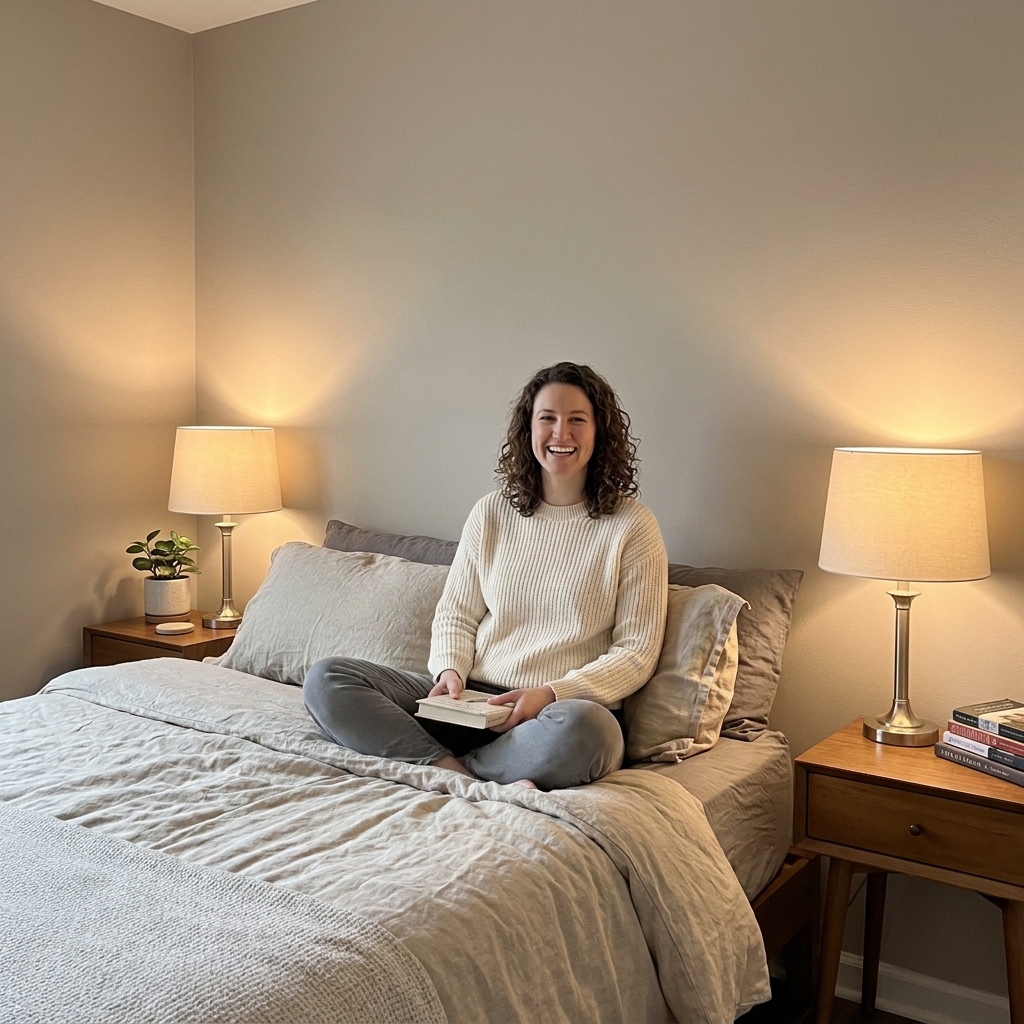
Small rooms and rentals
If you are working with a small room, a rental, or both, monochrome is a powerful tool. It reduces visual clutter, which makes the space feel larger and more peaceful.
My go-to rental moves
- Peel-and-stick wallpaper in a tone-on-tone pattern for one wall behind the bed.
- Plug-in sconces to free up nightstand space.
- A big rug in the same color family as your bedding to unify the floor.
- Removable hardware (knobs and pulls) to repeat your finish story.
Space planning tip: In a tight bedroom, keep the largest pieces calm and consistent (bed, curtains, rug), then put your deepest shade on smaller items (lamps, frames, throws). It keeps the room open but still dimensional.
Quick checklist
- Choose one color family and a mood (airy, cozy, or moody).
- Create a shade ladder: light, mid, deep.
- Layer bedding from base to finish, with at least one rich texture.
- Mix finishes (matte, soft sheen, warm metal, maybe a touch of black).
- Layer lighting with warm bulbs and at least two glow sources.
- Add subtle pattern in the same color family.
- Style surfaces with restraint and repeat your deep shade around the room.
FAQ
Can I do monochrome without painting?
Absolutely. Start with bedding, curtains, and a rug in the same color family. Add the deeper shade through lamps, frames, and pillows. If you want more impact, try peel-and-stick wallpaper behind the bed.
How many shades should I use?
At least three (light, mid, deep). Four to six shades looks especially luxe, as long as they stay in the same family and the textures vary.
What is the easiest palette for beginners?
Beige, sand, and warm white. It is forgiving, cozy in every season, and incredibly easy to thrift and layer.
How do I keep it from feeling boring?
Add texture first (linen, boucle, velvet, knits), then bring in one quiet pattern like a stripe or jacquard. Finish with warm lighting. Most "boring" monochrome rooms are missing texture and glow.