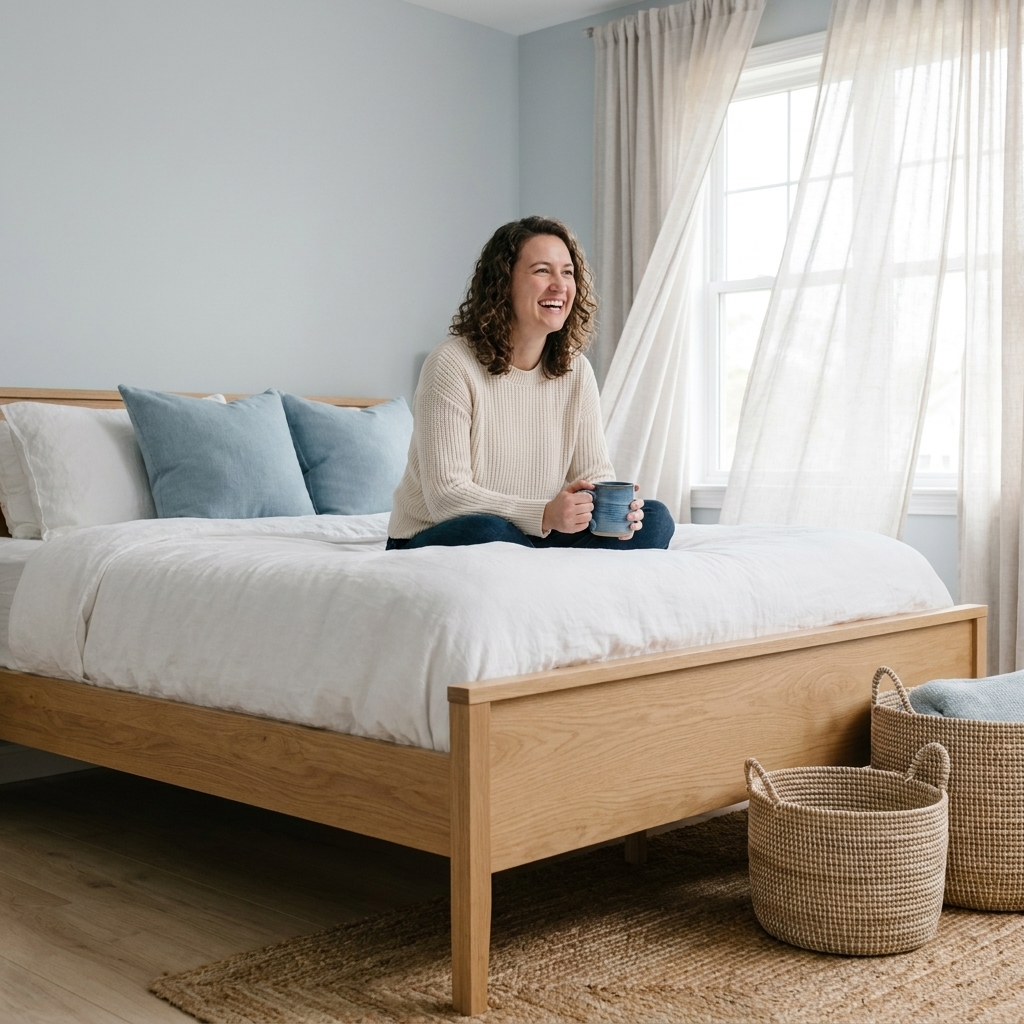
If your bedroom feels like it is missing that “pulled together” feeling, there is a good chance the rug is the culprit. The right area rug placement under the bed does three things at once: it anchors the bed (so it feels intentional, not floating), softens the room acoustically, and gives you that warm, happy landing for bare feet in the morning.
I have bought, tried, returned, and thrifted my way through enough rugs to confidently say this: rug size matters more than pattern, and placement matters more than price. Let’s get yours right.
The golden rule
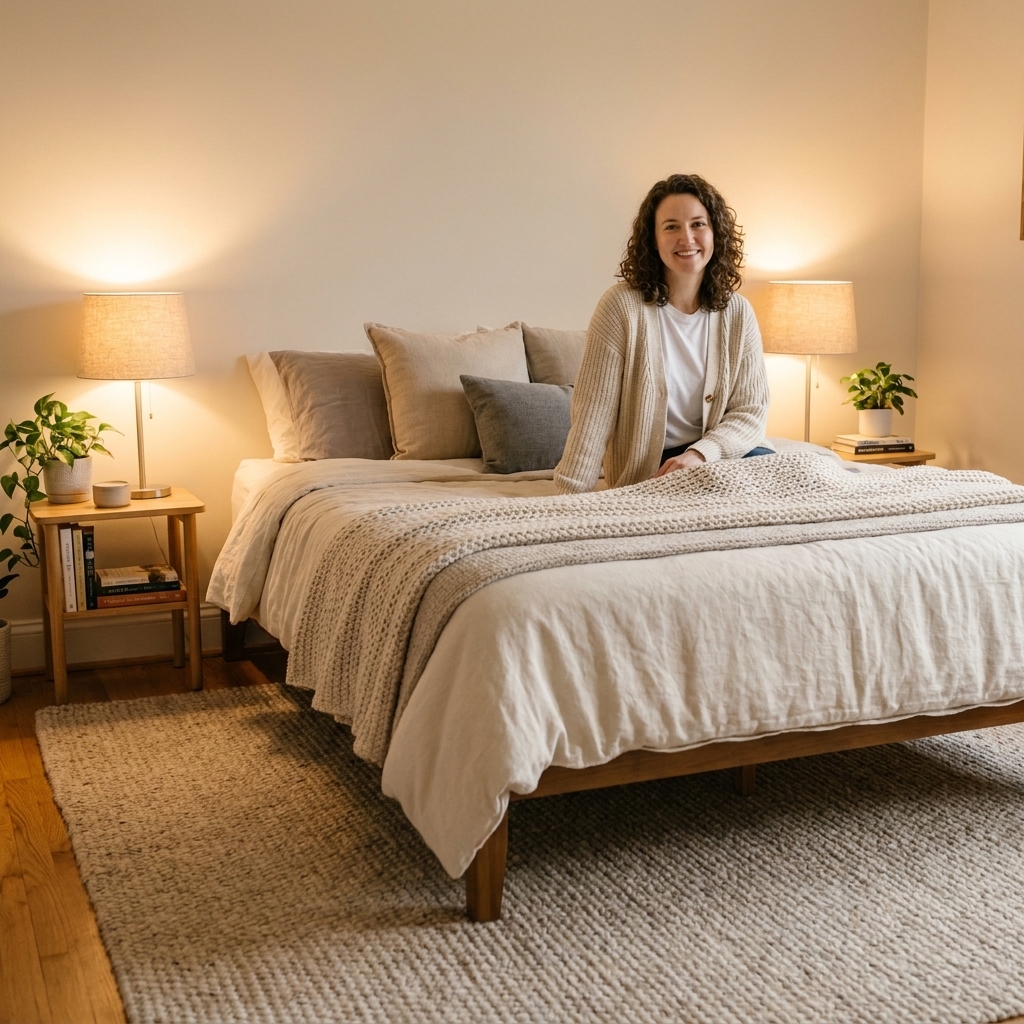
When a rug sits under a bed, you want enough rug showing that it reads like a foundation, not a bath mat that wandered into the wrong room. As a rule of thumb, aim for 18 to 24 inches of visible rug on each side of the bed, and about 12 to 18 inches at the foot.
- Minimum cozy: You can step onto the rug when you get out of bed.
- Looks “designer”: The rug extends past your nightstands and visually frames the whole sleep zone.
If you remember nothing else, remember this: too small looks accidental. A slightly-too-large rug almost always looks richer and more intentional.
Pick the right rug size
Here is my simple sizing cheat sheet. Think of these as starting points, not laws. Room size, nightstand footprints, and bed frames vary a lot.
Measure the bed you actually have: If your frame is wider than your mattress (platform rails, sleigh bed, canopy posts), measure frame width, not just mattress width. That one detail is where people accidentally undersize.
Twin
- 5' x 8': The most flexible choice. Lets the rug peek out on both sides and at the foot in many rooms.
- 6' x 9': Great if the room can handle it and you want extra softness around the bed (availability varies by retailer).
Full
- 6' x 9': A solid “just right” option in most bedrooms (availability varies).
- 8' x 10': Best if you have space and want that framed, anchored look.
Queen
- 8' x 10': My go-to for a queen. Usually gives you generous rug on the sides and at the foot.
- 9' x 12': Gorgeous in a larger room, especially if you want the nightstands fully on the rug.
King
- 9' x 12': The classic choice that actually looks proportional under a king.
- 10' x 14': Dreamy in a spacious primary bedroom, especially with a bench at the foot (less common in some stores).
Quick measuring tip (then round up): Take your bed (or frame) width and add 36 to 48 inches to estimate a rug width that usually leaves enough “showing” on both sides. Then round up to a standard rug size so you do not end up just shy.
- Example: A standard king is about 76 inches wide. 76 + 36 = 112 inches, which is roughly 9'4". You would typically choose a 9' x 12' (108 inches wide) if it works in your room, or size up to 10' x 14' if you want a more generous border and have the space.
Three placements
Think of these as layouts you can choose based on your room, your budget, and what you want to feel when you step out of bed.
1) Two-thirds tuck
Place the rug so it starts a little in front of your nightstands and runs under the lower two-thirds of the bed. The head of the bed stays on bare floor.
- Why it works: Saves money versus going huge, still looks grounded, and feels great underfoot.
- Best for: Most bedrooms, especially rentals and mid-size rooms.
2) Fully under
The rug goes under everything, including nightstands. When done right, it is incredibly polished.
- Why it works: Creates a single, cohesive zone that makes the bed feel like the star.
- Best for: Large rooms and heavier furniture that does not get moved often.
3) Two runners
Skip the big rug and use two runners, one on each side of the bed.
- Why it works: Softer mornings, easier budget, and no awkward wall-to-wall squeezing.
- Best for: Narrow bedrooms, beds pushed close to walls, and anyone who hates wrestling a giant rug upstairs.
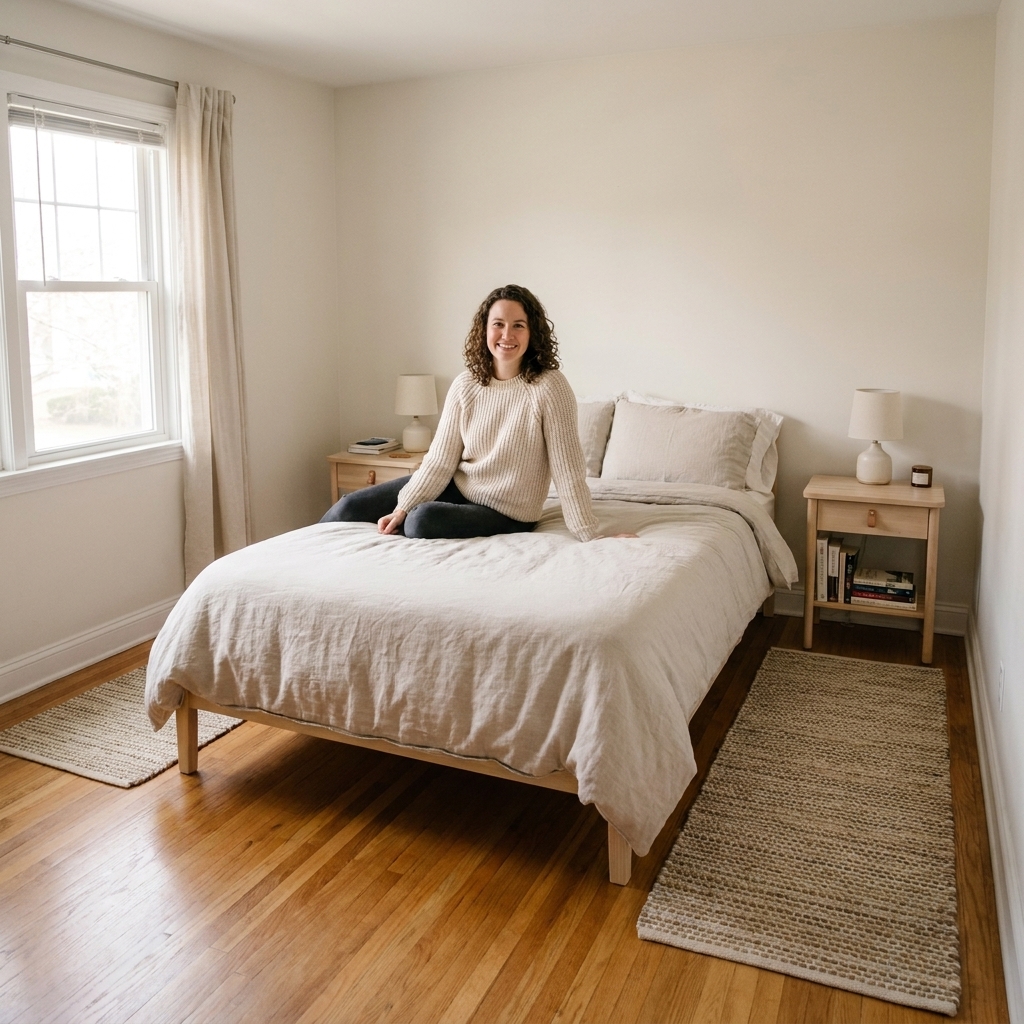
Runner sizing I like: around 2' x 7' or 2'6" x 8', depending on bed length and where your feet land.
How far should it stick out?
Once your rug is placed, check these three landing zones. Treat these as practical guidelines, then adjust for your room and how you actually move through it.
- Sides: You should be able to put both feet on the rug when you get out of bed. Aim for 18 to 24 inches of visible rug.
- Foot of the bed: Enough rug to visually finish the bed. Aim for 12 to 18 inches visible.
- Border near walls: Leaving some floor between the rug edge and the wall keeps things looking clean. In small rooms, 2 to 6 inches can feel tidy; in larger rooms, 6 to 18 inches often looks more balanced.
If your rug is fighting with a door swing or a closet, scoot it slightly so the walkway stays clear and you do not end up catching toes every morning. A rug that looks perfect but turns into a trip hazard is not a cozy choice.
Orientation tips
Most of the time, you will place the rug with the long side running left to right under the bed (so you get generous coverage on both sides). But if your room is narrow, do not be afraid to adjust.
- Narrow room: Try sliding the rug so it favors the open side of the bed, or switch to runners so your main walkway stays comfortable.
- Bed centered: A centered rug reads the most “finished,” especially if you can keep the nightstands fully on or fully off (no awkward half-and-half).
Texture matters
Rug texture is where comfort lives. I always decide based on two things: how I want mornings to feel, and how much real life my bedroom sees (kids, pets, allergy sensitivity, constant snack crumbs, you know the vibe).
Best textures
- Wool: Warm, resilient, and naturally hides minor dirt. Feels plush without being overly fluffy.
- Cotton flatweave: Lightweight and easy to clean, great for layering. Softer than jute, less bulky under doors.
- Low-pile or vintage-style rugs: Comfortable, practical, and easy to vacuum. Perfect if you like a more tailored look.
- Shag or high-pile: Maximum “barefoot luxury,” but needs more maintenance and a stronger vacuum.
Use carefully
- Jute and sisal: Beautiful and earthy, but can feel scratchy in a bedroom. If you love the look, consider layering a softer rug on top or placing jute where you do not step out of bed.
- Viscose or bamboo silk blends: Very pretty sheen, but can be fussy with water spots and heavy wear.
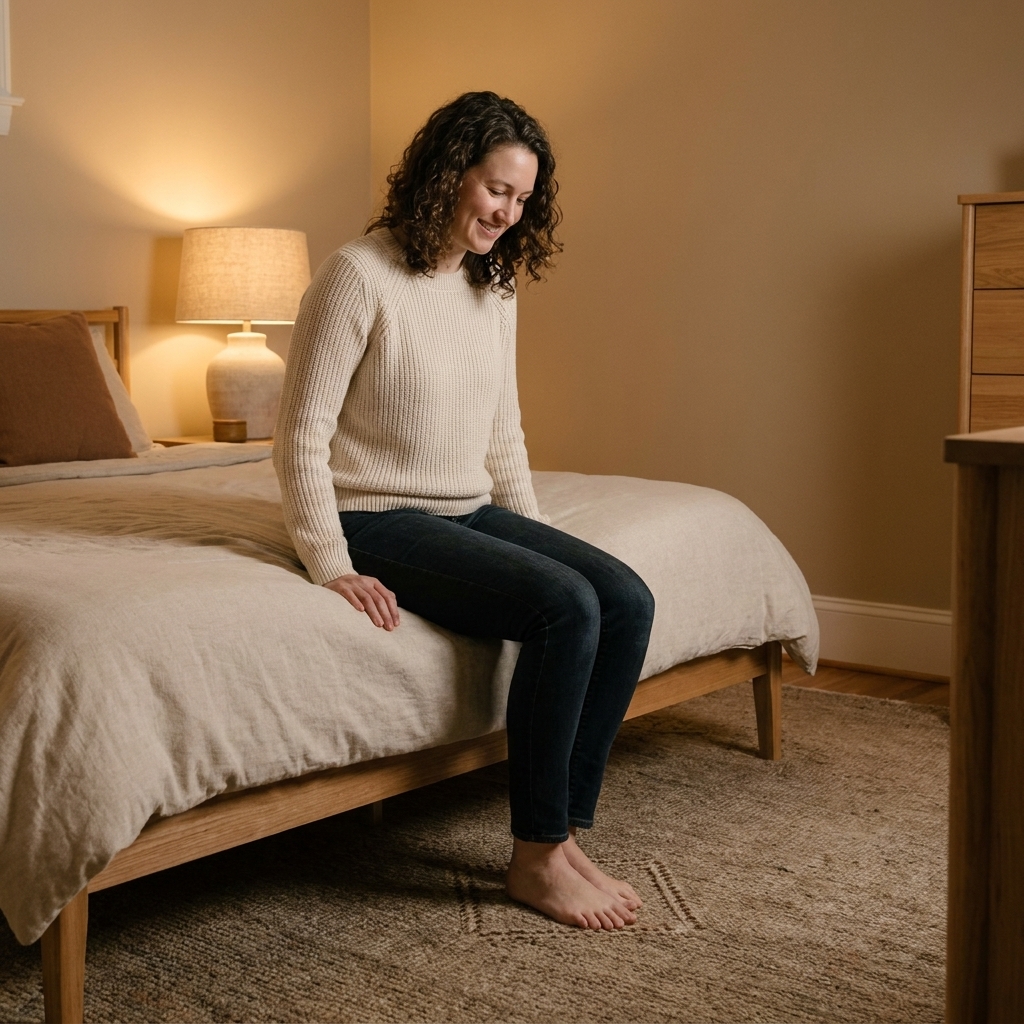
My personal cozy sweet spot: a wool or wool-blend low pile rug under the bed, plus extra softness from layered bedding and warm lamps. You get comfort without the maintenance spiral.
Do not skip the rug pad
I used to treat rug pads like an optional add-on. Now I consider them part of the rug. A pad keeps the rug from creeping, adds cushion, and helps it wear evenly.
- On hardwood or laminate: Use a non-slip pad designed for hard surfaces. If you have delicate finishes, double-check the pad materials and your flooring manufacturer guidance, since some latex or vinyl-based grips can react with certain finishes over time.
- On carpet: Many people do best with thin corner grippers or a low-profile pad designed specifically for rug-on-carpet. Super thick “carpet-on-carpet” pads can feel bouncy on plush pile, so match the pad to your carpet type.
- Thickness: For bedrooms, I like 1/4 inch for comfort without making the rug edge feel like a speed bump.
Common mistakes
- Mistake: Rug is too small.
Fix: Upgrade size if you can, or switch to two runners on the sides for better proportions. - Mistake: Rug is centered in the room, not on the bed.
Fix: Anchor the rug to the bed. The bed is the main event, so the rug should relate to it first. - Mistake: Nightstands half on, half off.
Fix: Either put both nightstands fully on the rug (bigger rug) or keep them fully off (shift rug down a few inches). - Mistake: Rug edge hits a door swing.
Fix: Pull the rug down toward the foot of the bed, or choose a lower-pile rug that the door clears.
Small bedroom strategies
Tiny rooms do not need tiny style. If you are short on square footage, you just need a smarter layout.
- Try the two-thirds tuck: It gives you the look of a big rug without swallowing the room.
- Use runners: They are often cheaper, easier to find secondhand, and easier to clean.
- Go light in color: A pale rug visually expands the floor, especially under a bed with airy bedding.
- Choose low pile: It keeps the room from feeling bulky and helps with door clearance.
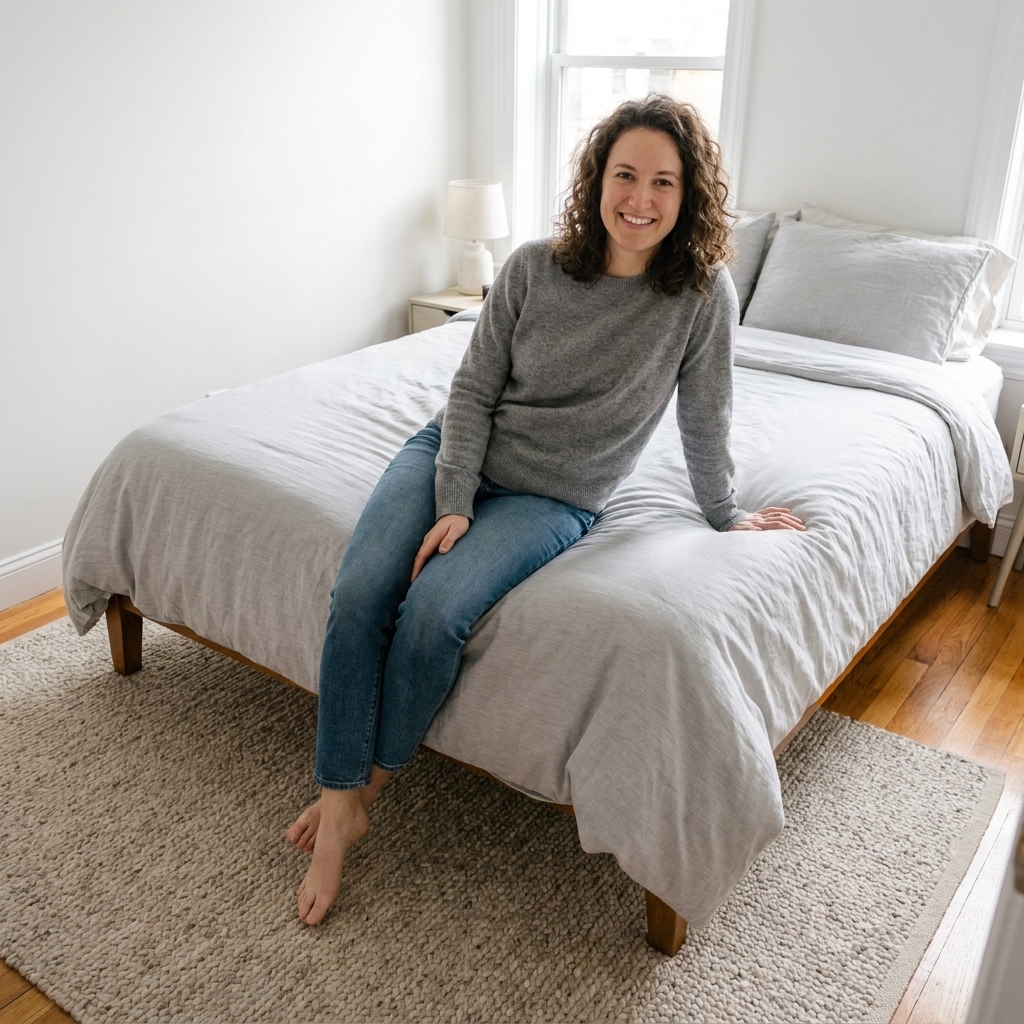
If you are renting and cannot change much, a well-placed rug is one of the biggest upgrades you can make without touching a paintbrush.
Budget-friendly options
I love a thrift find, but I also love a strategy. If you want the right size without the scary price tag, here are my tried-and-true options:
- Shop secondhand for larger sizes: Big rugs are often donated when people redecorate. Look for wool, dense low pile, and intact edges.
- Layer rugs: Use a larger, affordable flatweave as a base and add a smaller plush rug near the sides or foot of the bed for softness.
- Choose a simple solid: Texture can do the decorating when pattern is out of budget.
- Refresh what you have: A deep vacuum, gentle spot clean, and rotating the rug can make it feel brand new.
Quick FAQ
Should the rug go under nightstands?
It can, but it does not have to. If your rug is large enough to fit the bed and both nightstands fully on it, it looks very polished. If not, keep nightstands fully off the rug and slide the rug down so the visible portion still frames the bed.
How much should show at the foot?
Aim for about 12 to 18 inches. More is lovely if you have the space, especially if you have a bench at the foot.
What if the bed is against a wall?
You can still use a rug. Pull the rug out so it extends on the open side and at the foot, or use a single runner on the open side for the best “feet hit softness” payoff.
Is shag a bad idea?
Not at all, if you love that plush feel. Just know it is higher maintenance, can trap more dust, and needs a rug pad so it does not shift. A medium-pile rug is often the easiest compromise.
Cozy checklist
- Choose a rug size that gives you about 18 to 24 inches of visible rug on each side (adjust for room size and furniture).
- Decide on a placement: two-thirds tuck, fully under, or runners.
- Pick a texture that matches your real life. Wool and low pile are the easiest “cozy meets practical” options.
- Add a rug pad so your rug feels cushier and stays put.
Once your rug is in the right spot, the whole bedroom instantly feels calmer. Like the bed finally has its own little island of comfort, which is exactly what a sleep sanctuary should be.