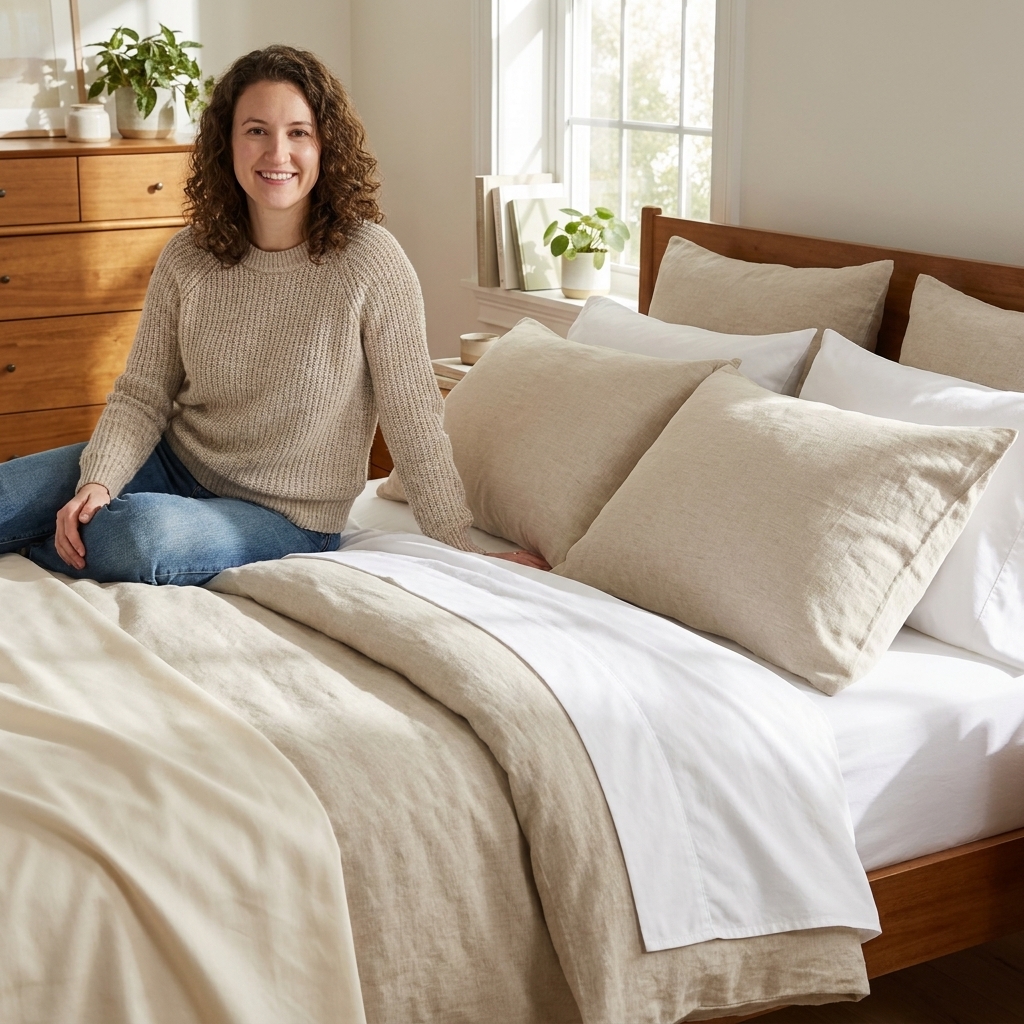
If you have ever climbed into a hotel bed and thought, why does this feel so ridiculously good, I promise it is not magic. It is layering, and it is surprisingly formulaic. Many hotels build comfort the same way we build a great outfit: a strong base, breathable layers, one cozy “wow” piece, and a tidy finish.
I am going to walk you through the exact order I use when I want that plush, five-star look at home, whether you are working with a brand-new duvet or a thrifted blanket you cannot believe you found for eight dollars.

The hotel bed formula
Before we get detailed, here is the “stack” you are building from the mattress up. If you follow this order, your bed will automatically look more intentional and feel more supportive.
- Mattress protector + pad or topper (protection and comfort)
- Fitted sheet (the smooth base layer)
- Top sheet (common in many hotels)
- Duvet insert + duvet cover (your main fluff layer)
- Light blanket or coverlet (optional, for that tailored look)
- Pillows (sleeping pillows plus “display” pillows)
- Throw blanket (the cozy finishing touch)
Now let’s build it properly, step by step.
Step 1: Smooth foundation
Use a mattress protector (quietly)
Hotels protect their mattresses, and you should too, especially if you are investing in good bedding. Look for a protector that is breathable and quiet. If yours crinkles when you roll over, it will never feel luxurious.
- Hot sleepers: choose a thin, breathable protector and skip anything heavily waterproof unless you truly need it.
- Allergy-prone: an allergen-barrier protector can help reduce allergens like dust and dander between washes.
Add comfort with a topper or mattress pad
This is where that “ahh” feeling often comes from. You have two main routes:
- Mattress pad: thinner, easier to launder, adds a little cushion and helps even out minor lumps.
- Mattress topper: thicker and more dramatic, best for making a too-firm bed feel plush.
My thrift-friendly tip: If your budget is tight, prioritize the topper over fancy sheets. A modest set of cotton percale sheets on top of a comfy topper will still feel elevated.
Step 2: Do the sheets
Pick the right fabric
In many hotel properties, bedding leans crisp and breathable, not stretchy and clingy.
- Percale cotton: cool, matte, crisp, very hotel.
- Sateen cotton: smoother and slightly warmer with a soft sheen, still luxe but less “crisp.”
- Linen: relaxed, airy, a little rumpled in the best way, especially in summer.
If you want that classic snap when you slide in, go percale.
Fitted sheet first, then a top sheet
Lay your fitted sheet tight and smooth. Then add a top sheet with the finished edge at the top of the bed. Leave extra length at the head so you can fold it back later.
Why many hotels like top sheets: they create a breathable buffer between you and the duvet, and they make the whole bed feel cleaner and more layered. If you have ever felt too warm under a duvet, a top sheet can help with temperature control.
Fit check: mattress depth matters
Before you blame your sheets for popping off, measure your mattress depth (top to bottom), then add any topper. Buy fitted sheets that match that number. Deep-pocket sheets are great, but only if they are deep enough for your bed.
Hospital corners are optional
You do not need perfect corners to get the look. The easiest visual win is the fold-back:
- Pull your top sheet up to the head of the bed.
- Once the duvet is on (next step), fold the top sheet down over the duvet by 8 to 12 inches.
That simple cuff instantly says “hotel.”
Step 3: Pick an insert
The insert matters more than the cover. A thin insert will look flat no matter how expensive your duvet cover is.
Choose warmth for your room
- Warm sleeper or heated apartment: lightweight insert
- Average sleeper: all-season insert
- Cold room or winter lover: warm insert
If you often kick covers off at night, going too warm will make your bed look pretty but feel annoying.
Down, down-alternative, or wool?
- Down: lofty and long-lasting, a classic hotel choice, can be pricey. If you want a concrete metric, look at fill power (higher usually means loftier).
- Down-alternative: great budget choice, easy care. Look for box stitching to prevent clumps and check the fill weight if it is listed.
- Wool: excellent temperature regulation, a little less “cloud puff” but deeply comfortable.
Proportion hack: sizing up (carefully)
This is a favorite styling trick, but it only works if the measurements cooperate. If your bed looks skimpy at the sides, you can sometimes size up your insert:
- Full or Queen bed: some people use a King insert for extra drape
- King bed: look for an oversized King insert if available
Important: measure your duvet cover and the insert in inches. Brand sizing varies, and a too-big insert can bunch, shift, or stress seams.
Step 4: Add the cover
Anchor the corners
If your duvet cover has corner ties, use them. If it does not, you can hand-sew small ribbon ties inside or use duvet clips. The goal is simple: no sad bunching at the bottom corners.
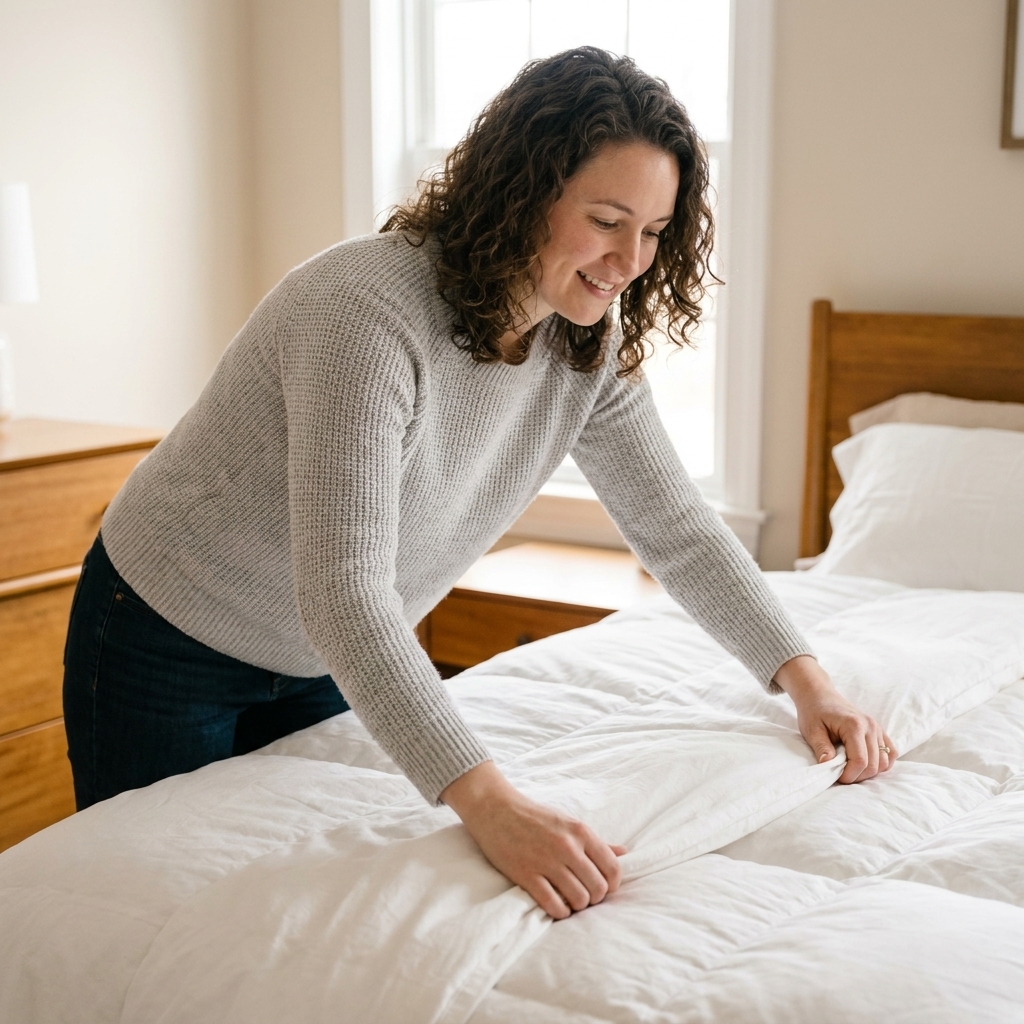
Fluff, then smooth
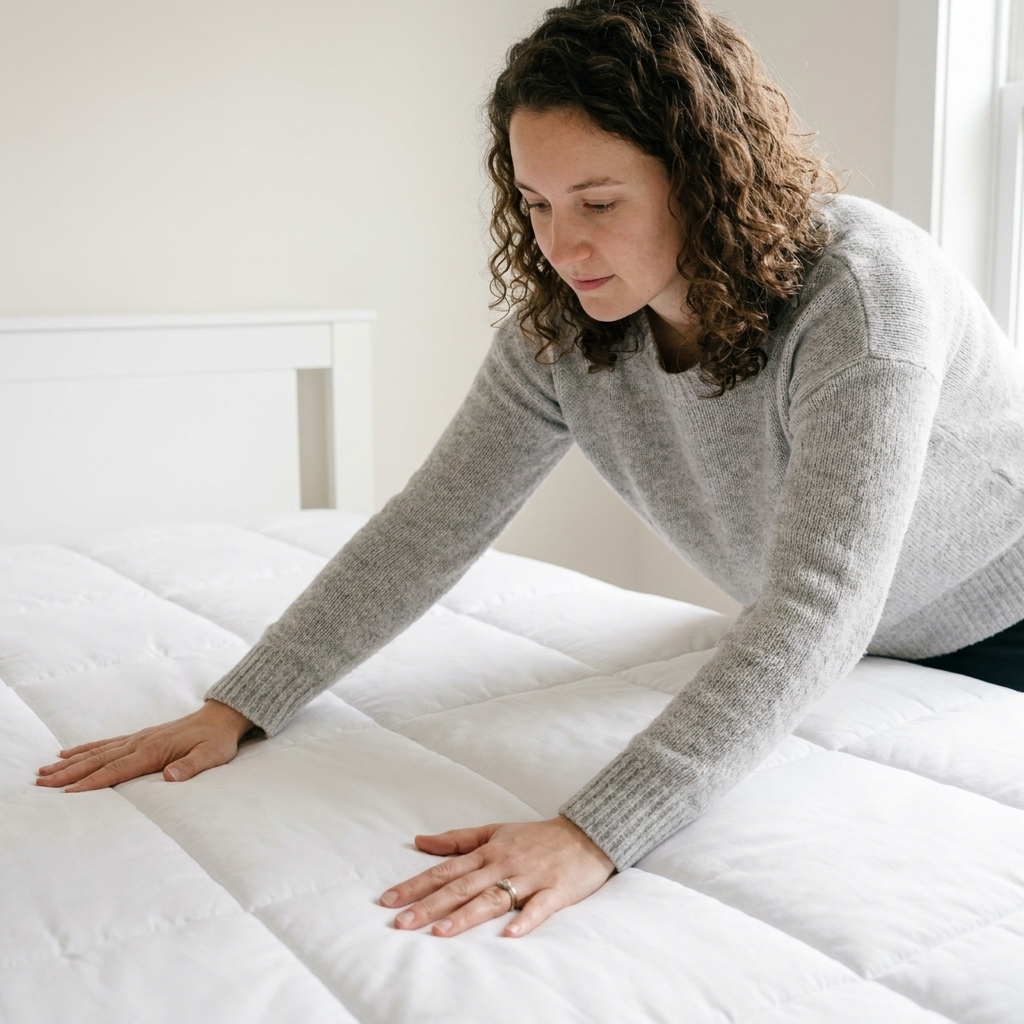
Give the duvet a big shake to loft it, then smooth the top surface with flat palms. Many hotels do this because it makes the bed look calm and intentional rather than lumpy.
Step 5: Add a blanket
If you want that extra “designed” feeling, add a thin layer on top of the duvet or at the foot of the bed.
Two easy ways to use it
- Foot-of-bed fold: Fold a coverlet or blanket into thirds lengthwise, then drape it across the foot.
- Full-bed layer: Lay a lightweight quilt or coverlet over the duvet for a slightly more tailored, less puffy look.
Thrift shopper’s note: This is where vintage finds shine. A pre-loved cotton quilt or woven blanket adds texture that brand-new sets sometimes lack.
Step 6: Stack pillows
Hotel beds look generous because pillows are layered by purpose. You do not need an entire pillow store on your bed, you just need the right order.
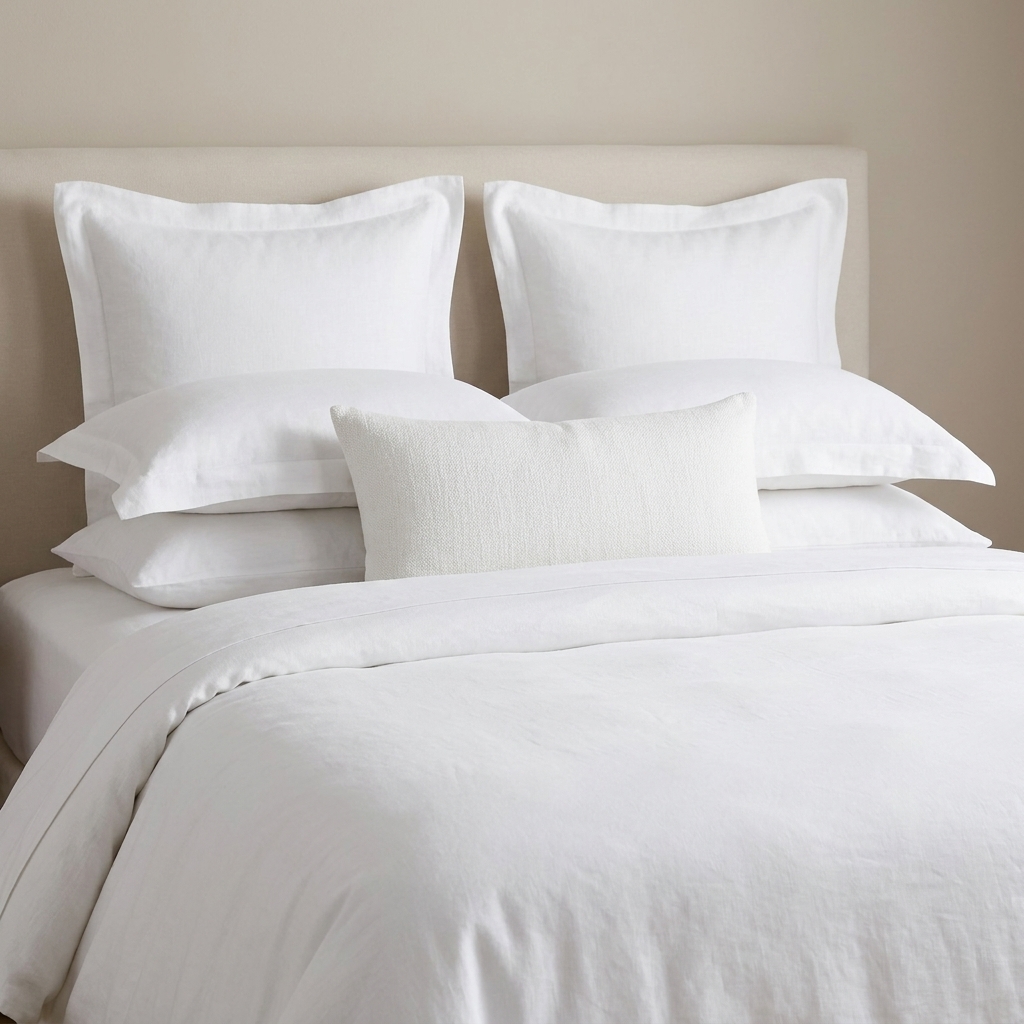
A simple arrangement
- Back row: 2 sleeping pillows per person if you like, standing upright or slightly angled
- Middle row: 2 shams (Euro shams if you love a tall, plush look)
- Front: 1 lumbar pillow or 1 to 2 smaller accent pillows
If your room is small, stop at sleeping pillows plus two shams. It will still look polished.
Match firmness to function
- Sleeping pillows: choose what your neck actually likes, not what photographs best
- Euro pillows: slightly firmer ones hold their shape and look elevated
- Lumbar: supportive and tidy, great if you read in bed
Step 7: Add a throw
The throw is the jewelry of the bed. It adds color, texture, and that cozy “come nap here” vibe.
Throw materials that look elevated
- Wool or wool blend: structured, polished, great drape
- Cotton knit: casual cozy, works year-round
- Mohair-style or plush throws: soft and inviting, best in cooler months
Two placements that work
- Folded: Fold into a long rectangle and place at the foot for a clean finish.
- Casual drape: Drape diagonally across the lower third of the bed for a softer, styled look.
If your bed already has a lot of pattern, keep the throw solid. If your bedding is mostly white, a throw is the perfect place to bring in a warm caramel, soft sage, or moody navy.
Color and texture
Luxury hotel beds are usually calm in color, but rich in texture. That is the trick you can steal immediately.
A foolproof palette
- Base: white, cream, or soft ivory sheets and duvet cover
- Mid layer: subtle pattern like a thin stripe, small waffle texture, or matelassé
- Accent: one deeper tone through a throw or lumbar pillow
Texture combos that work
- Percale sheets + fluffy duvet + waffle blanket
- Linen sheets + down-alternative duvet + chunky cotton knit throw
- Sateen sheets + quilted coverlet + wool throw
Upgrades that cost $0
- Make your bed daily. Two minutes of smoothing changes the whole room.
- Steam or lightly iron pillowcases. Even just the front side makes everything look crisp.
- Fluff the duvet like a pillow. A quick shake brings the loft back.
- Keep the bedside surface simple. A busy nightstand makes even perfect bedding feel less luxe.
Common mistakes
Your duvet looks flat
Fix: Upgrade the insert, not the cover. Or size up the insert only if the cover measurements can handle it.
Everything slides around at night
Fix: Use duvet corner ties or clips. For sheets, try deep-pocket fitted sheets and make sure they match your mattress height.
The bed looks messy, not cozy
Fix: Limit the look to 2 to 3 textures and 1 accent color. Too many patterns fight each other.
It feels hot and heavy
Fix: Switch to percale or linen sheets and a lightweight insert. Add warmth with a throw you can kick off.
Shopping checklist
If you are building your “hotel bed” over time, prioritize the pieces that change comfort first, then the pieces that change the look.
- Duvet insert
- Mattress topper or pad
- Sheets (fitted, top sheet if you like them, plus pillowcases)
- Duvet cover
- Shams
- Throw blanket
- Coverlet or quilt
FAQ
Do I really need a top sheet?
If you want the classic, layered hotel feel, a top sheet helps a lot. It adds that crisp cuff at the head of the bed and makes temperature control easier. That said, some hotels and plenty of homes skip top sheets and go duvet-only. If you hate top sheets, you can still get a luxe bed by focusing on a fluffy insert, a smooth duvet cover, and a polished pillow stack.
How many pillows is “hotel style”?
For most beds: 2 sleeping pillows plus 2 shams is the sweet spot. Add 2 Euro pillows if you love a taller look, then finish with one lumbar.
What is the best duvet cover fabric for a hotel vibe?
Cotton percale gives the crispest, most traditional feel. Cotton sateen feels smoother and slightly warmer. Linen looks beautifully relaxed and lived-in.
How often should I wash everything?
A simple schedule: wash sheets and pillowcases weekly, wash the duvet cover every 2 to 4 weeks (more often if you skip a top sheet), and launder blankets and throws as needed. Fluff the insert in the dryer on low with dryer balls if it starts looking tired, and make sure everything is fully dry before you remake the bed.
How do hotels get beds so white without looking dingy?
They wash consistently and replace pieces before they look tired. At home, the easiest win is to avoid too many competing white tones. Stick to one family like soft white or warm ivory, and add texture instead of more shades.
My five-star check
Before you call it done, stand in your doorway and do this quick scan:
- Is the bed visually smooth with one intentional fold-back at the top?
- Do you have at least two textures (like crisp sheets and a fluffy duvet)?
- Is there one cozy element that makes you want to climb in right now (usually the throw)?
If yes, congratulations. You just made your own little hotel suite, and you do not even have to check out at 11.