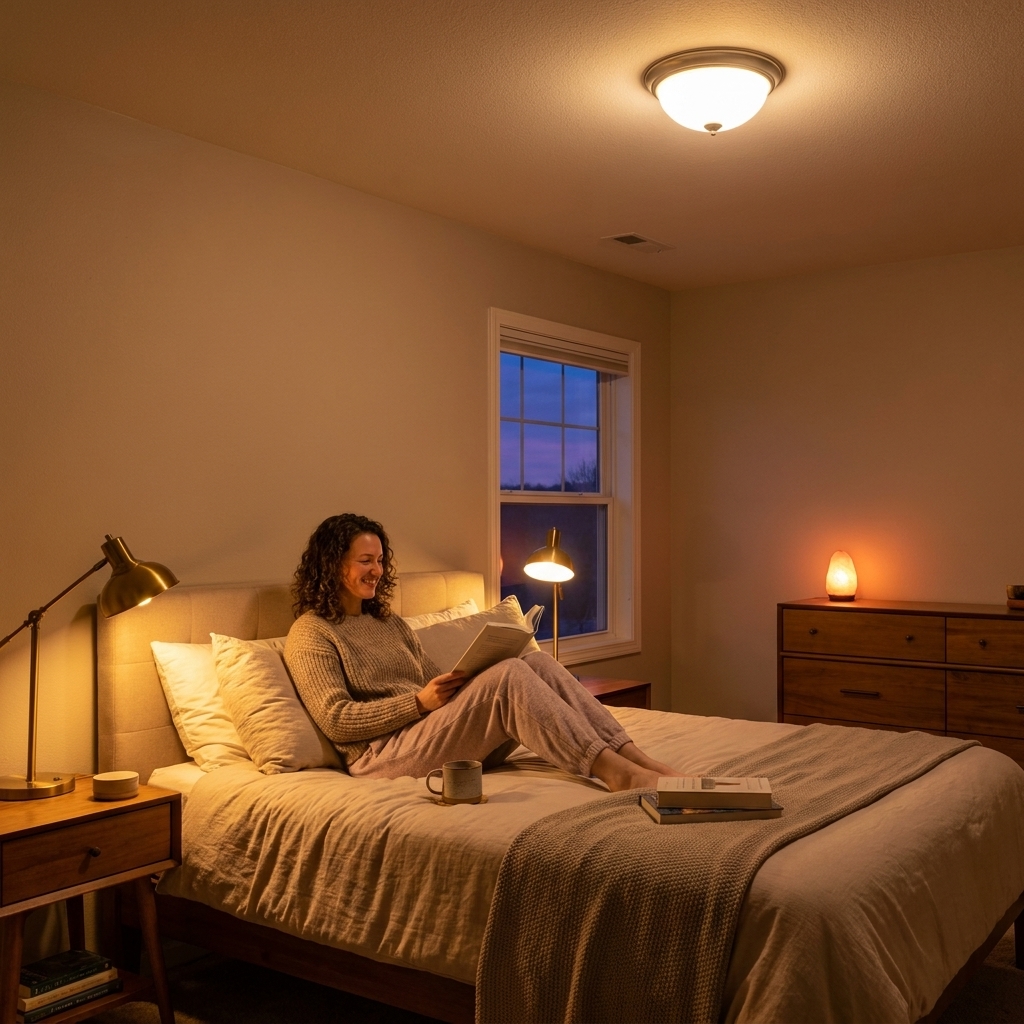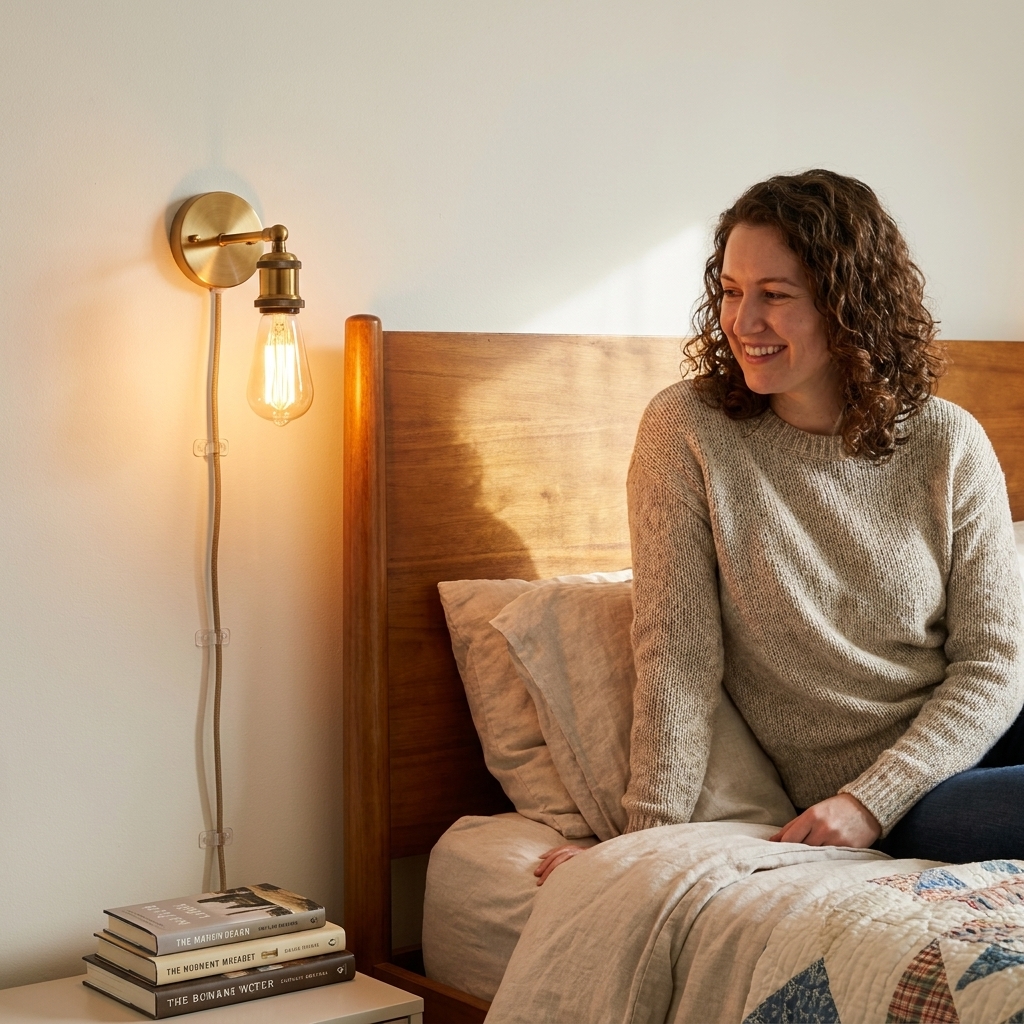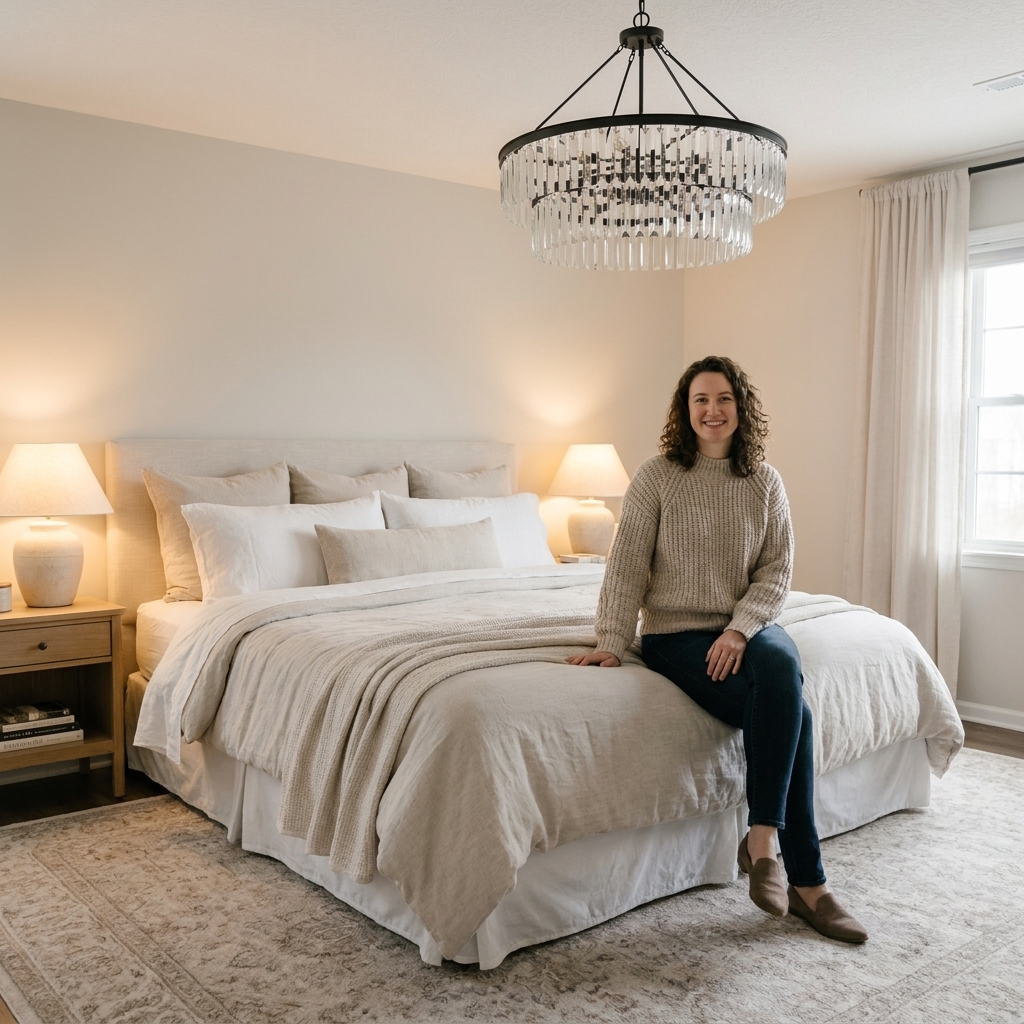
Bedroom lighting is one of those small choices that quietly changes everything. The “wrong” bulb can make your room feel like a waiting room, keep you alert at night, or make getting dressed in the morning a guessing game. The “right” bulb makes your whole space feel like a soft landing. Let’s talk about how to pick bulbs by color temperature (Kelvin), brightness (lumens), and smart features that can support your wind-down routine.
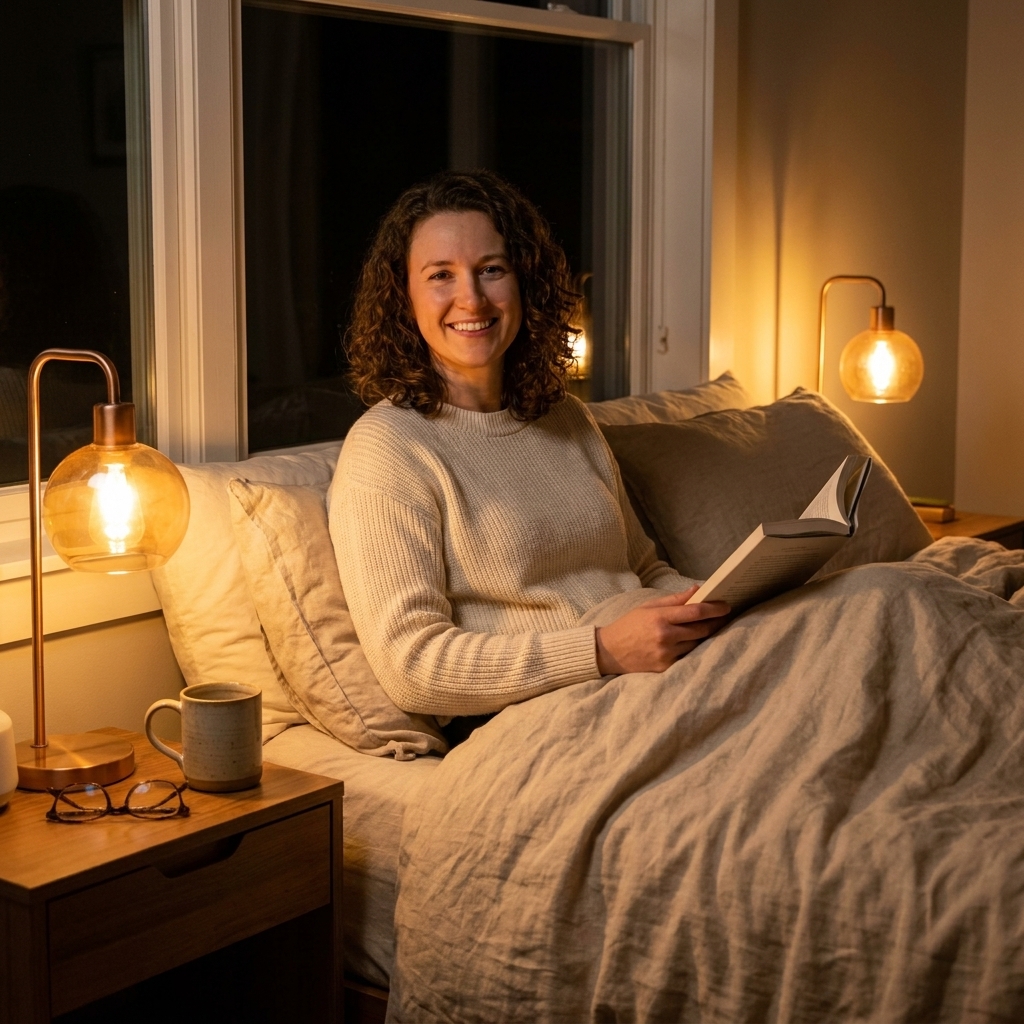
Color temperature: the Kelvin numbers that matter
Kelvin (K) is the warmth or coolness of the light. In a bedroom, Kelvin is not just a style choice. It also affects how your brain and body read the time of day. Light that is cooler and brighter tends to feel more “daytime,” while warmer light tends to feel more evening-friendly, especially when it is dim.
- 1800K to 2200K: candlelight-warm. Dreamy, ultra-inviting, best for late evening and bedtime routines.
- 2700K: classic warm white. This is my default for most bedroom lamps and overhead fixtures when you want comfort but still want to see what you are doing.
- 3000K: warm-neutral. Good if your bedroom doubles as a getting-ready space and you want a bit more clarity without going cool.
- 3500K to 4000K: neutral to cool. Brighter and more alerting for many people, and usually better saved for kitchens and work zones.
- 5000K+: daylight/cool blue-white. Great for task lighting in the right place, but in a bedroom at night it can feel harsh and may make it harder to settle down, especially at higher brightness.
My bedroom sweet spot: 2700K for most bulbs, plus a lower-K option (around 2200K) for the hour before sleep. If you want the easiest version of this, a smart bulb that gradually warms and dims as the evening goes on does the heavy lifting.
Brightness: think lumens, not watts
Wattage is energy use. Lumens are brightness. With LEDs, a low watt bulb can still be very bright, so lumens are what you want to check on the box.
Quick lumen targets for a bedroom
- Bedside lamps: 400 to 800 lumens per lamp (lower if you love moody light, higher if you read in bed).
- Overhead ambient light: roughly 1,000 to 2,000 lumens total for an average bedroom as a starting point.
- Reading light (focused): 450 to 900 lumens aimed at your book, ideally with a shade that blocks glare.
- Closet/dresser area: bright and even, often 800 to 1,600 lumens total so you can actually see colors.
These are rules of thumb. Room size, ceiling height, and finishes matter a lot. A larger bedroom or darker walls usually need more lumens. A small room with pale walls usually needs less.
Rule I use when styling rentals: it is easier to make a bright bulb feel gentle with a dimmer than it is to make a too-dim bulb feel useful. If you can, choose dimmable bulbs and build flexibility in from day one.
Why warm, dim light helps at night
Your body uses light cues to decide when to be alert and when to power down. In general, short-wavelength (blue-leaning) light and higher brightness are more likely to feel stimulating at night, while warmer and dimmer light is typically less disruptive. Timing and intensity matter here. A very bright “warm” bulb can still keep you feeling awake, and a cool bulb at very low brightness is usually less of a problem than the same bulb at full blast.
A simple night-friendly lighting plan
- Morning: brighter, more neutral light if you need help waking up (3000K can be a good compromise).
- Daytime: keep things clear and functional if you work in your bedroom, but avoid super-blue bulbs if you are sensitive to them.
- Evening: shift warm (2700K or lower) and dim down gradually.
- Last hour before sleep: very warm and low, ideally 1800K to 2200K, and keep light sources out of direct line of sight.
If you do nothing else, do this: swap any 4000K to 5000K bulbs in your bedroom for 2700K. For many rooms, it is the fastest “why does this suddenly feel calmer?” upgrade.
Smart bulbs: the easiest way to get bedtime-friendly light
Smart lighting sounds fancy, but it is a budget-friendly way to make one room do multiple jobs. In a bedroom, the two features that matter most are dimming and color temperature shifting.
What to look for in smart bedroom bulbs
- Warm-to-cool range: look for bulbs that can go warm (down to around 2200K, or even 1800K) and up to a neutral white for mornings if you want it.
- Truly smooth dimming: the best bulbs dim without flicker and without jumping from “fine” to “too dark.”
- Schedules: set a gentle fade-down in the evening and a slow brighten in the morning.
- Red or amber “night light” modes: helpful for middle-of-the-night wake-ups, especially at very low brightness.
- Works with your setup: some use Wi-Fi, others use a hub. If you want simplest, Wi-Fi is easy. If you want super reliable, hubs can be steadier.
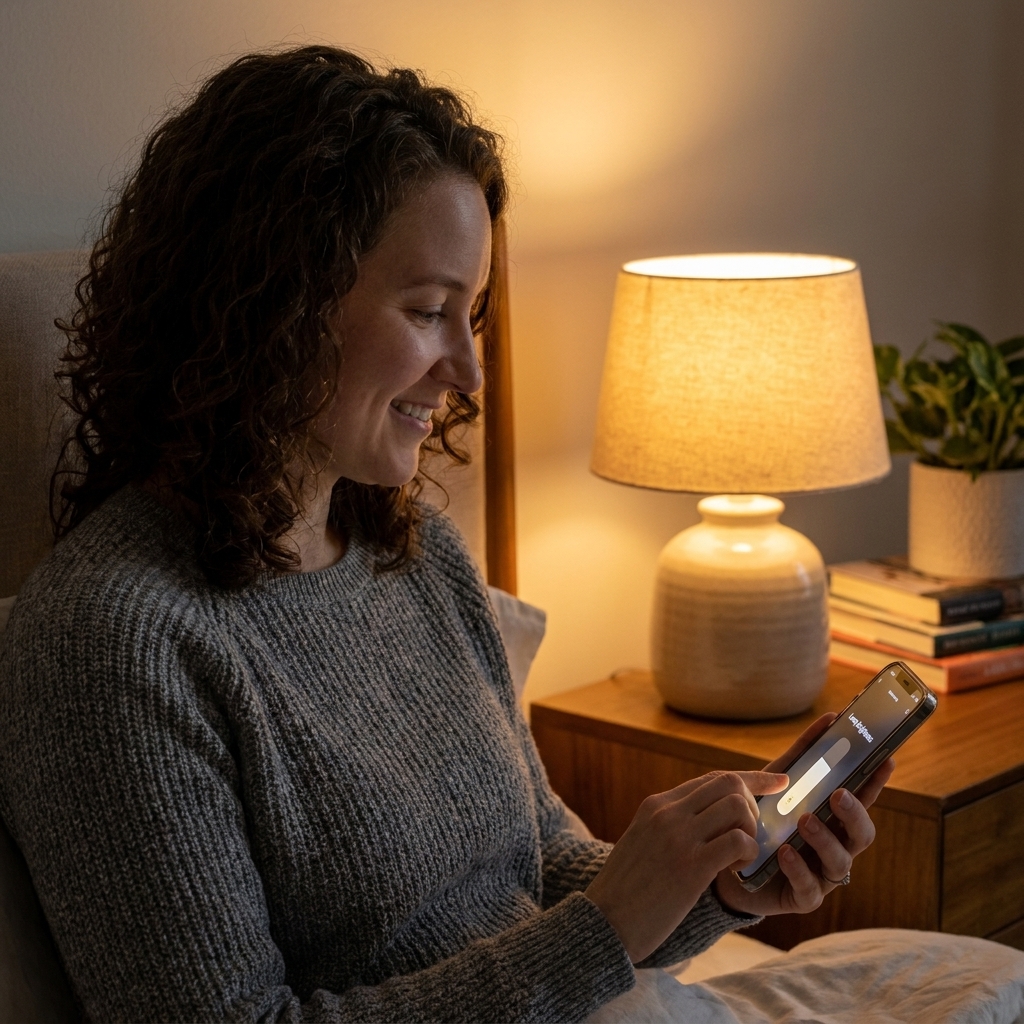
Smart dimmer switch vs smart bulbs
- Smart bulbs: best for table lamps, plug-in sconces, and renters who cannot change wiring.
- Smart dimmer switch: best for ceiling lights or a wall-controlled fixture with multiple bulbs, but it is a more involved install and not always renter-friendly.
Important: do not put a smart bulb on a traditional dimmer unless the bulb brand explicitly says it is compatible. That combo can cause flicker, buzzing, or bulbs that behave unpredictably.
Dimmable bulbs: the cozy upgrade
If I could pick only one “sleep sanctuary” lighting tip, it is this: make at least one light source in your bedroom dimmable. Bright light at 10 p.m. can feel stimulating. Dim light is a simple cue that the day is winding down.
Two easy dimming setups
- Option 1: Smart dimmable bulb in your bedside lamp. You get schedules, a warm glow, and one-tap control.
- Option 2: Dimmable LED plus a plug-in dimmer for a lamp. This is a great thrift-friendly solution for older lamps you love.
CRI: the secret to flattering light
If your bedroom is also where you choose outfits, do skincare, or apply makeup, look at CRI (Color Rendering Index). CRI is a rough measure of how accurately a light source renders colors.
- CRI 90+: my go-to recommendation for bedrooms, especially near a closet or dresser. Colors look more true, not dull or slightly gray-green.
- CRI 80+: common and usually fine for general ambient light, but it can be less forgiving for color matching.
If you are deciding between two otherwise similar bulbs, I would take the higher CRI every time.
Glare and shades: comfort matters
Brightness and Kelvin get all the attention, but glare is often what makes a bedroom feel “too much.” If you can see the LED points or the bulb is bare in your line of sight, it will feel harsher, even at a warm Kelvin.
- Choose frosted bulbs for exposed fixtures or lamps where the bulb sits low.
- Prefer opaque or lined shades for bedside lamps if you want softer, lower-glare light.
- Use diffusing glass (opal, milk glass, or similar) in ceiling fixtures when possible. It spreads light and reduces harsh hotspots.
- Aim task lights at the task. For reading, point the light at the page, not toward your eyes or your partner.
Flicker: what to know before you buy
Some LEDs flicker in a way you can see, and some flicker in a way you just feel as eye strain or headaches. Flicker can come from incompatible dimmers, cheaper drivers inside the bulb, or even certain fixtures.
- Look for clear claims: “flicker-free,” “smooth dimming,” or a compatibility list for dimmers.
- Buy from brands with decent specs: flicker is not always listed on packaging, so a good return policy matters.
- If you see flicker: try a dimmer-compatible bulb, swap the dimmer switch for an LED-rated dimmer, or move the bulb to a non-dimmed fixture.
Bulb shape and base: make it fit
Before you fall in love with a bulb, make sure it matches your fixture. This is the boring part that saves you the “why does this not screw in?” moment.
- A19: the classic everyday bulb for most lamps.
- BR30: common for recessed can lights.
- Globe (G25): often used in vanity-style fixtures, and can look great in a bedroom if you like that boutique-hotel vibe.
- Candelabra (E12 base): used for chandelier-style fixtures and some wall sconces.
- Standard medium base (E26): most common in the US for lamps and many ceiling fixtures.
Also check your lamp shade. If the bulb sits low and exposed, you will want a bulb with lower glare (frosted finish) and a warmer Kelvin.
How many bulbs do you need?
The most relaxing bedrooms rarely rely on one overhead light. The magic is in layers, so you can shift the mood depending on the time of day.
My favorite 3-layer setup
- Ambient: ceiling fixture or a floor lamp for general light (dimmable if possible).
- Task: reading light or adjustable bedside lamp aimed at the page, not your eyes.
- Accent: a small warm lamp on a dresser, soft LED strip behind a headboard, or a gentle plug-in night light for late-night trips.

If your room is tiny, you can still layer. One overhead light plus one bedside lamp plus one small accent light on a dresser is enough to make a big difference.
Bedroom bulb cheat sheet
| Bedroom zone | Recommended Kelvin | Brightness idea | Best bulb features |
|---|---|---|---|
| Bedside lamp (general) | 2200K to 2700K | 400 to 800 lumens | Dimmable, warm glow, low glare |
| Reading in bed | 2700K to 3000K | 450 to 900 lumens | Focused shade, dimmable |
| Overhead light | 2700K to 3000K | 1,000 to 2,000 lumens total (adjust for room size) | Dimmable switch or smart |
| Dresser and closet area | 3000K (sometimes 3500K) | 800 to 1,600 lumens total | Even coverage, CRI 90+, low flicker |
| Night light | 1800K to 2200K | Very low | Amber or red option, motion sensor |
Common bedroom lighting mistakes
- Buying “daylight” bulbs for bedside lamps. They look crisp in the package, but in a bedroom they often feel clinical at night.
- Skipping dimming. You end up with one intensity: too bright at night, too dim when you need to function.
- Only using the overhead light. It flattens the room and makes it harder to create that soft, layered feeling.
- Mixing wildly different Kelvins. If one lamp is 2700K and the other is 5000K, the room can feel visually chaotic and oddly uncomfortable.
- Glare from exposed bulbs. Frosted bulbs, better shades, and lower Kelvin help a lot.
FAQ
Is 2700K or 3000K better for bedrooms?
2700K is softer and more traditionally “bedroom.” 3000K is slightly brighter and more neutral, which can help if you apply makeup, choose outfits, or work in your bedroom. If you are torn, go 2700K for bedside lamps and 3000K for a closet or dresser area.
What watt LED bulb is best for a bedroom?
Look at lumens first, but as a rough guide: an 800-lumen LED is often around 8 to 10 watts, depending on the bulb. For a softer bedside vibe, many people prefer 450 to 600 lumens, often around 5 to 7 watts.
Do smart bulbs really help with sleep?
They can, mainly because they make it easy to dim and shift warmer in the evening. The biggest benefit is consistency: a scheduled wind-down light cue is one less thing to think about when you are trying to relax.
Why do some LED bulbs flicker?
Flicker can come from incompatible dimmer switches, lower-quality drivers inside the bulb, or certain fixtures. If you notice flicker, try a bulb labeled “dimmable” with a compatible dimmer, choose a bulb marketed as flicker-free, or swap to an LED-rated dimmer switch.
Quick picks if you want to choose fast
- Bedside lamps: 2200K to 2700K, dimmable, 450 to 800 lumens, preferably frosted.
- Overhead: 2700K to 3000K, dimmable if you can, adjust lumens up for larger or darker rooms.
- Want the coziest, easiest setup? One smart warm-to-cool bulb in each bedside lamp, scheduled to dim and warm after dinner.