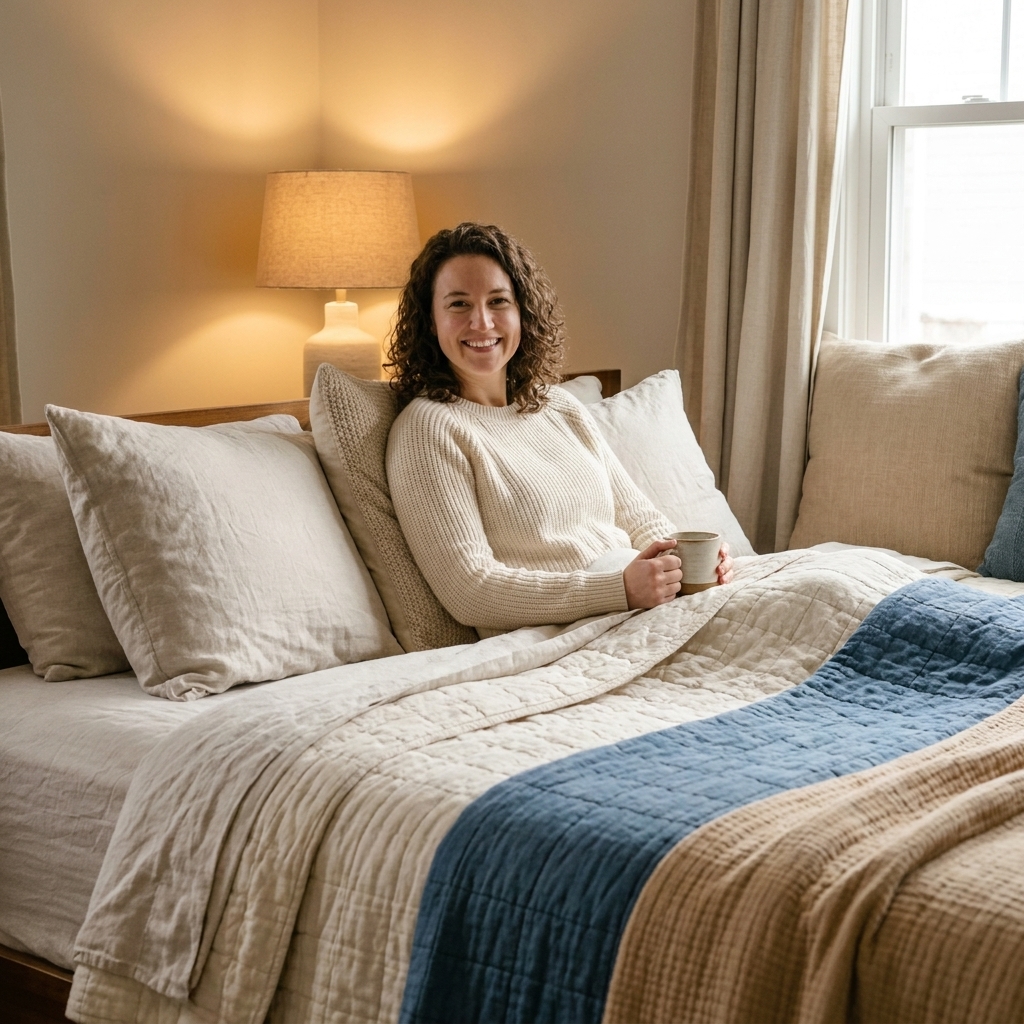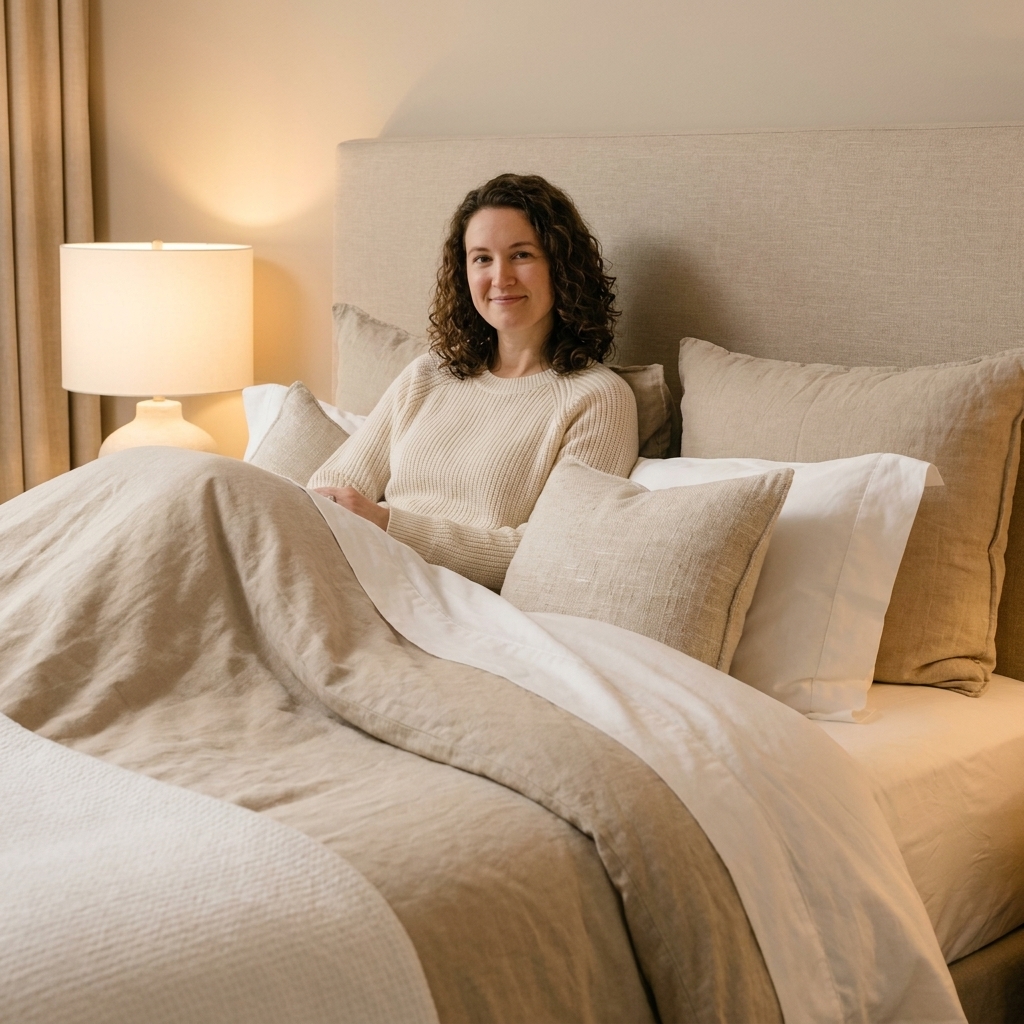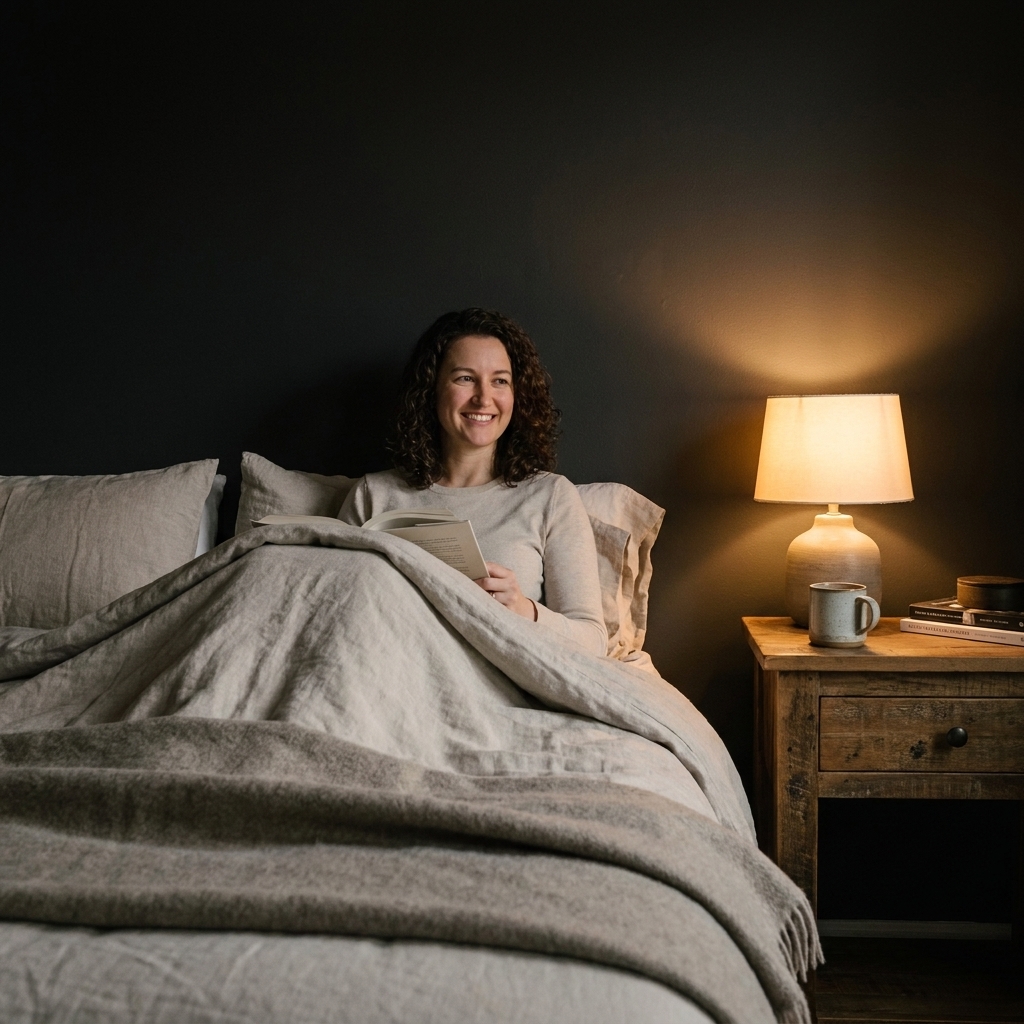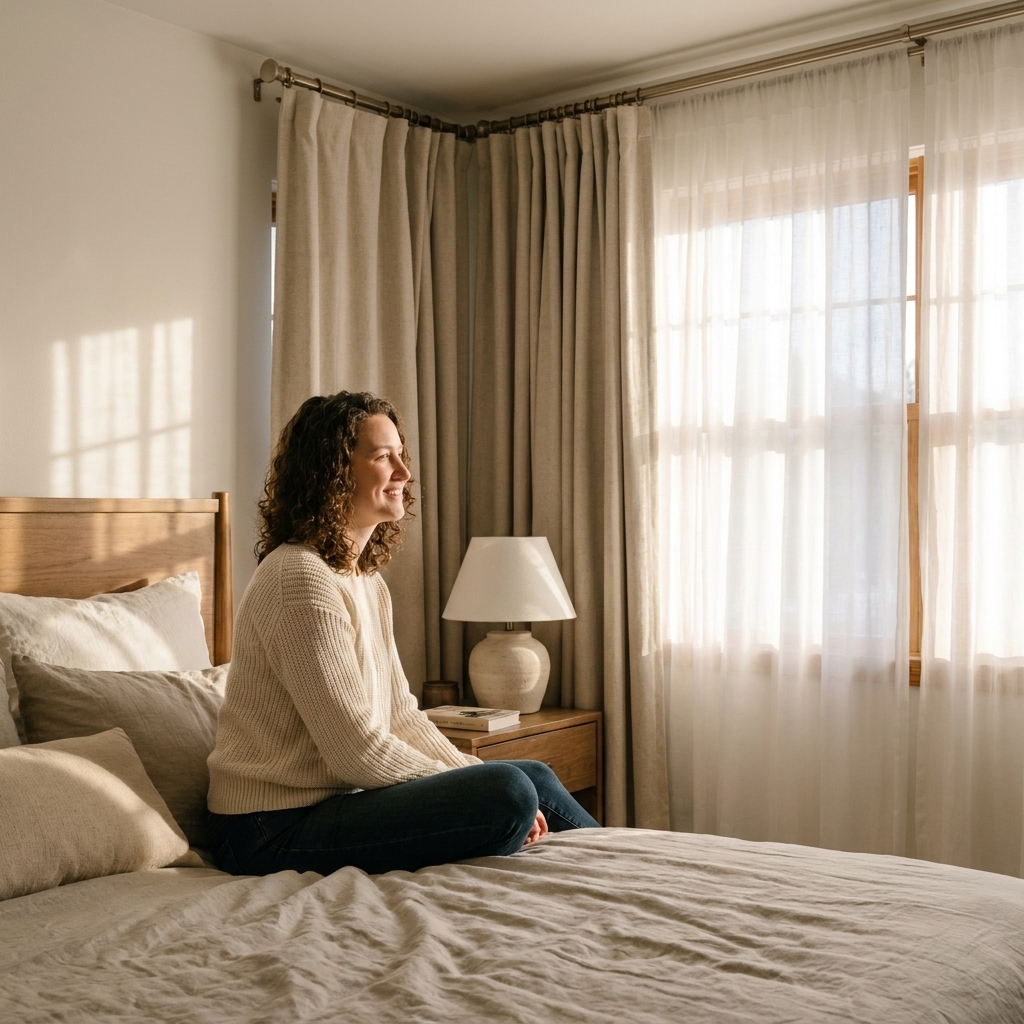
If your bedroom lighting feels either too bright or not bright enough, you do not need “more lights.” You need the right mix of lights. Layering is what turns a room from a single harsh ceiling glow into a real sleep sanctuary, the kind that can handle everything from making the bed to reading a chapter (or three) without feeling overstimulating.
I like to think of bedroom lighting in three layers: ambient (overall light), task (focused, useful light), and accent (the cozy sparkle). When those three are working together, your room looks warmer, feels calmer, and functions better.
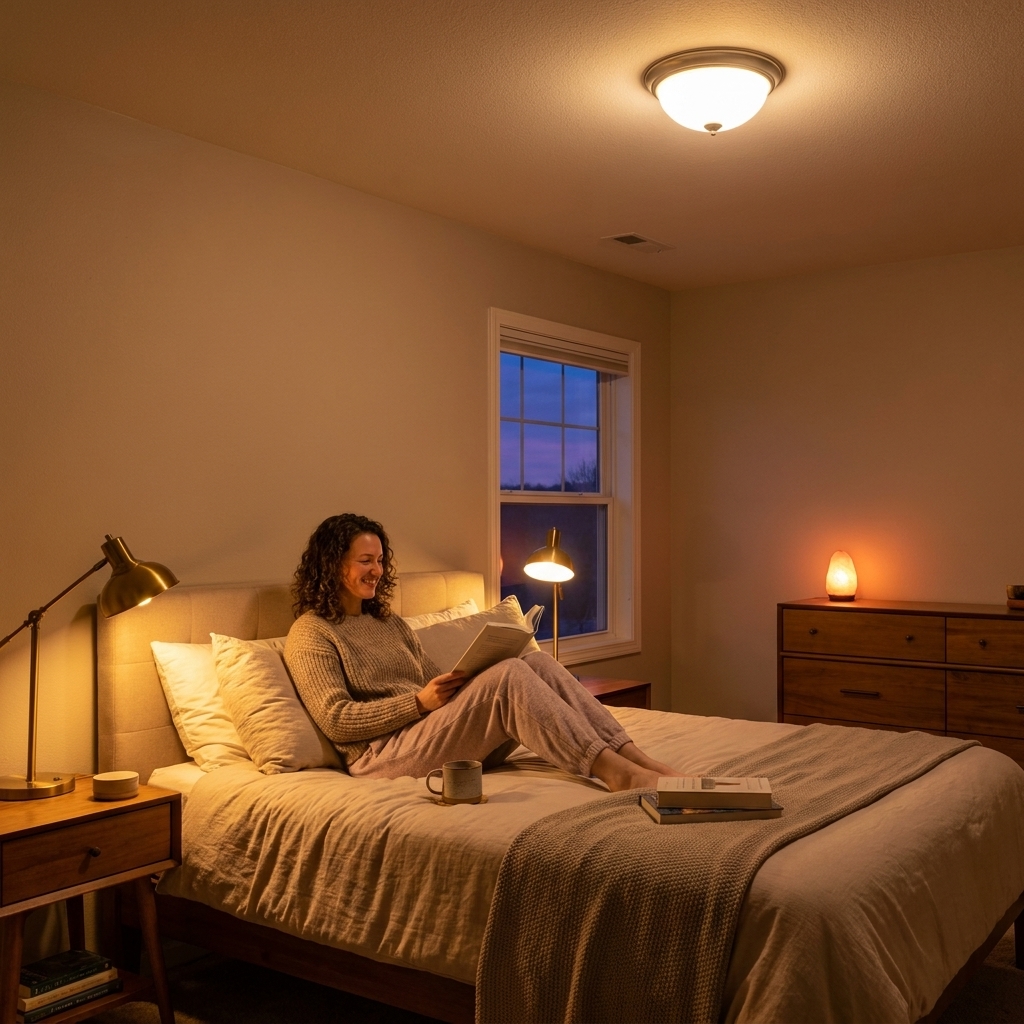
The three lighting layers
1) Ambient: the baseline
Ambient lighting is your “I need to see where I’m going” light. It fills the room evenly enough that you can walk around, put laundry away, and not stub your toe on a shoe you swore you put in the closet.
- Best options: ceiling fixture, semi-flush mount, flush mount, chandelier, or recessed lights.
- Goal: comfortable brightness that does not feel clinical.
2) Task: focused and useful
Task lights are for reading, journaling, folding, or doing skincare without leaning toward a dim lamp like a moth. In bedrooms, the most common task zone is the bed.
- Best options: bedside lamps, wall sconces, swing-arm lamps, adjustable floor lamps, reading lights mounted to the headboard.
- Goal: directional light that does not blast the entire room.
3) Accent: the cozy factor
Accent lighting is what makes your bedroom feel layered, soft, and a little magical. It highlights corners and textures, adds depth, and keeps the room from feeling flat when the overhead is off.
- Best options: small table lamps, picture lights, LED strips tucked behind a headboard, candles (real or flameless), fairy lights used sparingly, salt lamps, or a soft-glow plug-in night light.
- Goal: warm pools of light that help your brain downshift.
A simple lighting plan
If you want a bedroom that feels calm but still works in real life, aim for this:
- One ambient source (ceiling fixture or equivalent)
- Two task sources (one for each side of the bed whenever possible)
- One or two accent sources (dresser, shelf, corner, or under-bed glow)
That sounds like a lot, but you do not need to buy everything at once. Even adding one warm accent lamp can change the whole mood of a room.
Ambient light without the harshness
Match the overhead to your ceiling
- Low ceilings: flush mount or semi-flush mount keeps things airy and prevents head bumps.
- Standard ceilings: semi-flush or a small chandelier adds style without overwhelming.
- High ceilings: a chandelier or pendant can visually “lower” the room and make it feel cozier.
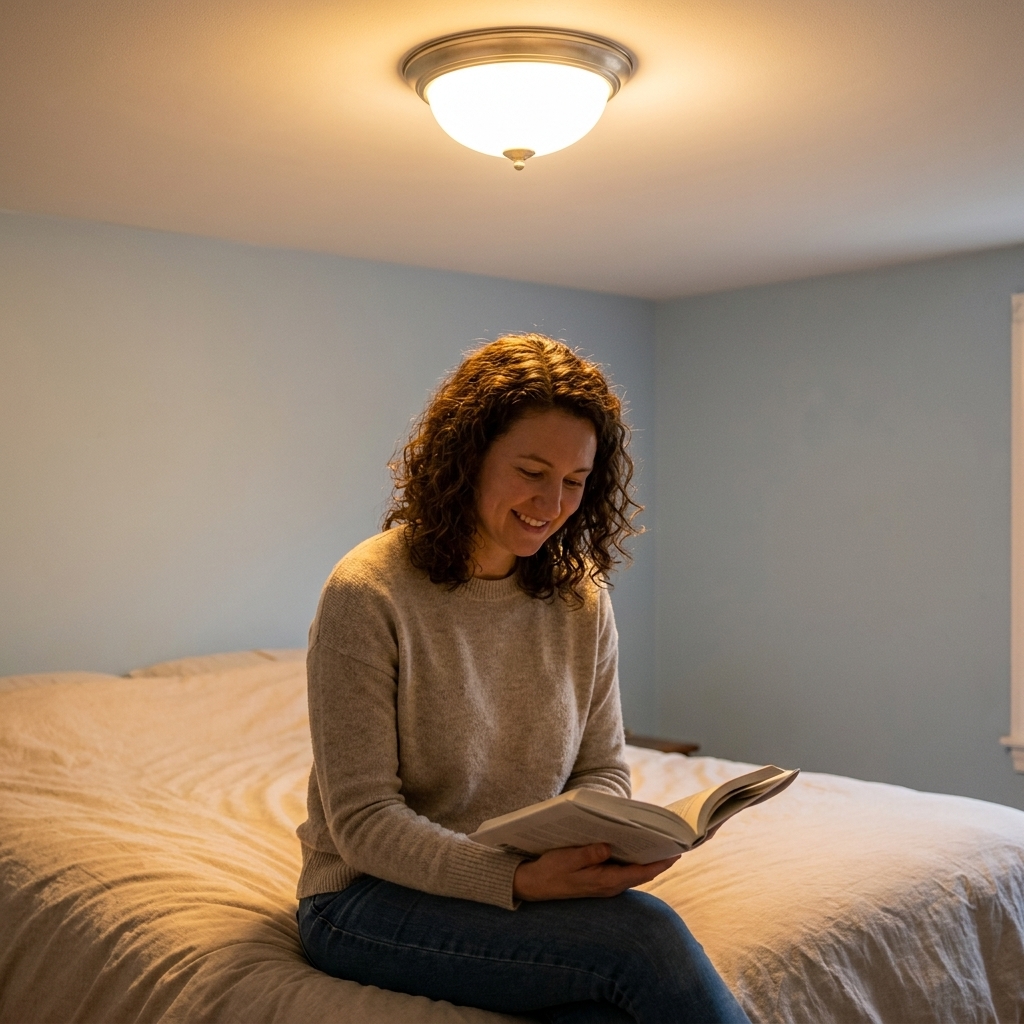
Go diffused, not bare
Fabric shades, frosted glass, and globe fixtures help the light spread softly. If your fixture is clear glass or exposes the bulb, glare usually comes from a bright point source in your line of sight. A frosted bulb, a lower-lumen bulb, and a dimmer (or smart dimming) can make a dramatic difference.
If you do one upgrade, do a dimmer
Dimmers are the secret to making a single fixture work for multiple moods. Bright for cleaning, low for winding down. If you rent, a plug-in solution or smart bulb can mimic that dimmer magic without rewiring.
Task light for reading
Bedside lamps: classic for a reason
Choose lampshades that hide the bulb and soften the light. For the most comfortable setup, the bottom of the shade should sit around eye level when you are sitting up in bed, so the bulb is not staring right at you.
Wall sconces: small-room lifesavers
If your nightstand is basically a coaster, sconces free up surface space. Look for plug-in sconces if you rent or do not want electrical work. Swing-arm styles are especially great because you can direct light onto your book instead of into your partner’s face.
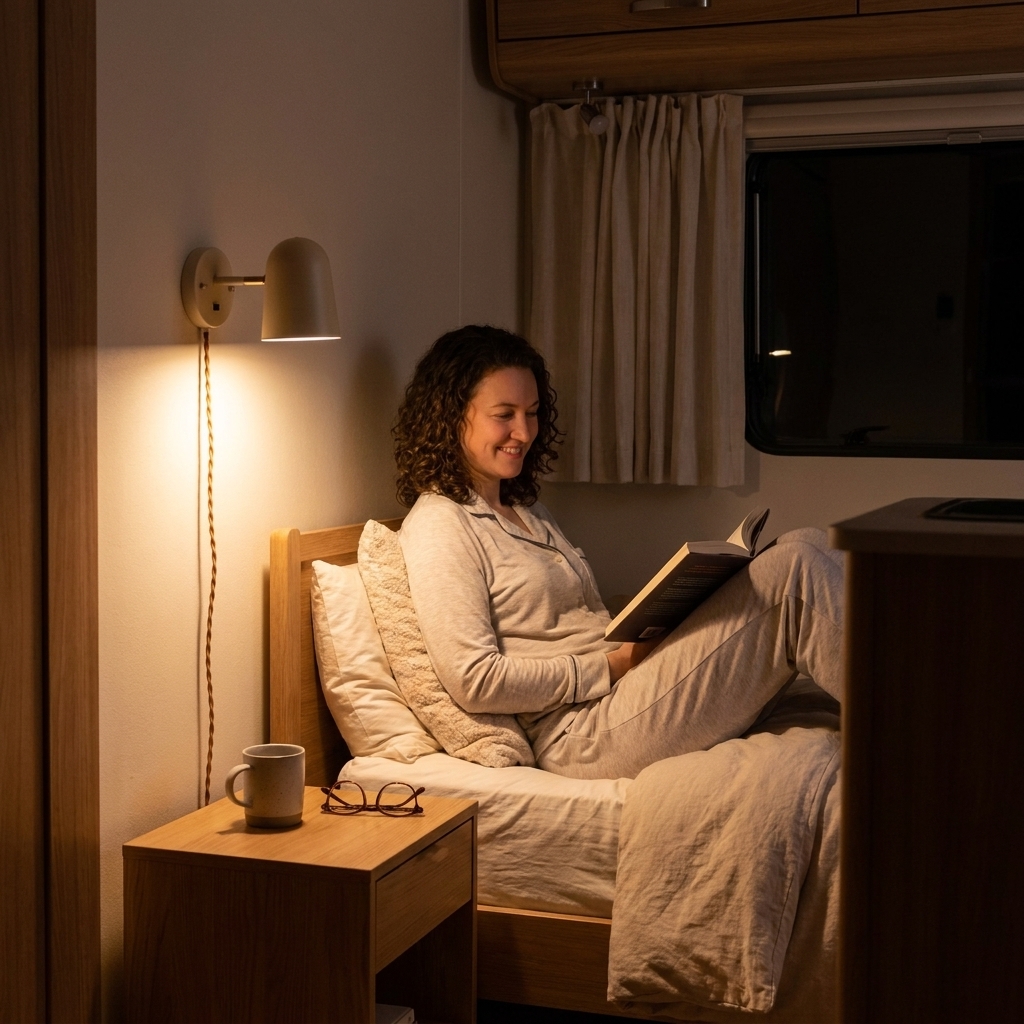
Two readers need two lights
If you share a bed, two separate reading lights can be the difference between “cozy night in” and “why is it so bright over here.” Even mismatched thrifted lamps can look intentional if they share something in common, like shade color or warm bulb tone.
Accent light that adds depth
Light the dead corner
Most bedrooms have one corner that feels a little forgotten. A slim floor lamp or a small table lamp on a dresser instantly adds depth. I love using a warm little lamp on a thrifted stool if there is no space for furniture.
Highlight texture, not clutter
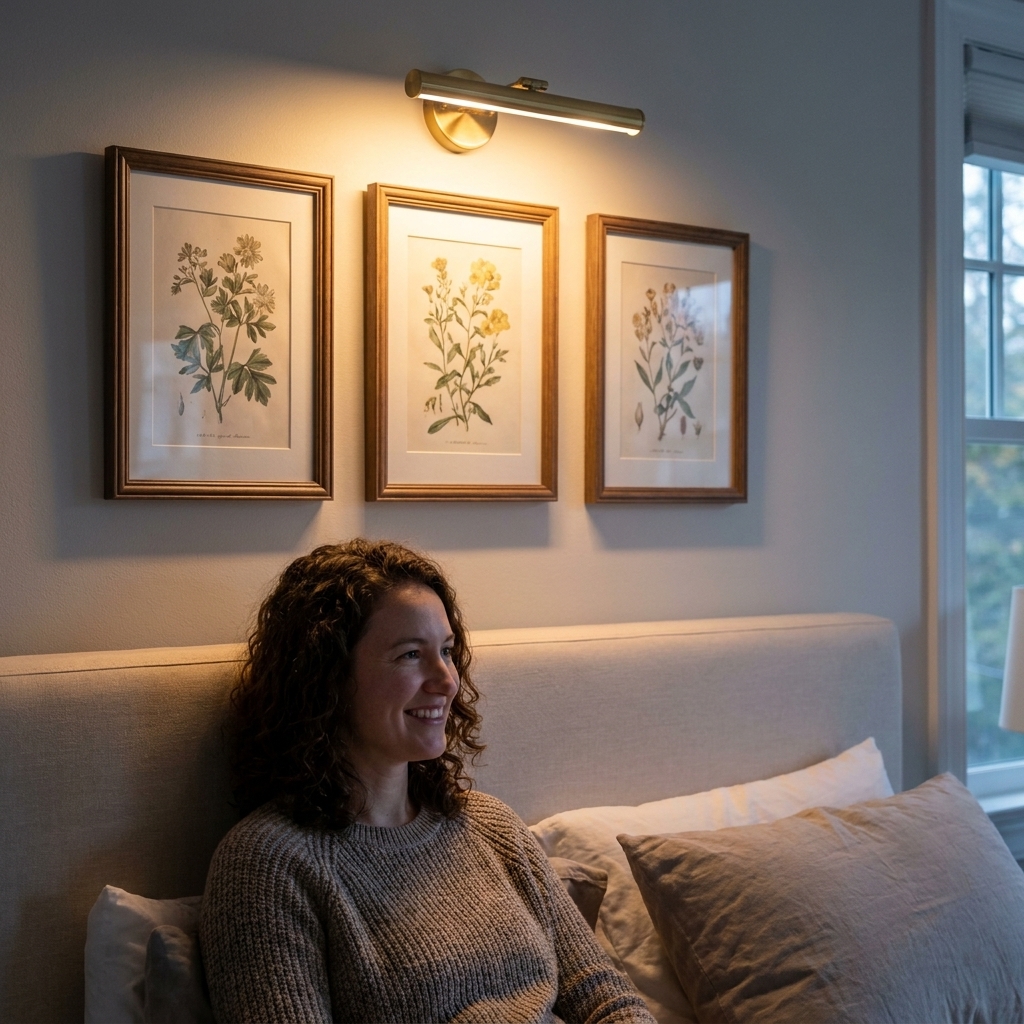
Accent lighting looks best when it hits something soft and touchable: curtains, a textured wall, layered bedding, a cozy chair, or a piece of art. If you aim it at a messy stack of stuff, it will faithfully spotlight the chaos.
Easy renter-friendly ideas
- LED strip behind the headboard for a halo glow (choose warm white, not blue-white).
- Battery picture light above art for a boutique-hotel feel.
- Flameless candles clustered on a tray for safe, steady ambiance.
If you love real candles, keep them far from bedding and curtains, set them on a stable heat-safe surface, and never fall asleep with one burning. Bedroom cozy should not come with a fire drill.
Bulbs: the fastest fix
Choose a warm color temperature
For bedrooms, I usually stick to 2700K for a classic warm glow. If you want extra cozy, try 2200K to 2400K in accent lamps. Personal preference matters here, and very warm bulbs can look dimmer at the same lumen output, so you may need a touch more brightness to get the same “I can see” feeling.
Start with lumens, then adjust
Lumens are the simplest way to avoid the “why is this so dark” or “why is this so loud” lighting problem. These are common starting ranges, then you tweak based on lampshade opacity, distance to the page, wall color, and your sensitivity to brightness:
- Ambient fixture: start around 1000 to 2000 lumens total for many bedrooms, then scale up for larger rooms or darker walls.
- Bedside reading: start around 400 to 800 lumens per side, and go lower if your shade is very open or the light sits close to your face.
- Accent lamps: start around 200 to 450 lumens for that soft, glowy look.
Pick CRI based on your routines
If you do makeup, skincare, or anything where “is this actually blended” matters, look for bulbs labeled CRI 90+. Higher CRI means colors look more like they do in daylight, which is helpful at a mirror or vanity.
Dimmers, LEDs, and flicker
If you are using a dimmer, make sure the bulb is dimmable and ideally rated for LED dimmers. Some LED and dimmer combinations flicker or buzz when paired poorly. Smart bulbs also dim well, but a few models do not love being on a wall dimmer, so check the manufacturer notes if you plan to use both.
Check bulb shape and base
Before you buy, take 10 seconds to confirm the bulb size and base your fixture uses. Most table lamps take E26 (often A19 bulbs), while smaller sconces and chandeliers may use E12 candelabra bases.
Placement that looks intentional
Balance left and right
Symmetry reads as restful. If your nightstands do not match, you can still balance the room by keeping lamp heights similar or repeating the same shade color.
Layer at different heights
A ceiling light plus two bedside lamps is a great start, but the real cozy magic happens when you add a low or mid-height glow elsewhere, like a small lamp on a dresser. Different heights create that soft, wrapped-in-light feeling.
Control glare
If you can see the bulb from bed, you will feel it. Keep light sources out of your direct sightline with shades, frosted globes, diffusers, or a simple reposition. Even moving a lamp a few inches can change where the glare hits.
Different sleep schedules
If one person goes to bed earlier, give each side its own switch or smart control. A low, warm path light (like a plug-in night light in the hallway or near the closet) is also a relationship-saving move when someone is up first.
Lighting recipes to copy
Small bedroom
- Ambient: flush mount ceiling light on a dimmer or warm smart bulbs
- Task: two plug-in wall sconces (or one sconce and one clip-on reading light)
- Accent: tiny lamp on a dresser or shelf
Couple setup
- Ambient: semi-flush fixture, dimmed at night
- Task: two adjustable reading lights aimed at pillows
- Accent: one warm lamp across the room plus flameless candles on a tray
Studio bedroom nook
- Ambient: a floor lamp with multiple heads instead of overhead if wiring is awkward
- Task: one focused reading light
- Accent: LED strip behind the bed to separate “sleep zone” from “life zone”
Common mistakes and fixes
- Mistake: One bright ceiling light and nothing else. Fix: Add a bedside lamp and one accent lamp, both warm.
- Mistake: Cool white bulbs that feel like an office. Fix: Swap to 2700K bulbs, or warmer for accents.
- Mistake: Glare from exposed bulbs. Fix: Add shades, use frosted bulbs, lower lumens, or reposition the fixture so the bulb is not in your sightline.
- Mistake: Reading light that lights up the whole bed. Fix: Use directional sconces or a swing-arm lamp aimed down.
- Mistake: Too many tiny string lights everywhere. Fix: Use them in one intentional spot or swap for a small lamp with a shade.
FAQ
Do I need overhead lighting?
Not strictly, but it is helpful for cleaning and getting dressed. If you hate overhead light, make sure you have enough ambient light from floor lamps and multiple table lamps so the room still feels evenly lit.
What light color is best?
Warm white. Most people love 2700K. For the coziest corners, try 2200K to 2400K in an accent lamp, and remember it may feel dimmer than a less-warm bulb at the same brightness rating.
How many lamps should I have?
A good baseline is two bedside task lights plus one accent light somewhere else in the room. Then adjust based on your routines, room size, and how dark your finishes are.
The finishing touch
Once your lighting layers are in place, the bedroom almost styles itself. Warm bulbs, a dimmable ambient source, and one little accent glow in the corner will make your bedding look softer, your walls look richer, and your whole room feel like it is giving you a quiet exhale at the end of the day. That is the goal.