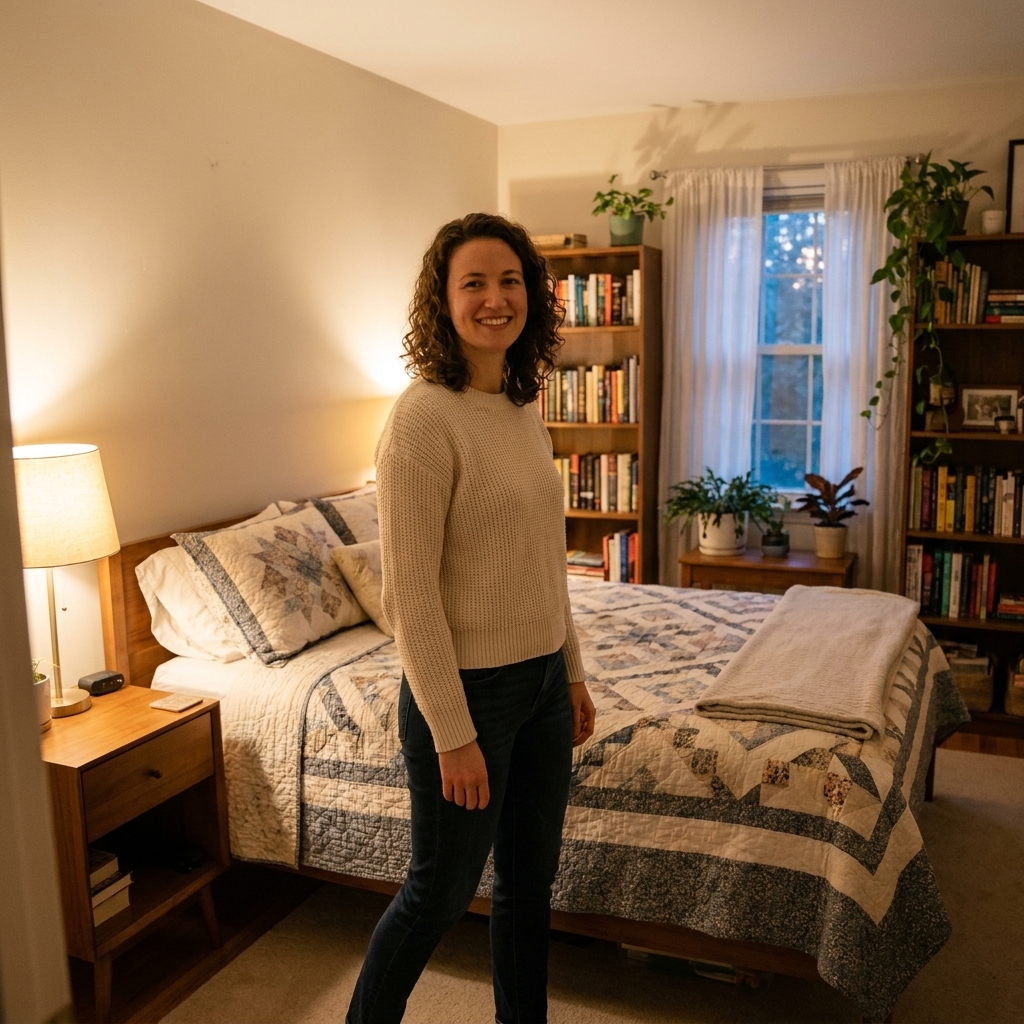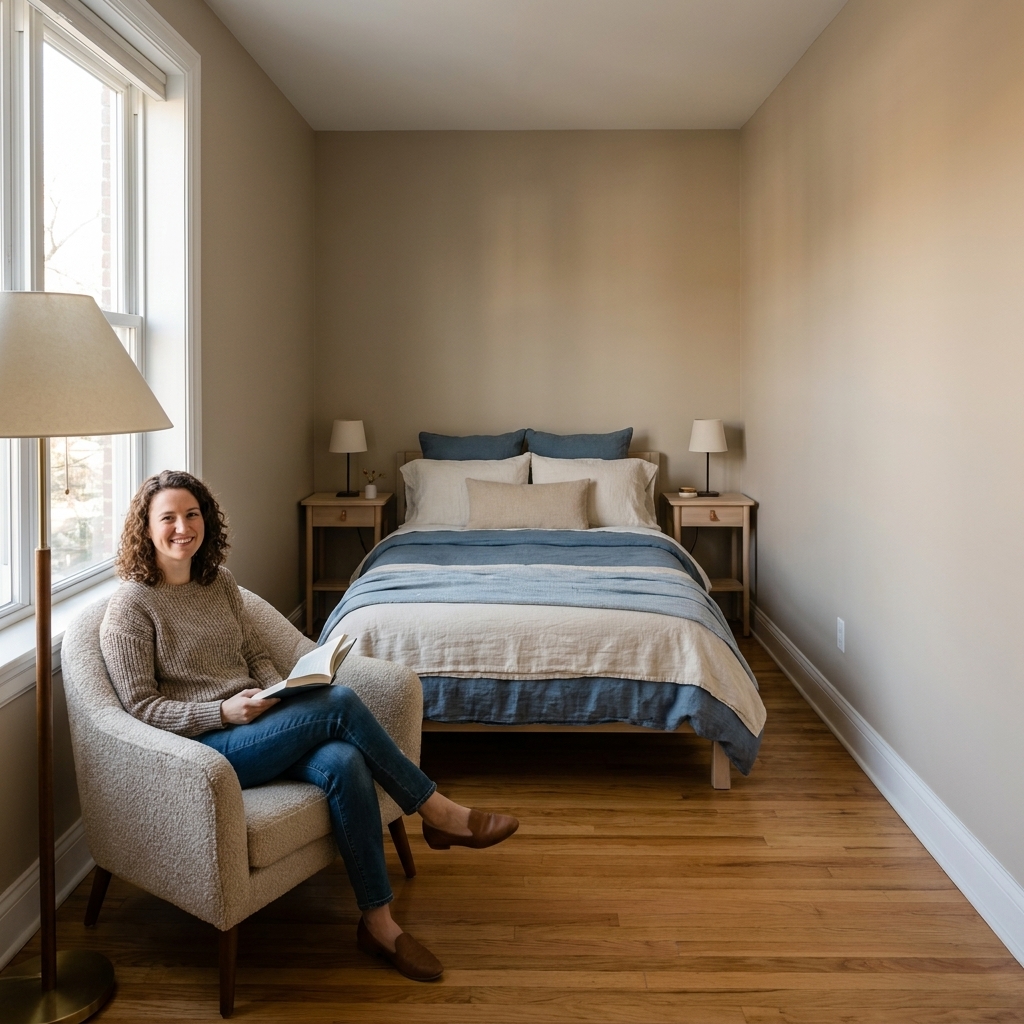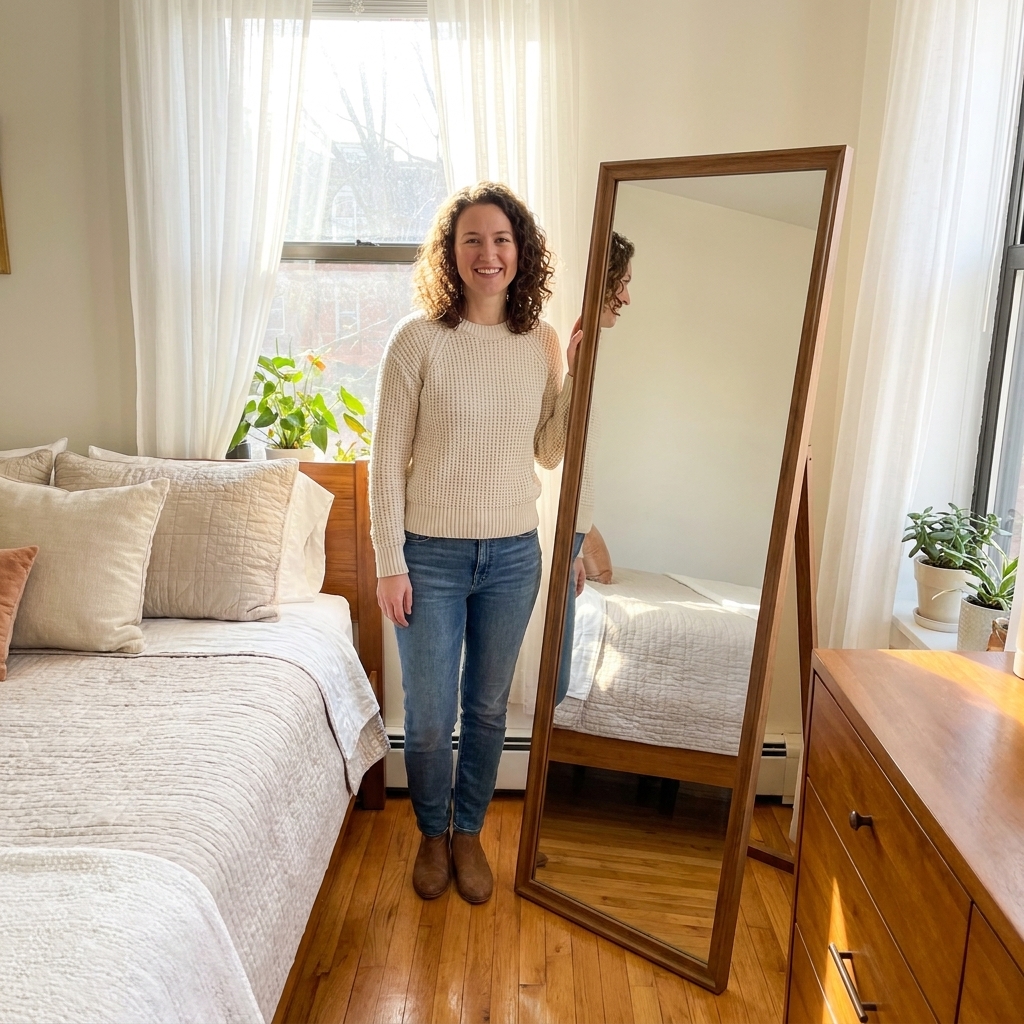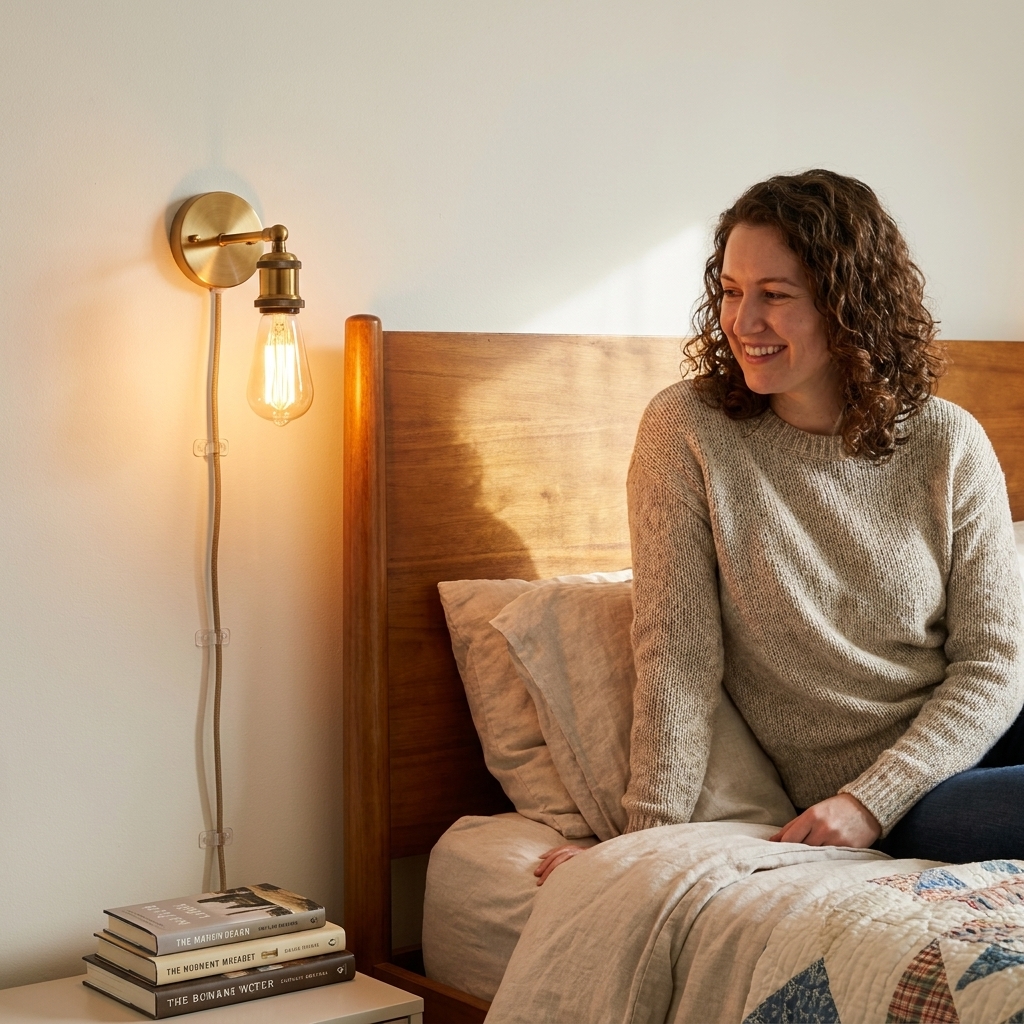
If your bedroom came without a built-in closet, you are not alone. Older homes, studio layouts, and plenty of rentals simply lack closet space. The good news is that a closet is really just storage + a getting-ready zone + visual calm. You can recreate all three with smart placement, a few flexible pieces, and a layout that lets your bed stay the star.
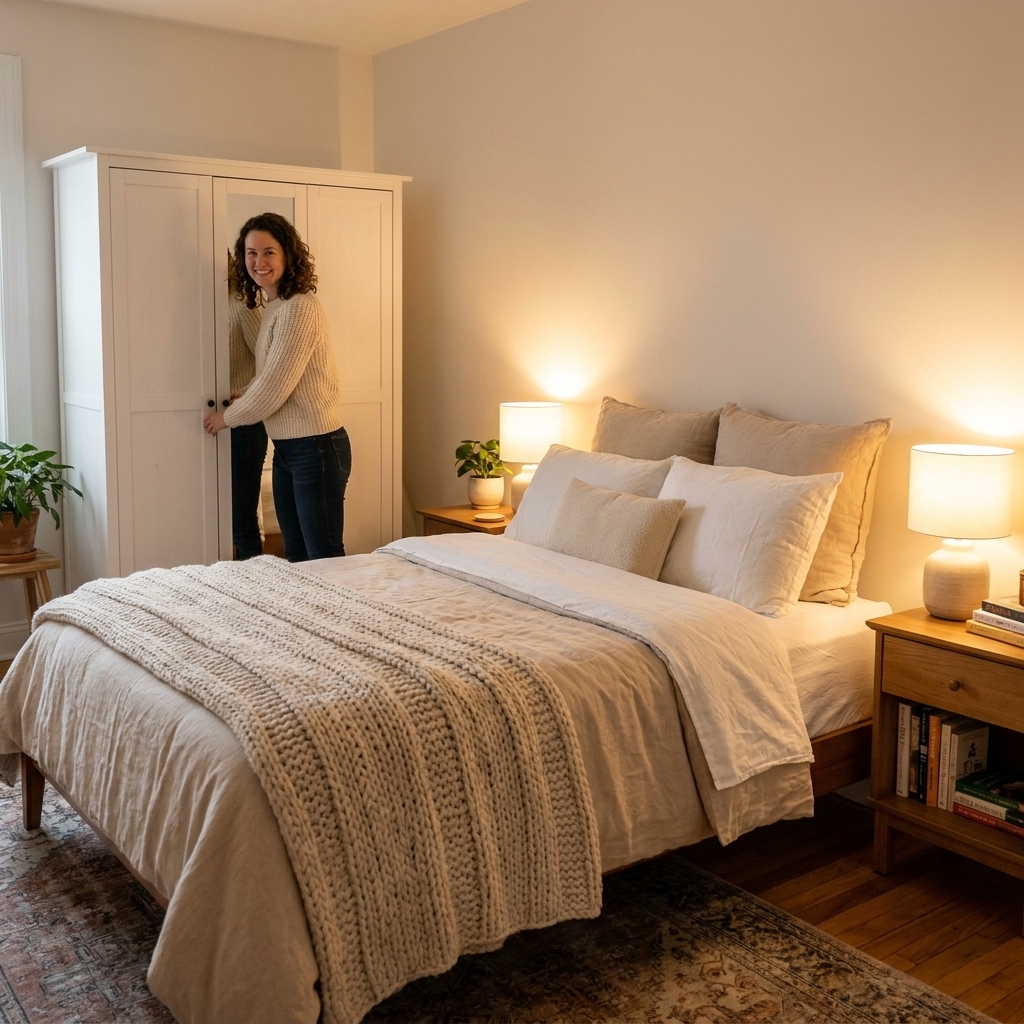
Below are my favorite layout strategies that work in tiny rooms, awkward corners, and rental situations where you cannot build anything in permanently.
Start with one floor plan rule
Before you buy a wardrobe or a rack, do this quick check. It saves so much frustration.
Clearance guidelines to aim for
These are useful starting points based on common residential space-planning advice. Your room, your body, and your furniture may need more, especially for mobility needs.
- 36 inches (ideal), 30 inches (workable): for a main walkway, especially bed-to-door.
- 24 inches: a minimum for a secondary path, like between the bed and storage.
- 18 inches (tight), 24 inches (comfortable): in front of drawers so they open without hitting the bed and you can actually stand there.
If you can hit one clear main path and keep the rest from turning into an obstacle course, your room will feel intentional, not like furniture got shoved in.
A quick measuring example
Say you have a 10-foot wall (120 inches) and a queen bed (about 60 inches wide). If you flank the bed with two wardrobes that are 20 inches wide each, that is 60 + 20 + 20 = 100 inches, leaving about 20 inches total. That tells you two things fast: either you need slimmer pieces, more space on one side than the other, or a different wall for the wardrobes. Do this math once and you avoid the “it looked smaller online” situation.
Pick your closet replacement
Different storage pieces behave differently in a layout. Pick the one that fits your room and your life first, then style it.
Freestanding wardrobe
A closed wardrobe reads like a wall. It is ideal if you want your bedroom to feel restful and minimal, even if your closet habits are more “creative.”
- Best for: shared bedrooms, small rooms that get visually busy fast, anyone who hates seeing clothing.
- Layout note: wardrobes are typically 20 to 24 inches deep, but some armoires run deeper. Measure before you commit.
Clothing rack
Racks are light, airy, and flexible. They also put your wardrobe on display, which can look chic or chaotic depending on editing.
- Best for: small wardrobes, capsule closets, people who rotate outfits often.
- Layout note: you need breathing room around a rack so it looks styled, not temporary.
Dresser-first system
If your room cannot spare depth for a wardrobe, go horizontal. A great dresser plus smart vertical add-ons can carry most people.
- Best for: narrow bedrooms, low ceilings, rooms with lots of doors and windows.
- Layout note: dressers double as nightstands or vanity bases when placed thoughtfully.
How much should you hang vs fold?
Quick rule of thumb: pull out everything you truly need to hang (wrinkle-prone pieces, long items, jackets). Count hangers, then give yourself a little buffer.
- Plan on roughly 1 inch of rod per hanger for shirts and most tops.
- Plan 2 inches per hanger for bulkier items like coats.
- If your “must-hang” number is high, a wardrobe or a double-rod rack will feel better than forcing everything into drawers.
Wardrobe placement that feels built-in
My favorite trick is to place a freestanding wardrobe like it is architecture. You are not adding a random box, you are creating a closet wall.
Option 1: Anchor the bed wall
If your bed is centered on a wall, consider placing wardrobes on either side like chunky, functional nightstands. This works beautifully when the room is shallow.
- Use two narrower wardrobes instead of one wide one if possible.
- Leave a small gap so your bed does not feel squeezed. Even 2 to 4 inches helps.
- Match heights for a calm, built-in look.
Option 2: Put it on the last-look wall
In many bedrooms, you walk in and your eyes land on the bed. Keep that moment. Place the wardrobe on the wall that is not your first view when you enter, often the wall beside the door.
- This keeps the room feeling like a sanctuary, not a dressing room.
- It also hides open-wardrobe moments if you sometimes forget to close the doors.
Option 3: Claim an awkward corner
Corners are underused storage gold. A wardrobe tucked into a corner feels purposeful and can actually make the rest of the room feel bigger because you are using dead space.
- Round off the look with a floor lamp or plant beside it so it feels styled.
- Choose a depth that does not block window curtains or door swings.
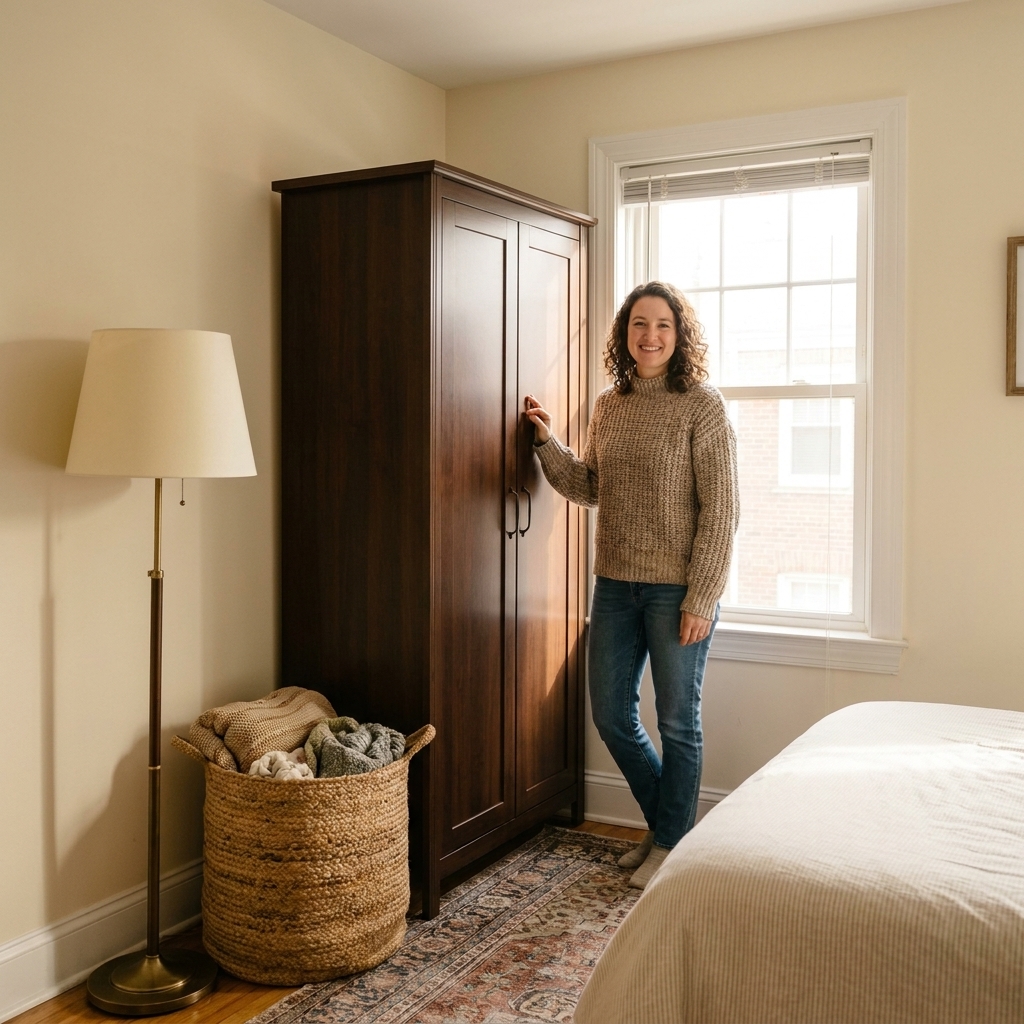
Two styling moves for a built-in look
- Go taller if you can. Less wasted vertical space, more custom feel.
- Add one visual bridge. A basket on top, a framed photo leaned on a nearby dresser, or matching wood tones helps the wardrobe feel like it belongs.
Safety first: anchor tall pieces
Any tall wardrobe or dresser can tip, especially on carpet or with deep drawers pulled out. Use the included anti-tip hardware when possible. If you rent, ask about small pilot holes you can patch later, or use a renter-friendly anti-tip kit designed for minimal wall damage. In earthquake-prone areas or homes with kids and pets, anchoring is non-negotiable.
Make a clothing rack look neat
A clothing rack can be gorgeous, but only if you treat it like a curated display.
Best rack placements
- Along a long blank wall, ideally opposite the bed or beside it, so it reads like a boutique moment.
- In a nook, like a recessed corner or the space beside a dresser, so it has a home.
- Near the door (not behind it) if you are short on walls. It tends to look more intentional and avoids door collisions.
My rack formula: hang 60%, fold 40%
If everything is hung, the rack gets crowded and visually loud. I like to hang your most-used pieces and keep the rest in drawers or bins.
Three edits that elevate a rack
- Use matching hangers. Cheapest way to make it look intentional.
- Limit your color palette. Group neutrals together, then add one color family if you want interest.
- Give shoes a boundary. A shallow tray or low bin under the rack keeps the floor from looking like a closet spill.
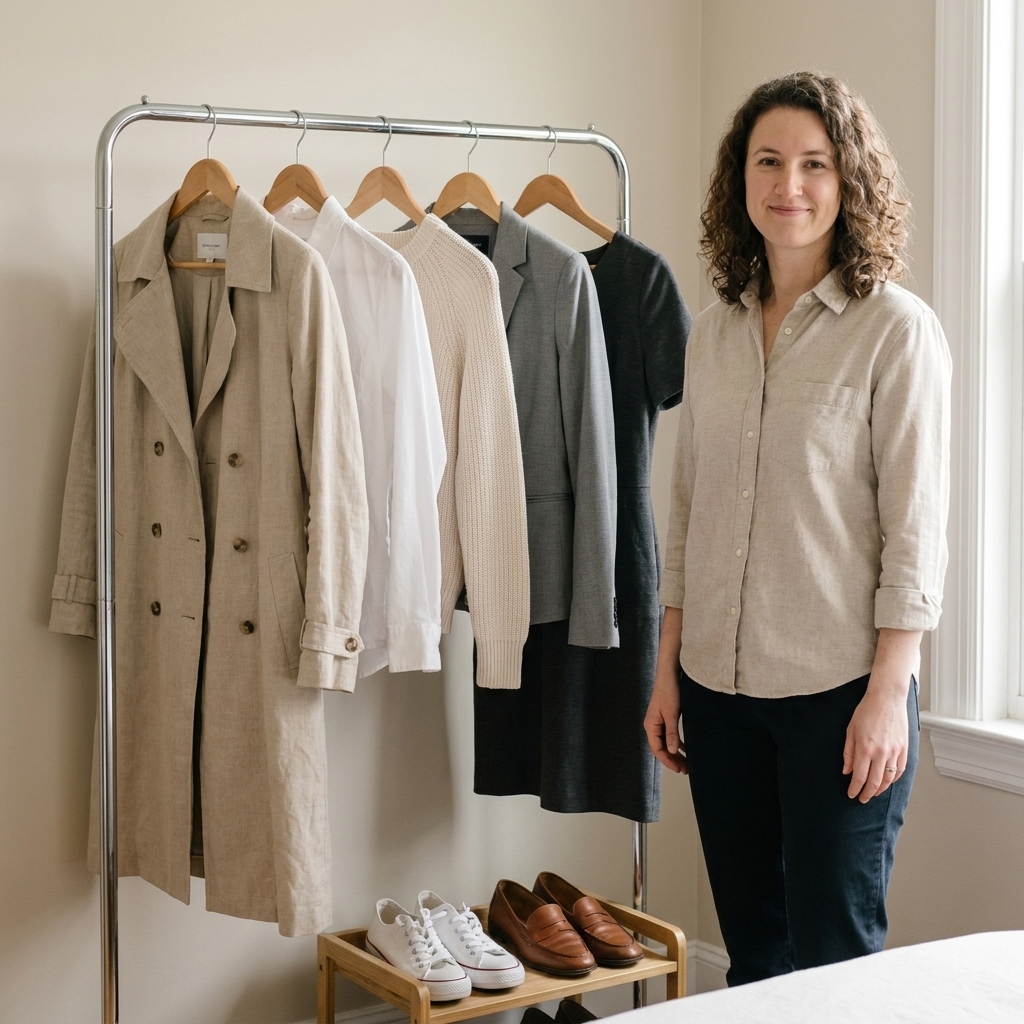
Ventilation and clothing care
Racks need air flow. Avoid cramming items so tightly that fabric cannot breathe, and keep a little space between the rack and the wall if possible. If you are storing shoes or sweaters under the rack, a breathable basket beats a sealed bin for everyday use.
Privacy hack for shared spaces
If you love the flexibility of a rack but do not want your clothes on display, add a curtain on a tension rod in front of it. It is renter-friendly and instantly softens the room.
Under-bed storage that stays calm
Under-bed storage is the unsung hero of no-closet bedrooms. The key is making it easy to access and making it look like it belongs.
Pick the right bed base
- Bed with drawers: best for daily items like workout gear, pajamas, basics.
- Bed on legs: best if you want to slide bins in and out, especially in small rooms.
- Lift-up storage bed: best for bulky seasonal items, but you need clearance to lift and a habit of not piling stuff on top.
Make it feel invisible
- Choose bins that are all the same height and color.
- Use a bed skirt if your style leans traditional or cozy-cottage.
- Label the inside of lids, not the outside, so the room stays serene.
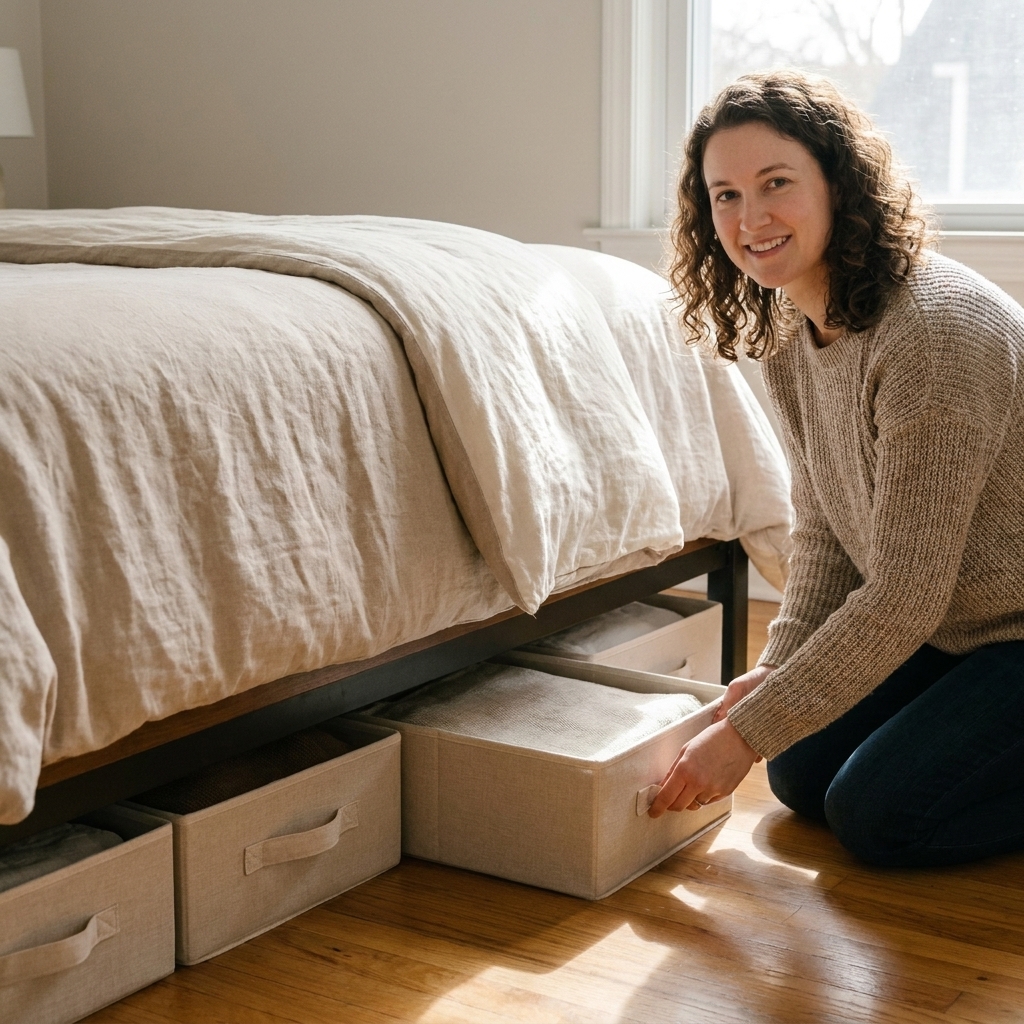
What belongs under the bed
Think soft and seasonal: extra linens, sweaters, off-season shoes, sentimental items you do not need weekly. If you live in a humid climate, add a moisture absorber and avoid sealing anything that is not fully dry. Skip items you need daily if the bins require kneeling and pulling everything out. That is how clutter is born.
Create a simple dressing zone
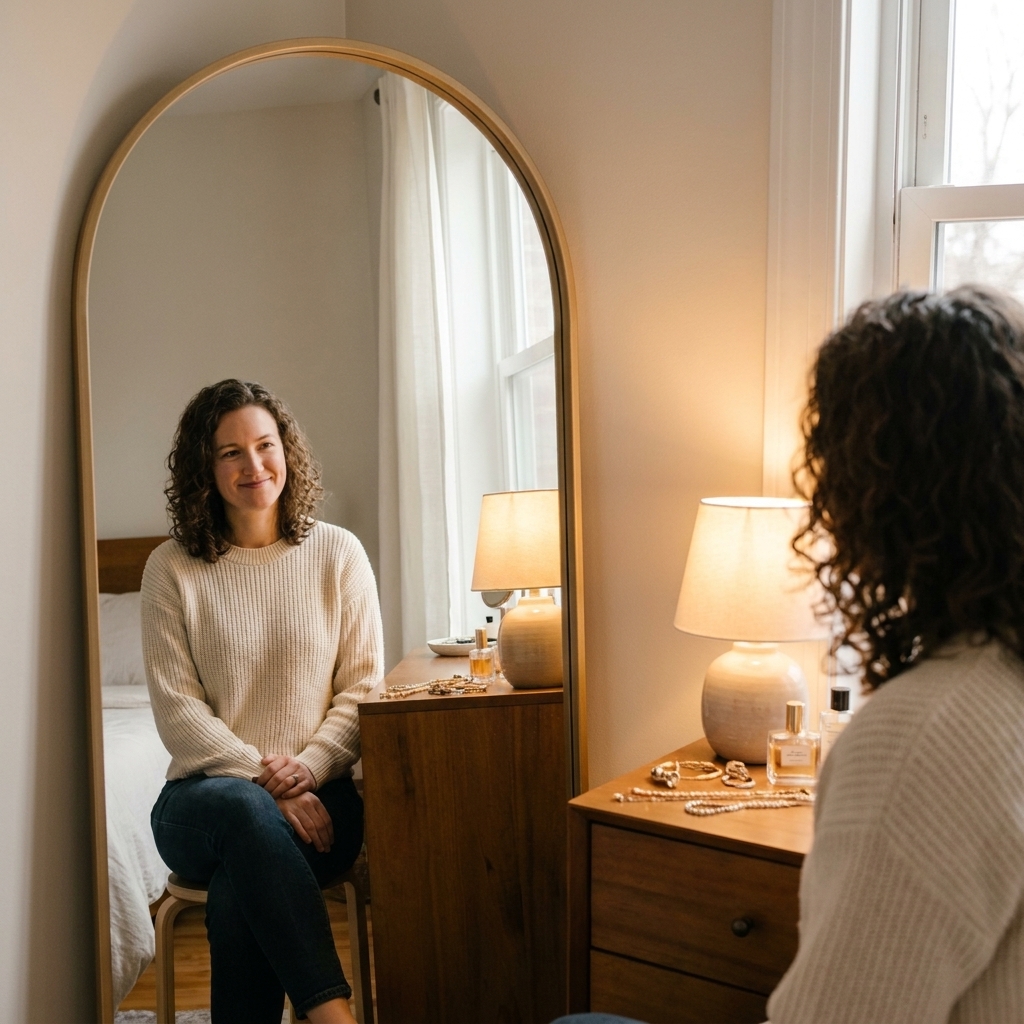
When there is no closet, your bedroom needs a clear getting-ready path. I like to create a mini dressing zone that has three things: a mirror, a landing spot, and light.
Easy dressing zone layouts
- Wardrobe + mirror: place a full-length mirror beside your wardrobe, not across the room. It keeps the clothes decision contained.
- Dresser + mirror: mount a mirror above the dresser or lean it securely if you cannot drill. Add a small tray for jewelry and daily essentials.
- Rack + hamper: put a hamper directly beside the rack so worn items do not migrate to the chair.
Leaning mirror safety
If you are leaning a full-length mirror, make sure it cannot slide. A simple anti-tip strap, non-slip pads under the frame, or placing it so the bottom edge is lightly blocked by the dresser can make it feel solid, not precarious.
Lighting matters
If your overhead light is harsh, add a plug-in sconce, a small table lamp on the dresser, or a warm floor lamp near the mirror. Soft light makes the whole no-closet setup feel like a boutique rather than a storage problem.
Bonus: make laundry flow easy
A no-closet room falls apart when laundry has nowhere to land. Put your hamper where clothes actually come off (near the rack, wardrobe, or dressing zone), and consider a small clear surface for folding, like the top of a dresser or a storage bench.
Choose double-duty furniture
In a closet-free room, every piece should earn its footprint.
- Nightstands with drawers: socks, sleep masks, charging cables, and the little stuff that otherwise floats around.
- Storage bench at the foot of the bed: great for extra blankets or tomorrow’s outfit.
- Trunk as a coffee table substitute: works especially well in studio setups where the bedroom overlaps with living space.
- Wall hooks plus a slim shelf: a landing strip for bags and jackets without needing a bulky coat rack.
My thrifting tip: vintage dressers can be a great deal and sometimes offer solid wood construction and deep drawers. Prices vary wildly by city and era, so treat it like a treasure hunt and measure carefully, especially depth, before you fall in love.
Small-room moves that help
Float the bed a little
If you need wall space for a wardrobe, consider pulling the bed a few inches off the wall to create a slim zone behind it for a low shelf or narrow storage. Even 6 inches can work if you keep it tidy.
Use vertical space
Closets store upward. Your room can too.
- Add a high shelf above a dresser for baskets.
- Use over-the-door hooks for robes or tomorrow’s outfit.
- Choose wardrobes with top cabinets or add matching bins on top.
Keep the main walkway clear
If you only follow one rule, follow this: do not place storage in the main path from the bed to the door. A clear walkway makes a small bedroom feel instantly calmer.
No-closet layout recipes
Recipe 1: Calm hotel
- One tall closed wardrobe on the wall beside the door
- Dresser under a mirror
- Under-bed bins for off-season storage
Recipe 2: Tiny room capsule
- Clothing rack on the longest blank wall
- One 3 to 4 drawer dresser for folded items
- Hooks near the door for bags and jackets
Recipe 3: Shared-bedroom setup
- Two narrow wardrobes, one per person, placed symmetrically
- One shared hamper station between them
- Storage bench for linens at the foot of the bed
FAQ
Is it better to buy a wardrobe or a dresser?
If you want the room to look calmer fast, go wardrobe. If your room is narrow or you have low ceilings, a dresser plus vertical shelves is often easier to fit.
How do I stop my bedroom from looking like a laundry room?
Hide the visual noise. Use closed storage where you can, match your hangers and bins, and keep one surface clear, usually the top of the dresser or nightstand. One clear surface makes everything feel more styled.
What is the best renter-friendly closet option?
A freestanding wardrobe, a clothing rack with a curtain on a tension rod, and under-bed bins. All three move with you and do not require drilling for the core setup. For tall pieces, plan for anti-tip anchoring whenever your lease allows.
Final checklist
- Measure your room and mark door swings and window clearance.
- Count what must be hung versus folded.
- Choose one main storage piece, then add supporting pieces.
- Plan a dressing zone with a mirror, a landing spot, and warm light.
- Set up laundry flow: hamper placement and one small folding surface.
- Edit your clothing display so the bedroom stays a sanctuary.
No closet can feel like a design setback, but it is also a chance to create storage that actually matches how you live. With the right layout, your bedroom can feel even more customized than a builder-grade closet ever did.