If your bedroom feels a little dim or a little tight, a mirror is the fastest, most renter-friendly “renovation” I know. The trick is not just adding a mirror, it is placing it so it reflects something worth doubling: a window, a lamp glow, or a clean line of sight that makes your room feel deeper.
Below are my favorite mirror placements for maximizing light and making a bedroom feel bigger, plus the small details that keep reflections looking calm instead of chaotic.
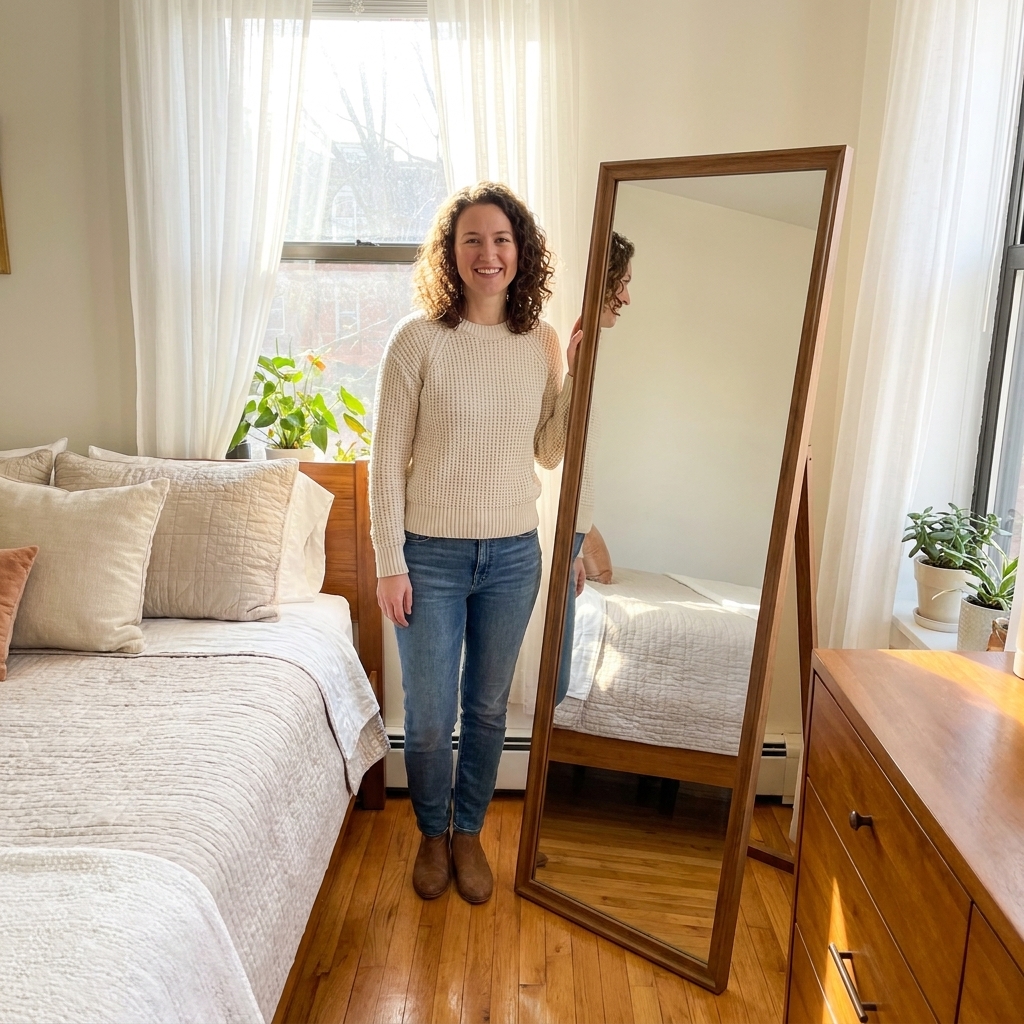
Before you move anything: two rules
Rule 1: Reflect light, not clutter
A mirror will happily double whatever you point it at, including laundry piles and tangled cords. Take 60 seconds to stand where the mirror will go and look at what it will reflect. If the reflection is messy, the mirror will make the room feel busier, not bigger.
Rule 2: Think “bounce” and “borrow”
Mirrors do two jobs:
- Bounce light: reflect daylight or lamplight into darker areas.
- Borrow depth: reflect a longer sightline so the room feels like it extends farther.
When you place a mirror, ask: Am I bouncing light into a corner, or borrowing a view that makes the room feel deeper? Ideally you get both.
One reality check I always keep in mind: mirrors can only reflect the light you already have. If a room gets very little daylight, mirror placement helps, but layering in lighting (a floor lamp, bedside lamps, or plug-in sconces) is what really changes the mood.
Best spots for natural light
1) Opposite the window
If you do one thing, do this. A mirror placed on the wall directly across from a window can feel like a second window by throwing daylight back into the room.
- Best for: north-facing rooms, bedrooms shaded by trees or buildings, small bedrooms that feel flat.
- Tip: If the window view is pretty, you get a bonus “borrowed” view that makes the room feel larger.
- Watch for: harsh glare at certain times of day. If you get a blinding beam, shift the mirror a foot left or right, angle it slightly, or soften the light with sheer curtains.
Mini example: If your window is on the left wall, try the mirror centered on the right wall so it catches that daylight and pushes it back across the room.
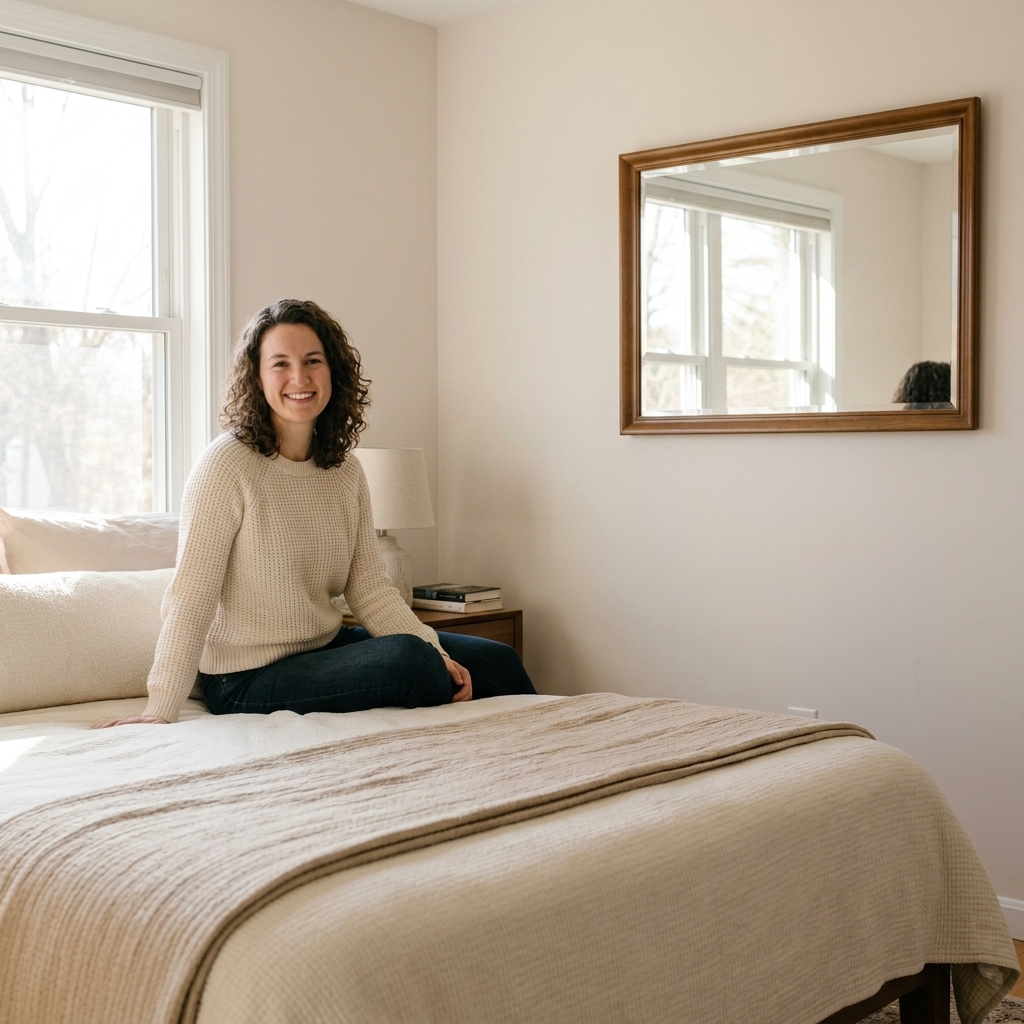
2) Next to the window
Not everyone has an open wall across from a window. The runner-up placement is on the wall adjacent to the window, where it can still catch and spread daylight without needing perfect symmetry.
- Best for: rooms where the opposite wall is taken up by a closet, door, or headboard.
- My favorite move: hang a mirror so its center lines up roughly with the center of the window. It reads intentional and brightens the mid-level light in the room.
- Glare fix: if the mirror throws light straight into your eyes, rotate it slightly or move it a few inches higher or lower until the bounce feels gentler.
3) On the far wall to extend the room
To make a bedroom feel longer, place a mirror on the far wall you see when you enter the room. You are borrowing depth and creating the illusion that the room continues.
- Best for: narrow bedrooms, long galley-style layouts, rooms where the bed eats most of the footprint.
- Tip: Keep the surface around the mirror simple. A clean end wall plus a mirror feels expansive.
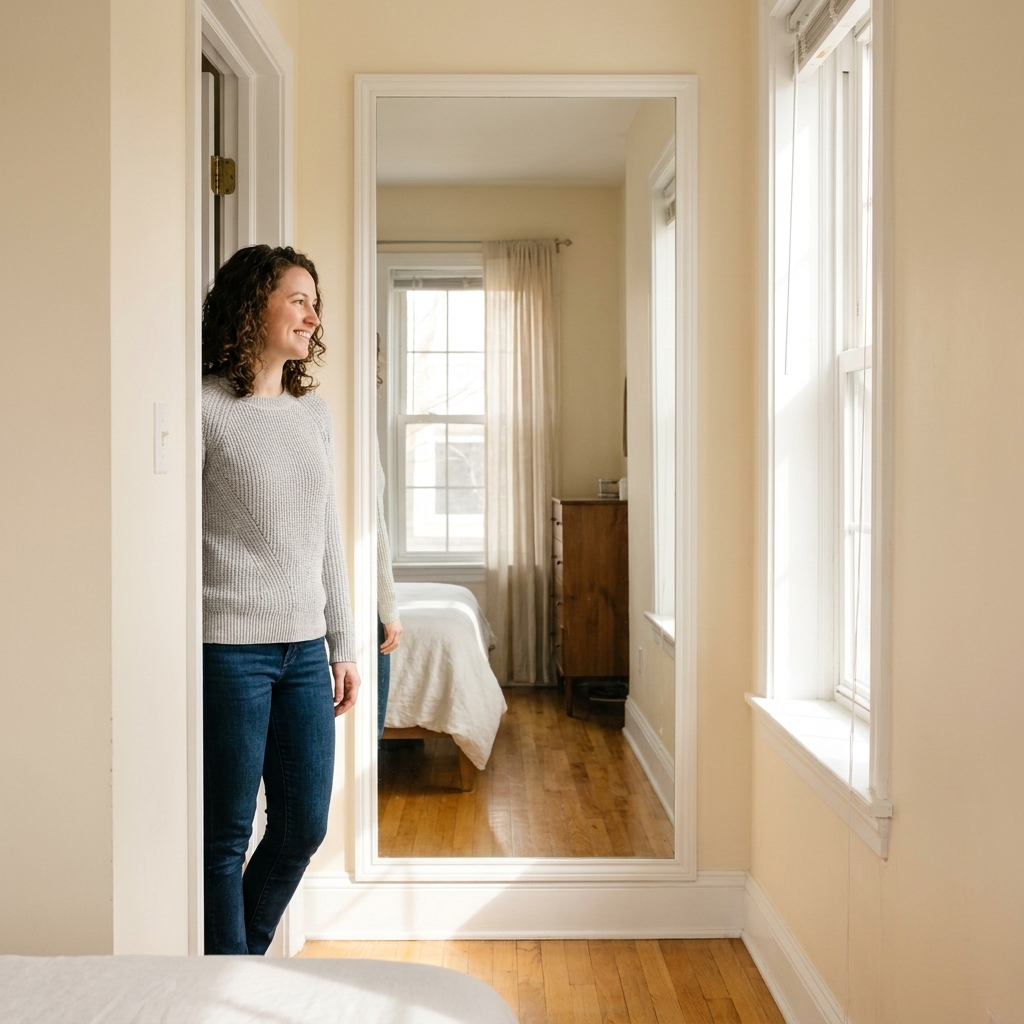
Where mirrors work hardest
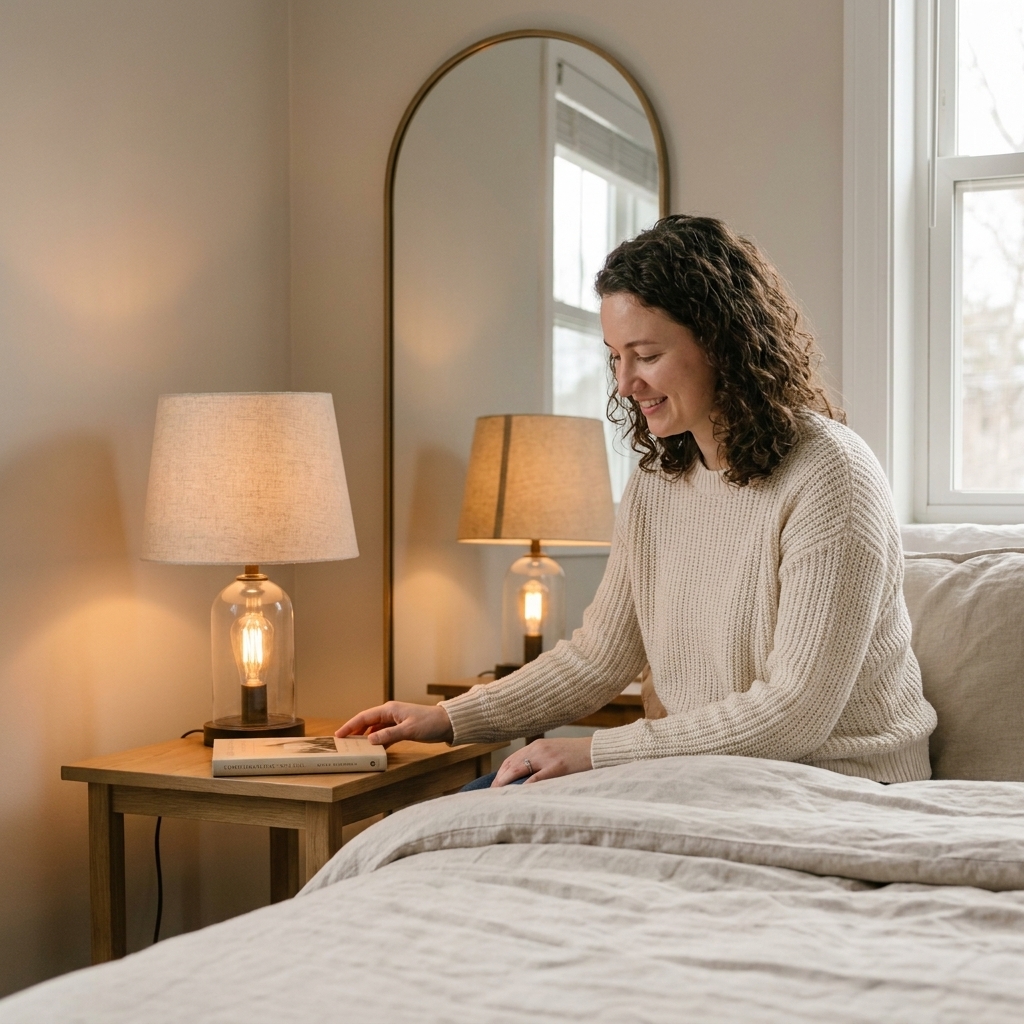
Behind a nightstand lamp
This is my secret weapon for cozy lighting. A mirror behind a bedside lamp reflects the warm pool of light and makes the whole side of the room feel softer and brighter.
- Best for: bedrooms with only overhead lighting, renters who want “hotel” ambiance.
- Style tip: A vintage framed mirror behind a thrifted lamp looks layered and collected.
Leaning floor mirror in a dark corner
A tall leaning mirror can rescue a gloomy corner, but the angle matters. Tilt it slightly so it catches light from a window or a lamp instead of reflecting the ceiling.
- Best for: bedrooms with one window, corners that feel dead, spaces where you cannot put holes in the wall.
- Safety note: Use anti-tip hardware if you have kids or pets, even for leaning mirrors, and follow the manufacturer’s mounting guidance for any heavy piece.
Inside or on closet doors
If your bedroom is short on wall space, a mirror on the back of the door or on closet doors keeps the floor clear and still bounces light around.
- Best for: tiny bedrooms, shared rooms, awkward layouts.
- Tip: If the closet faces a window, you will get a surprising amount of reflected daylight.
What to avoid
Mirrors facing the bed (only if it bothers you)
Some people sleep fine with a mirror facing the bed. Others find it distracting, especially if it reflects movement from a hallway or streetlight at night. If you are sensitive to light or easily overstimulated, aim the mirror to reflect a calmer scene, like curtains, a plant, or a blank wall.
Mirrors reflecting the doorway
If the first thing a mirror reflects is the open door, it can make a bedroom feel less private. Try shifting the mirror so it reflects the window side of the room instead.
Too many mirrors in one sightline
Two mirrors can look luxe. Three can start to feel like a funhouse. If you want more shine, mix in reflective accents instead, like a glass lamp, satin pillow, or a metallic tray.
Direct sun hot spots
In very bright rooms, a mirror can concentrate sunlight into an intense patch. If you notice a beam landing on bedding, curtains, or a chair, move the mirror or change the angle. This is rare, but it is worth checking during the sunniest hour of your day.
Height and sizing
Hang at eye level
For a wall mirror you actually use, a common guideline is to place the center around eye level for the primary user. Many people land in the 57 to 60 inch range from the floor to the mirror’s center, but treat that as a starting point and adjust for taller or shorter users, and for what you want the mirror to reflect.
Go taller over wider
A tall mirror pulls the eye upward and makes ceilings feel higher. In a small bedroom, I will choose a full-length mirror or a tall arched mirror over a short, wide one most days.
Match the mirror to nearby furniture
- Over a dresser: mirror should be about two-thirds to three-quarters the width of the dresser.
- Over a nightstand: smaller mirror is fine, especially if you want the lamp-glow trick.
- Leaning mirror: taller than the dresser height nearby so it does not look stumpy.
Favorite layouts
Layout A: One-window small bedroom
- Full-length mirror opposite the window if possible.
- If not, place it adjacent to the window and angle slightly toward the light.
- Add a small mirror behind a nightstand lamp for evening glow.
Layout B: Dresser, limited wall space
- Hang a mirror above the dresser and position the dresser so the mirror catches daylight from the window.
- Add an over-the-door mirror for function, not reflection drama.
Layout C: Long, narrow bedroom
- Place a mirror on the far wall to extend the room.
- Keep what it reflects simple: curtains, a plant, a tidy corner.
Renter-friendly hanging tips
- Use the right anchors: heavy mirrors need studs or proper wall anchors, installed according to the manufacturer’s instructions. If you are unsure, go lighter or lean it with anti-tip straps.
- Use hanging strips carefully: picture-hanging strips can work for lightweight mirrors, but check the weight rating and know they can fail on textured, dusty, or humid surfaces.
- Protect the wall when leaning: add felt pads to the frame corners so you do not scuff paint.
- Test the reflection first: hold the mirror in place, step back, then take a quick photo. Photos show you what your brain edits out in real time.
Quick checklist
- Can it reflect a window or a lamp?
- Does it reflect something calming, not clutter?
- Does it open up a sightline from the doorway?
- Is it secure for pets, kids, and nighttime trips?
- Does the frame style match your bedroom mood, cozy, airy, vintage, modern?
FAQ
Do mirrors really make a room look bigger?
Yes, when they reflect depth or light. A mirror that reflects a flat wall does less than a mirror that reflects a window, a hallway-like sightline, or a bright corner.
Is it better to lean or hang a mirror?
Hang for a cleaner look and maximum safety. Lean for flexibility, rentals, and small rooms where moving a mirror around helps you find the best light bounce.
Where should a mirror go if my bedroom gets very little sunlight?
Use mirrors to amplify artificial light: place one behind a nightstand lamp, above a dresser near a light source, or across from the brightest lamp in the room. Warm bulbs plus a mirror can make a surprisingly cozy difference, especially when you layer lighting instead of relying on a single overhead fixture.