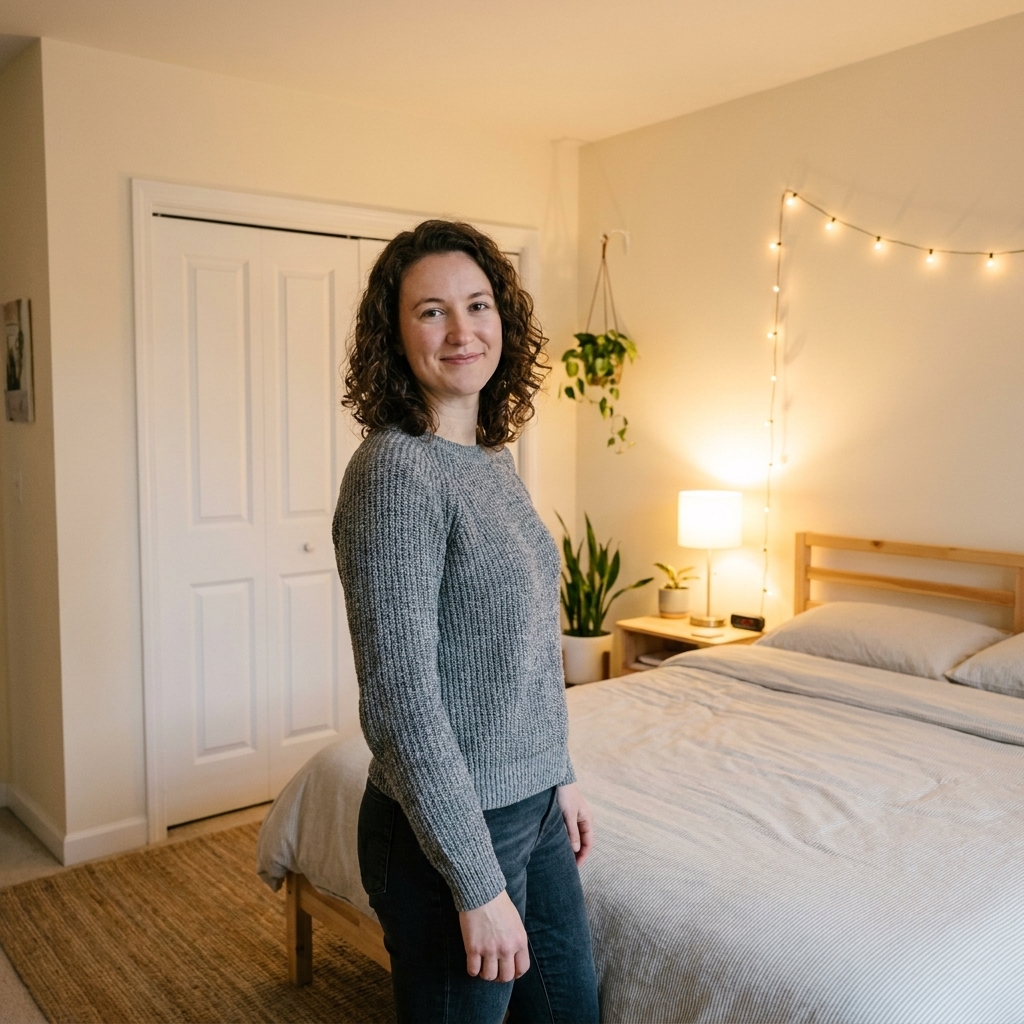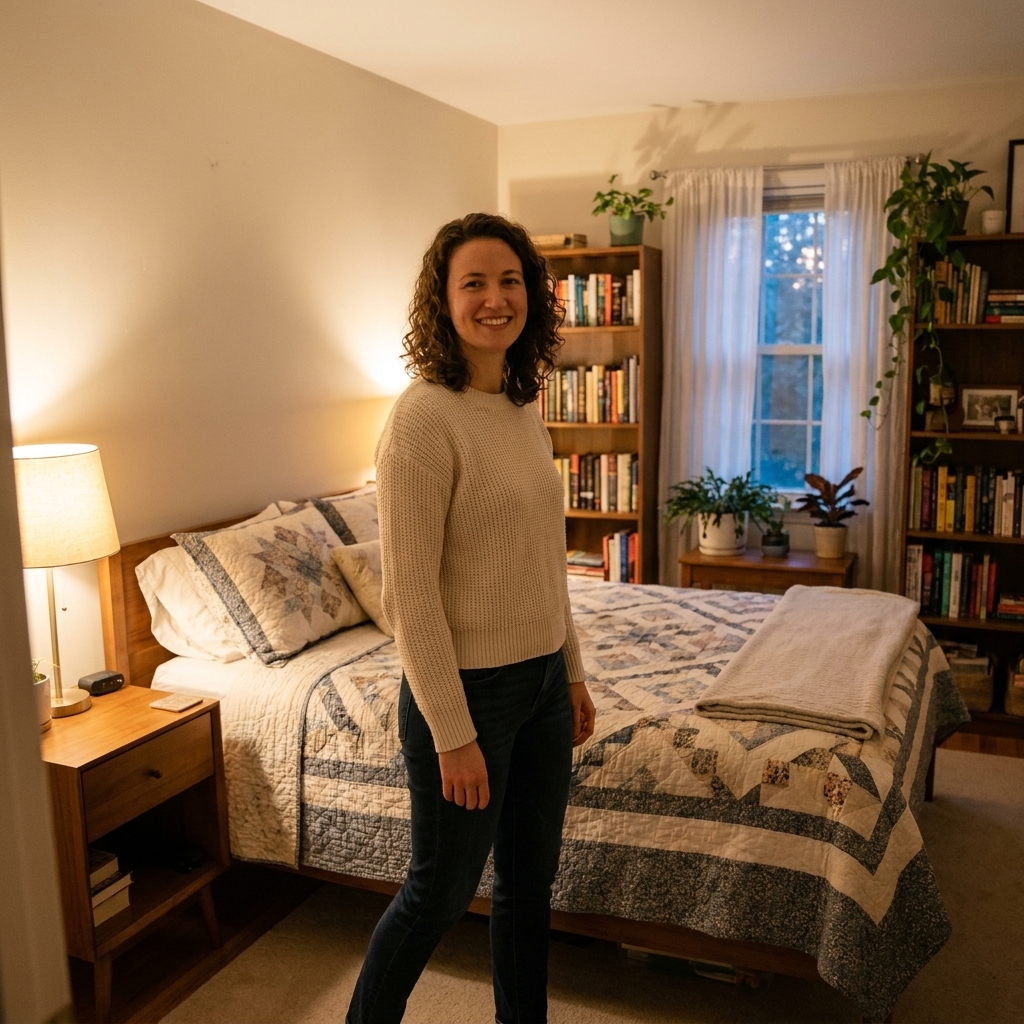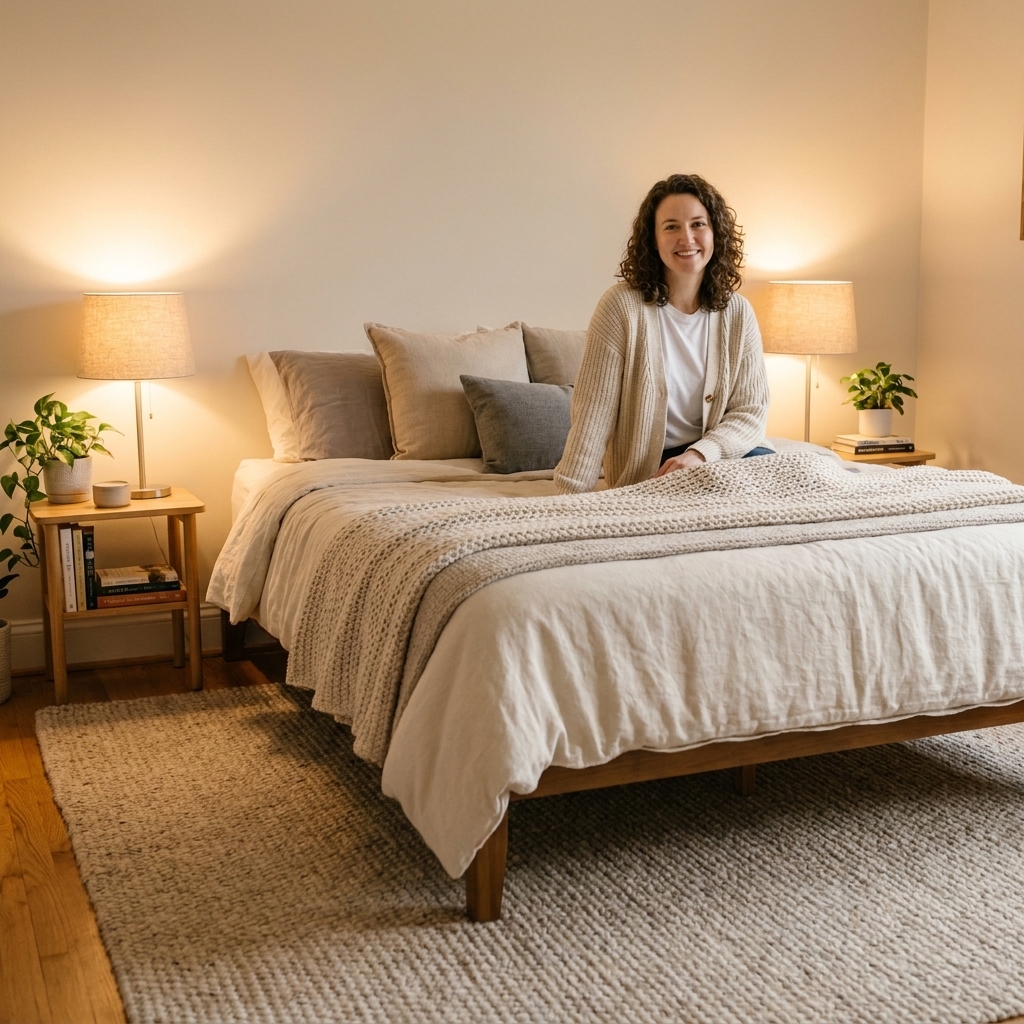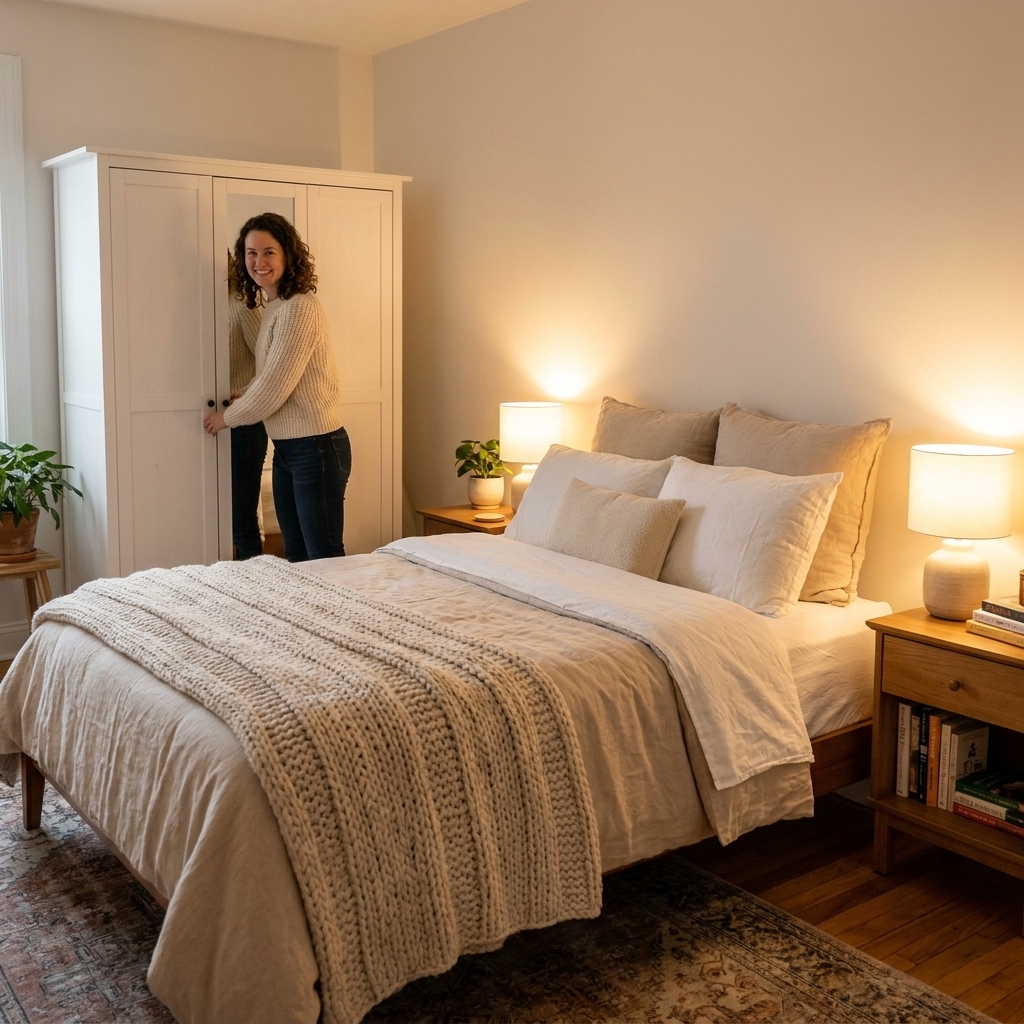
A 10x10 bedroom can absolutely hold a real bed, a dresser, and nightstands without feeling like you have to sideways shimmy to your pillow. The secret is not “smaller furniture at all costs.” It is choosing a layout that protects your walkways first, then building the cozy layers around it. I have arranged more tiny square bedrooms than I can count, and once you learn the few spacing guidelines that actually matter, the room starts working with you instead of against you.
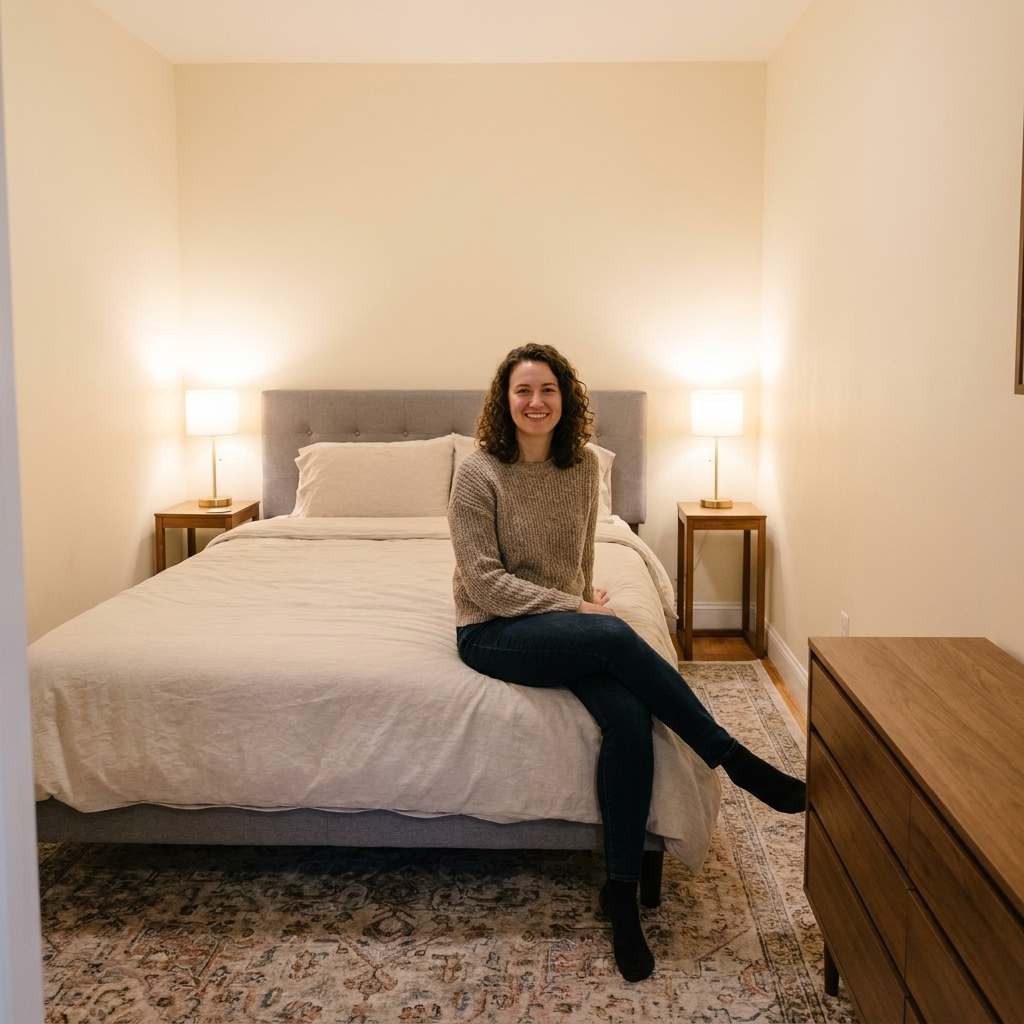
Start with the three things that decide everything
Before you drag anything across the floor, grab a tape measure and note these three anchors. They determine where your bed can realistically live and how painless your daily routine will be.
- Door swing: Open your bedroom door fully. Mark where it lands. That arc is your first “do not block” zone.
- Closet access: Measure how far the closet door needs to slide or swing. Sliding doors usually need less floor clearance; hinged doors need open space in front.
- Window and radiator placement: You can place furniture near windows, but do not block a radiator or force curtains to bunch awkwardly behind a headboard.
Quick tip from my renter years: use painter’s tape to outline your furniture footprints on the floor. It is faster than lifting a bed frame three times.
The spacing guidelines that keep a 10x10 from feeling cramped
If you remember nothing else, remember these numbers. They are not strict rules for every home, but they are solid planning targets that separate “cozy” from “claustrophobic.”
- Main walkway: Aim for 30 to 36 inches wherever you walk daily, like bed-to-door or bed-to-closet.
- Minimum passable clearance: About 24 inches can work in a pinch on one side of a bed, especially in a single-occupant room.
- Dresser drawer clearance: Plan 30 to 36 inches in front of drawers so they open comfortably.
- Nightstand breathing room: Even 2 to 4 inches between the bed and nightstand helps the setup feel intentional instead of jammed.
- Rug sizing reality: In a 10x10, a 6x9 rug often works well under a full, and it can work under a queen if you are fine with a little less rug showing on the sides or you tuck it farther under the bed. If you want more “soft landing” at the sides and foot, an 8x10 can work too, as long as it does not crash into door swings.
Step-by-step: map your room in 20 minutes
- Measure the room: Confirm your 10x10, then note baseboards, vents, outlets, and any bump-outs.
- Measure your furniture: Bed frame footprint, dresser depth, and nightstand width matter more than you think.
- Pick your bed size goal: A full gives you the easiest clearances. A queen can work beautifully, but you have fewer layout choices.
- Choose one “protected” path: Decide where you want the easiest flow, usually door to bed and door to closet.
- Tape it out: Bed first, then dresser, then nightstands. Walk it like you are carrying laundry, not tiptoeing with a cup of tea.
Layout 1: The classic setup
What it is: Bed centered on the most solid wall you have, dresser opposite the bed, two nightstands if they fit.
Why it works: Symmetry calms the room visually. In a small square space, that “order” reads as more spacious.
- Center the bed on a solid wall whenever possible, but let door and closet swings overrule aesthetics.
- Use slim nightstands (10 to 16 inches wide) or wall-mounted shelves as substitutes.
- Choose a low dresser if it sits across from the bed so the room does not feel top-heavy.
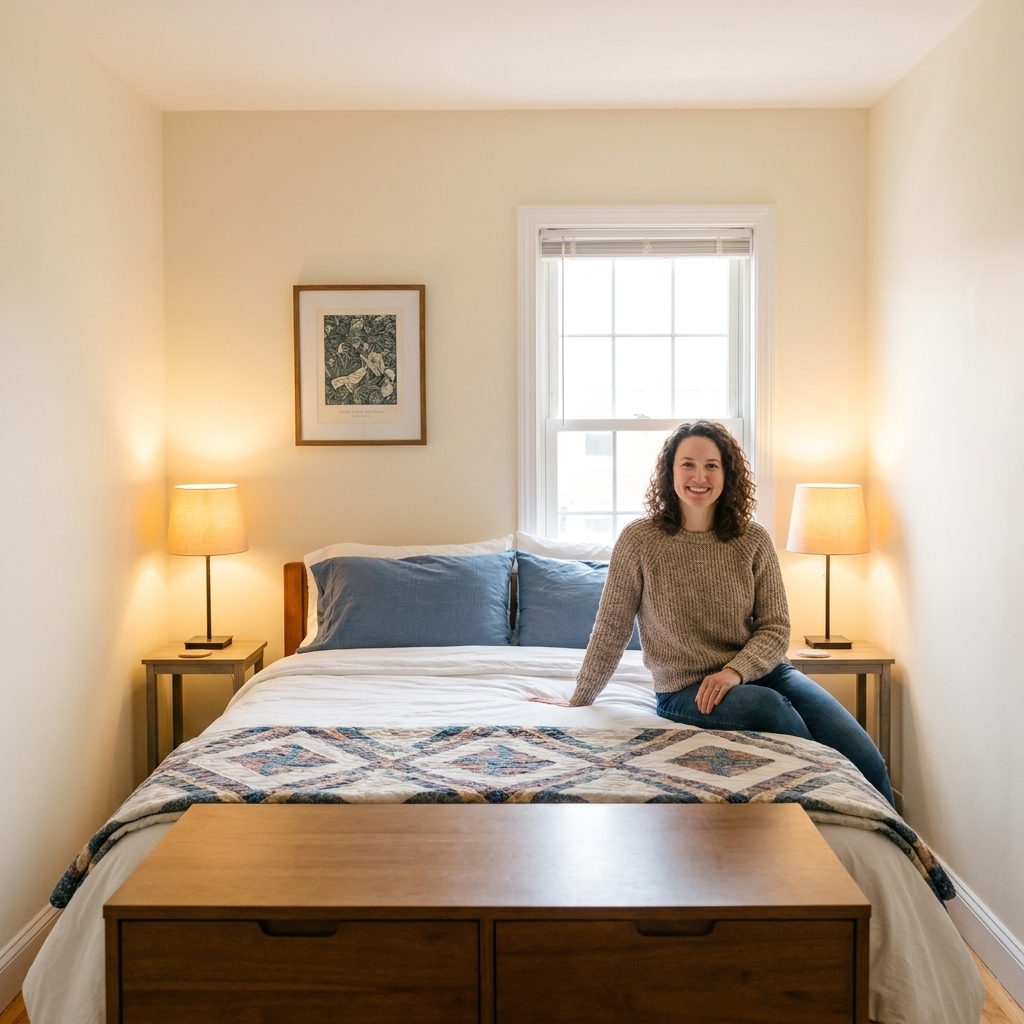
My styling move here: Hang curtains high and wide, even if the window is small. Your eye reads height, and the room instantly feels airier.
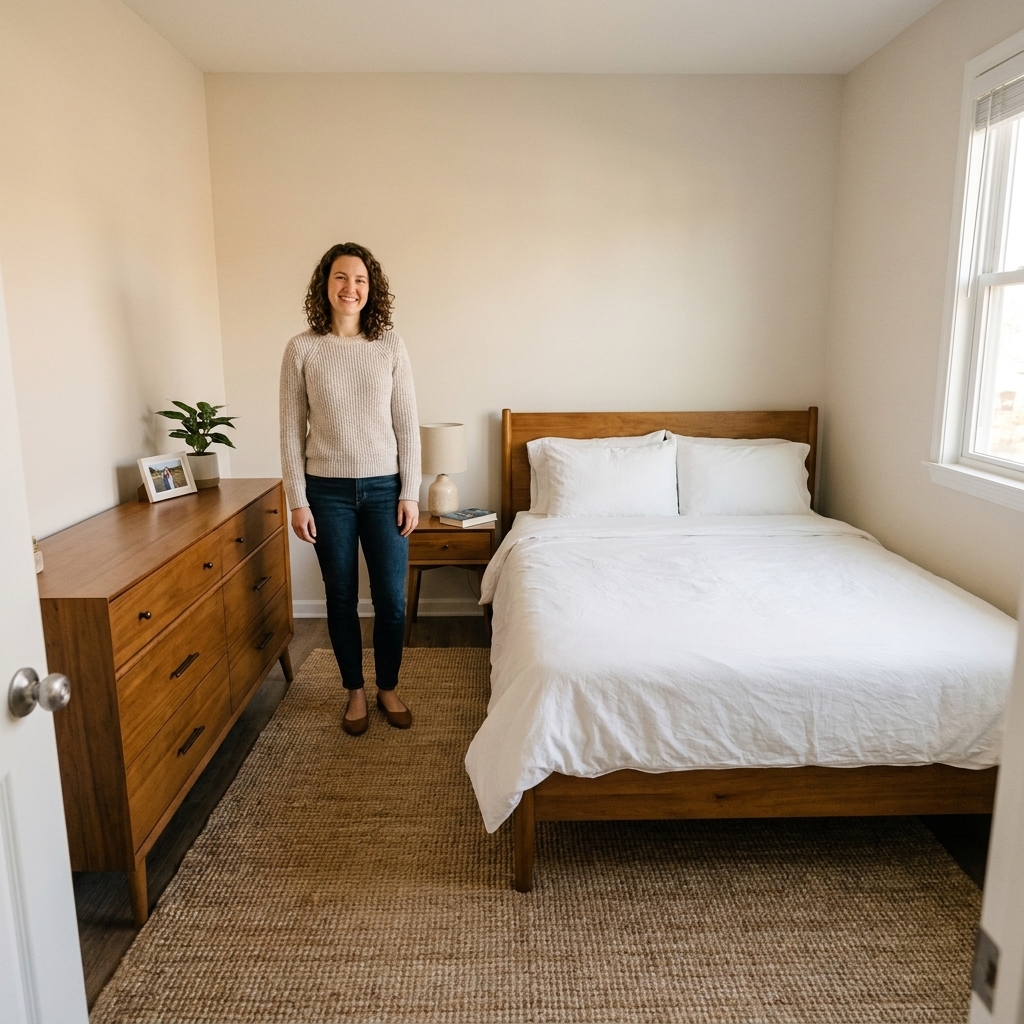
Layout 2: The clearance saver
What it is: Bed pushed into a corner with one main “open side,” one nightstand, dresser placed on the wall that stays clear of door and closet action.
Why it works: You sacrifice symmetry but gain a generous walkway. This is a lifesaver when the door and closet are fighting for the same real estate.
- Place the bed so you have one comfortable side to enter and exit daily.
- Swap the second nightstand for a sconce or plug-in wall light and a small shelf.
- If your drawer clearance is tight, choose a shallower dresser or a wardrobe or cabinet with sliding doors so you are not battling swing space.
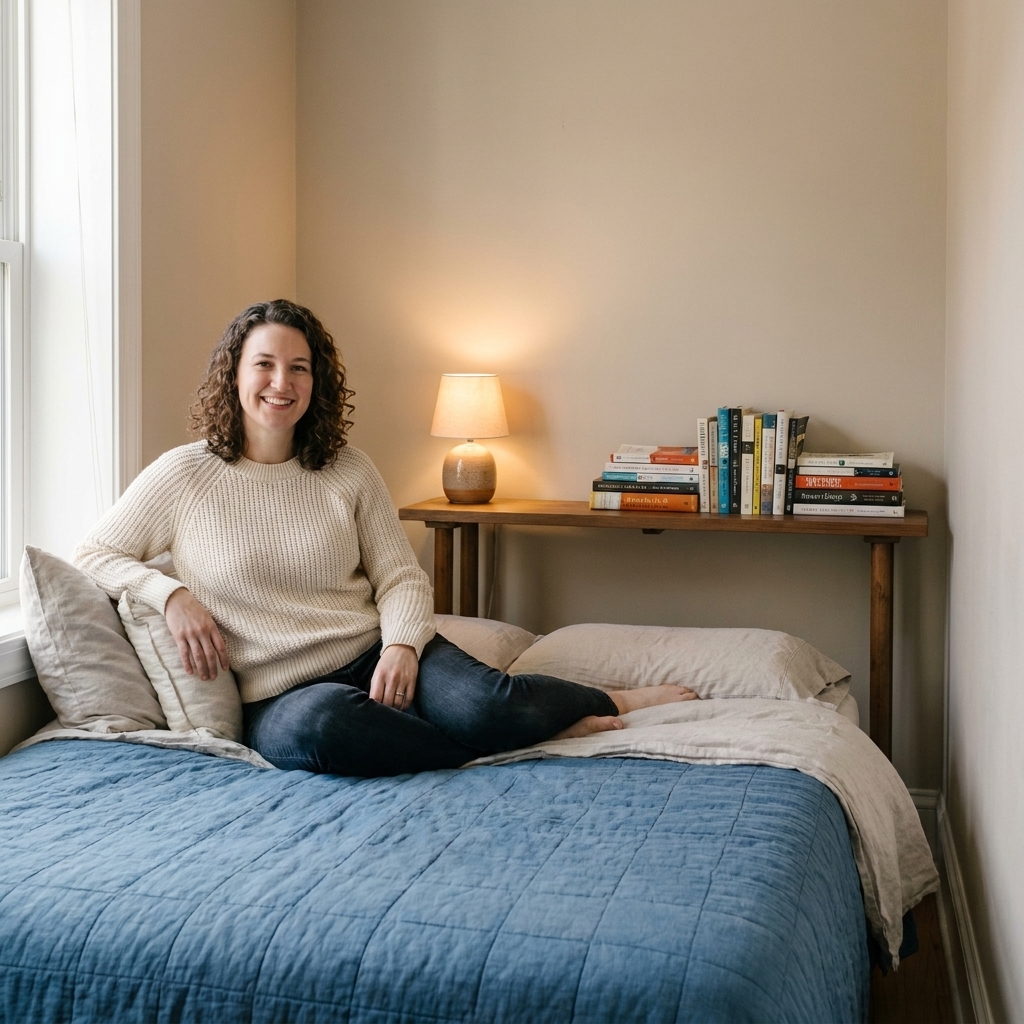
Layout 3: The floating bed trick
What it is: The bed is pulled slightly off the wall to avoid a window, radiator, or awkward bump-out, and you create a soft “headboard zone” behind it.
Why it works: Sometimes the perfect bed wall does not exist. Floating the bed lets you keep function without forcing furniture into weird gaps.
- Leave 3 to 8 inches behind the headboard. You do not need a huge gap.
- Use a console table or narrow shelf behind the bed for a lamp, books, and charging.
- Keep bedding streamlined so the bed reads intentional, not like it drifted.
Where the dresser should go
The dresser is usually the second-biggest piece after the bed, and in a square room it can either make the space feel grounded or blocked. Here are the best placements, in order:
- Opposite the bed: Most functional for getting dressed, especially if you can add a mirror above it.
- On the wall next to the door: Great if your closet wall is busy or your bed needs the opposite wall.
- Inside the closet (if it is deep): A lower dresser can replace a traditional closet system and free up wall space.
A quick dimension check: Many dressers are around 18 to 22 inches deep. If your plan leaves you less than about 30 inches in front, look for a shallower option or a different wall.
Avoid if possible: A tall dresser right next to the bed on the “open” side. In small rooms, tall and close reads bulky fast.
Nightstands: yes, you can have them
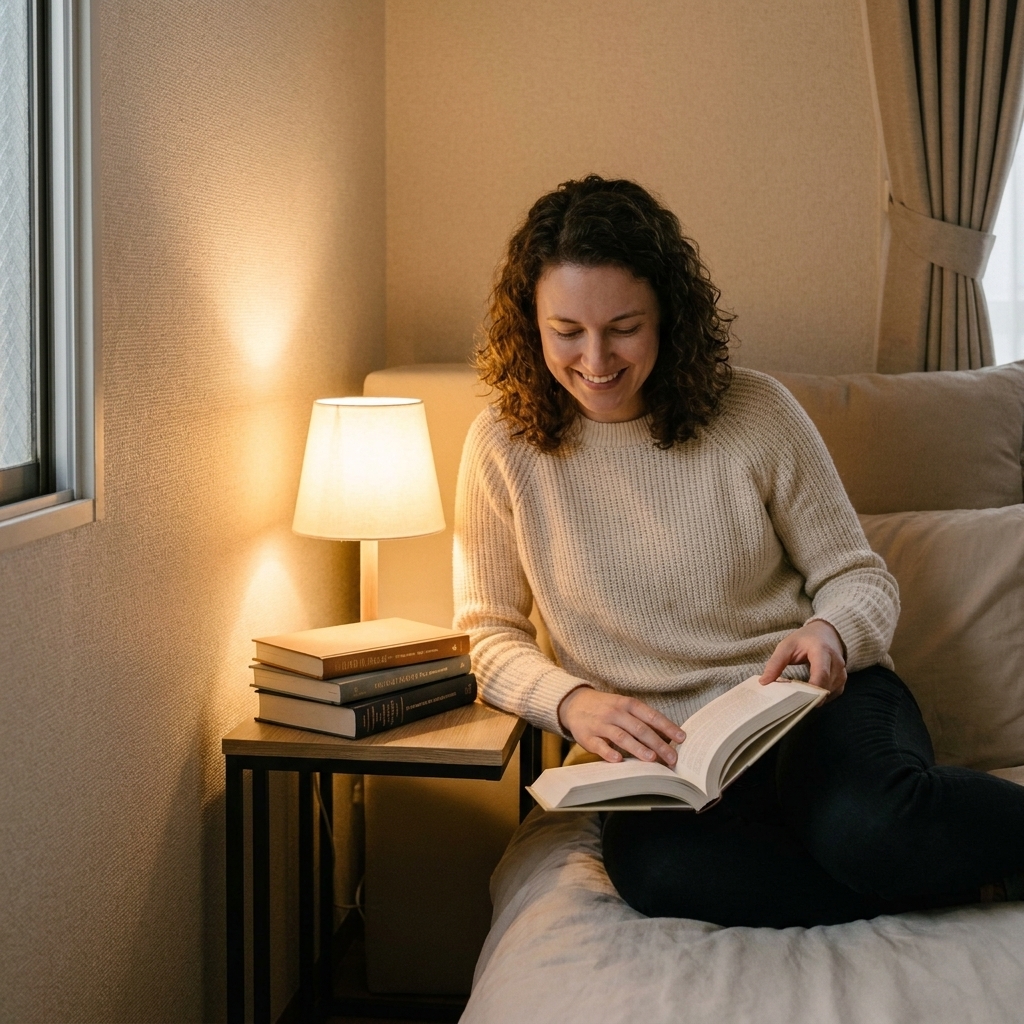
Nightstands are not just for looks. They keep your bedtime routine from migrating onto the floor. If full-size nightstands do not fit, you still have options that feel polished.
- Best small-space nightstand size: 10 to 16 inches wide, 12 to 18 inches deep.
- Wall-mounted shelf: Perfect for renters if you can use removable heavy-duty strips or if your lease allows a couple of small holes.
- Thrifted stool or plant stand: My favorite budget move. Add a small tray on top and it becomes instantly “nightstand.”
- Headboard with a ledge: Great for narrow rooms, just pair it with a reading light.
How to choose the right bed
If you are deciding between bed sizes, here is the honest tradeoff: bigger bed, tighter circulation. You can still make a queen work in a 10x10, but you will need to be choosy about everything around it.
Full bed
- Easier to fit two nightstands.
- More likely to keep 30-inch walkways.
- Feels less imposing in a square room.
Queen bed
- Totally doable, especially with slim nightstands or one nightstand plus a wall sconce.
- Prioritize a low-profile frame with legs so you can see floor underneath.
- Skip the chunky footboard. In a 10x10 it visually shortens the room.
My favorite frame style for small rooms: simple platform with 6 to 8 inches of clearance underneath. It is lighter visually and buys you storage.
Another quick reality check: a queen mattress is 60 by 80 inches, and many frames add a couple inches on each side. Those inches matter in a 10x10.
Make it feel bigger
Once the layout is working, these are the tweaks that give you that “ahhh” feeling when you walk in.
- Use matching bedside lighting: Two plug-in sconces or two small lamps make the room feel intentional, even if the nightstands are different.
- Go vertical: Hang curtains close to the ceiling and add one tall element like a leaning mirror or a narrow bookcase.
- Keep the floor visible: Choose pieces with legs when possible. Seeing more floor helps the room read larger.
- Mirror placement that actually helps: Put a mirror where it reflects a window or a lamp glow, not where it reflects clutter.
- Edit the landing zones: A tray on the dresser and a tray on the nightstand corral the little stuff so surfaces look calmer.
Common mistakes and fixes
- Mistake: Trying to keep a wide path on both sides of a queen. Fix: Make one side the primary walkway and let the other be tighter.
- Mistake: Oversized nightstands that eat the corners. Fix: Swap to a narrow table, stool, or shelf.
- Mistake: Dresser placed where drawers hit the bed. Fix: Rotate the dresser or choose a lower, wider piece.
- Mistake: Too many small items on the perimeter. Fix: Fewer, larger pieces look calmer than lots of tiny furniture.
- Mistake: Only overhead lighting. Fix: Add two warm light sources at different heights for instant softness.
Quick layout recipes
If you have a full bed
- Bed centered on one wall
- Two 12-inch nightstands
- 48 to 60-inch dresser opposite the bed
- 6x9 rug under the bed (front two-thirds)
If you have a queen bed
- Bed centered if possible, or tucked slightly toward one side
- One slim nightstand plus one wall shelf
- Low dresser (shorter height helps) on the opposite wall
- Plug-in sconces to free up surface space
If your closet is tight
- Bed on the wall that keeps the closet zone clear
- Dresser on the wall farthest from the closet doors
- Only one nightstand on the open side
FAQ
Can a 10x10 bedroom fit a queen bed, dresser, and two nightstands?
Sometimes, yes, but it depends on your door and closet placement and how slim your nightstands are. If the room feels tight, keep two light sources but switch one nightstand to a wall shelf or a narrow stool.
What is the best bed placement in a square bedroom?
Usually centered on the most solid wall with the clearest path to the door and closet. If centering blocks a swing or a window, a corner placement with one open side is the next best option.
How far should the bed be from the dresser?
Aim for 30 to 36 inches so drawers open easily. If you have less, try a shallower piece, smaller drawers, or relocate the dresser to a different wall.
How do I make a small bedroom feel cozy, not cramped?
Keep the layout simple, then add softness in layers: a rug, textured bedding, warm lamps, and curtains hung high. A calm color palette and a little visual symmetry go a long way in a 10x10.
My final check
Stand in the doorway and ask: Can I walk to the bed without turning sideways? Can I open the closet without bumping anything? Can I open dresser drawers fully? If the answer is yes, you have a functional layout. Then you get to do the fun part: the bedding, the lamp glow, and the thrifted little treasures that make the room feel like your own.