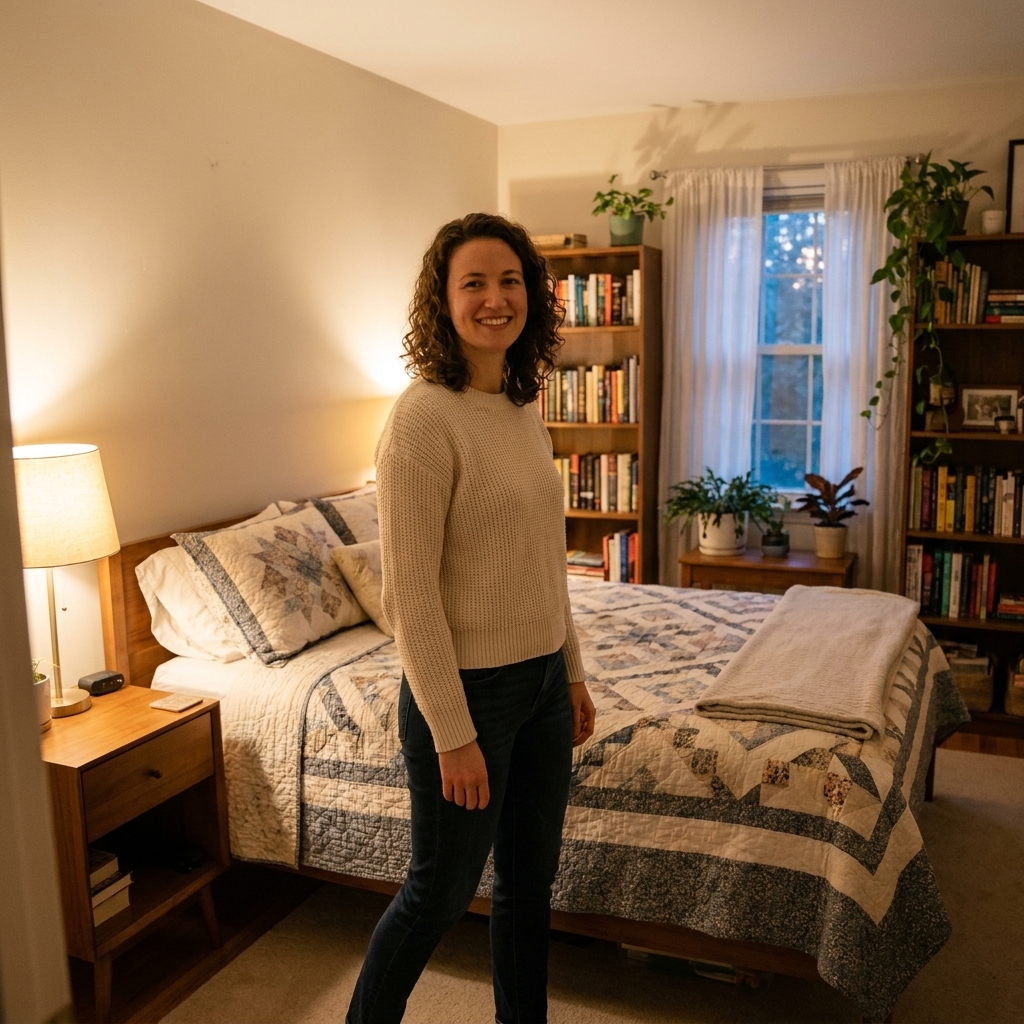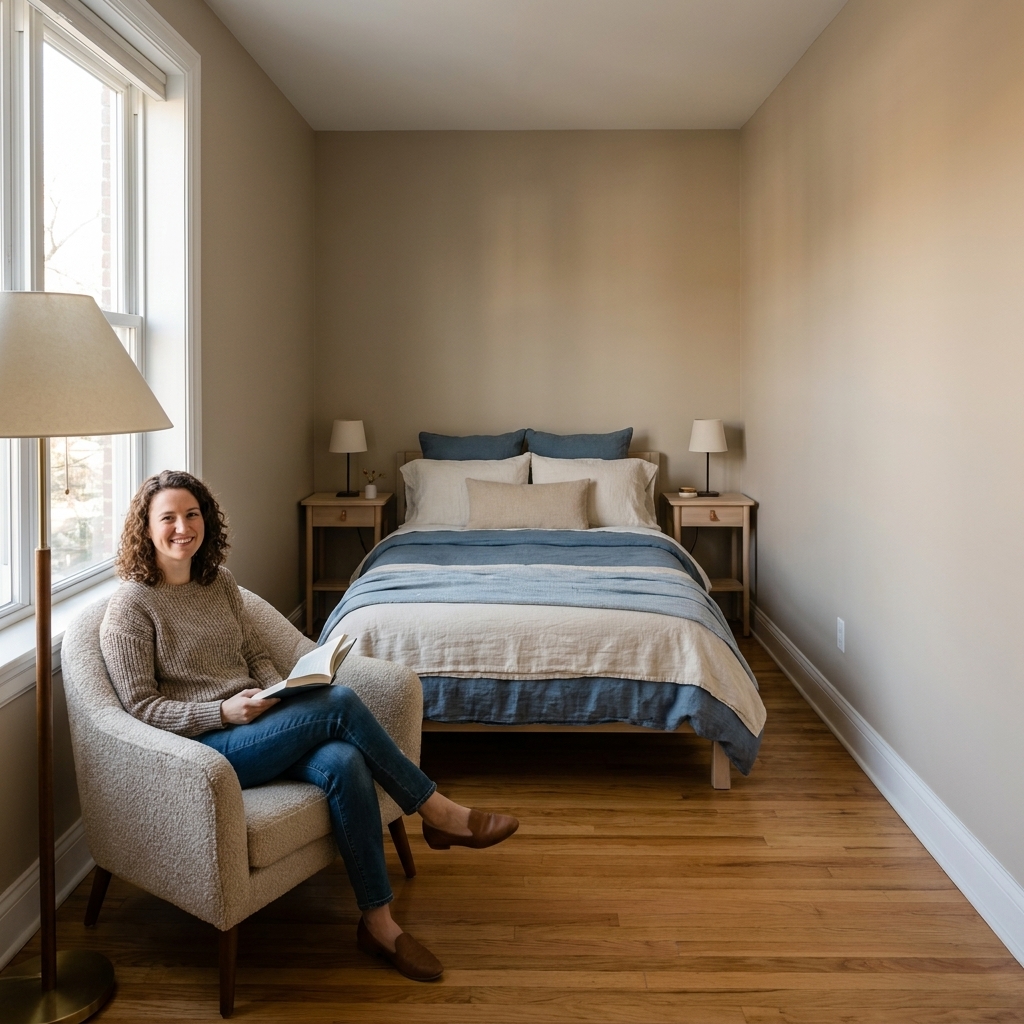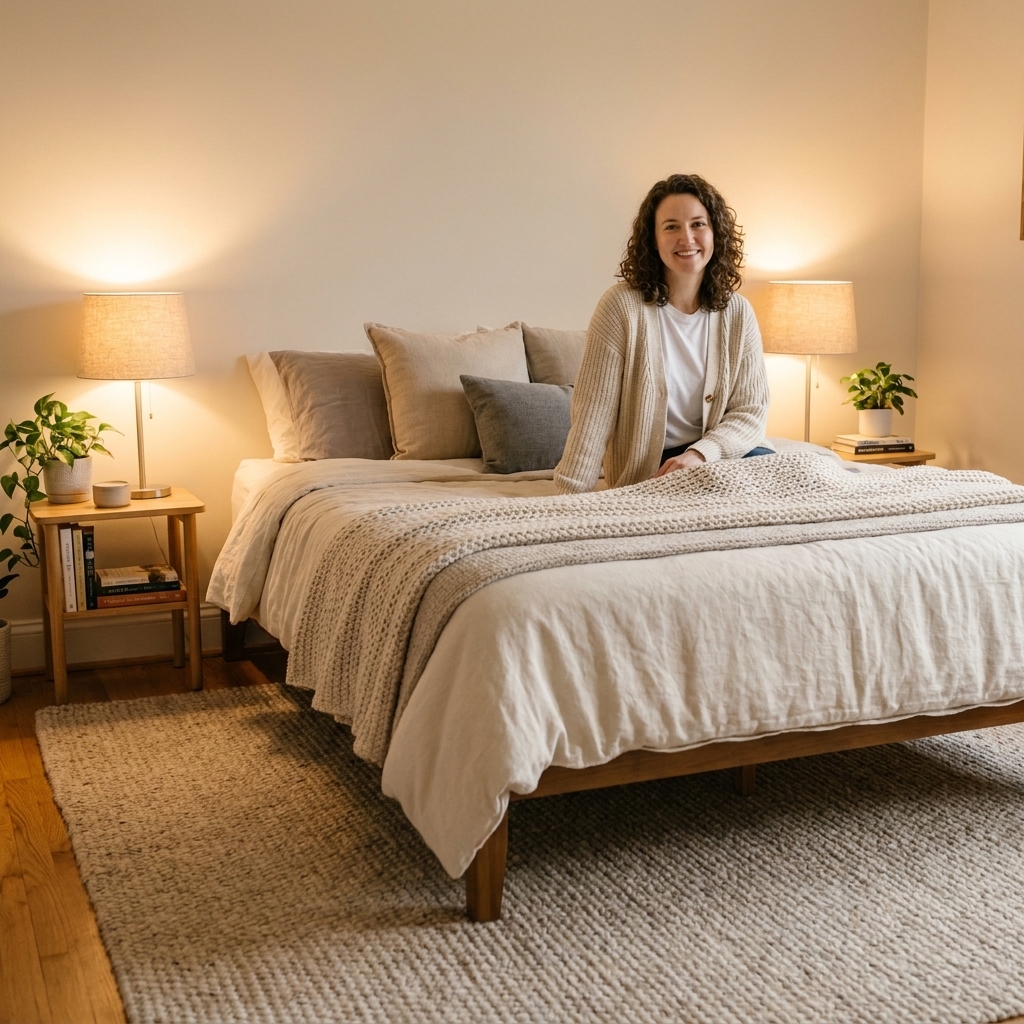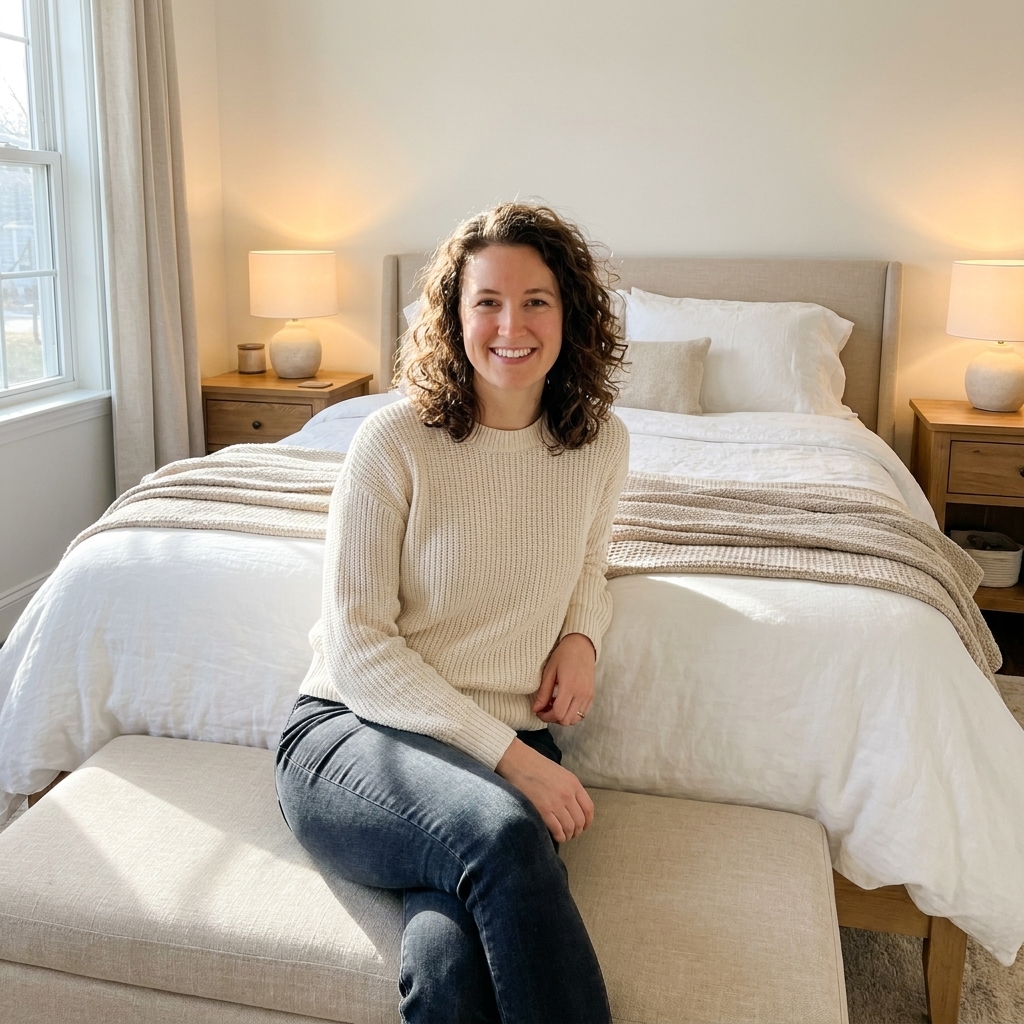
If your bedroom makes you do that little sideways shimmy to get to the closet, you are not alone. Poor traffic flow is one of the most common reasons a room feels smaller, messier, and more stressful than it needs to be. The good news: you can usually fix it without buying anything. You just need to give your body a clear, predictable path through the room.
I like to think of bedroom layout the way I think about making the bed: you want a smooth base layer first (walkways), then you add the pretty stuff (styling). Let’s clear the bottlenecks and get you back to an effortless, easy-to-live-in sleep sanctuary.
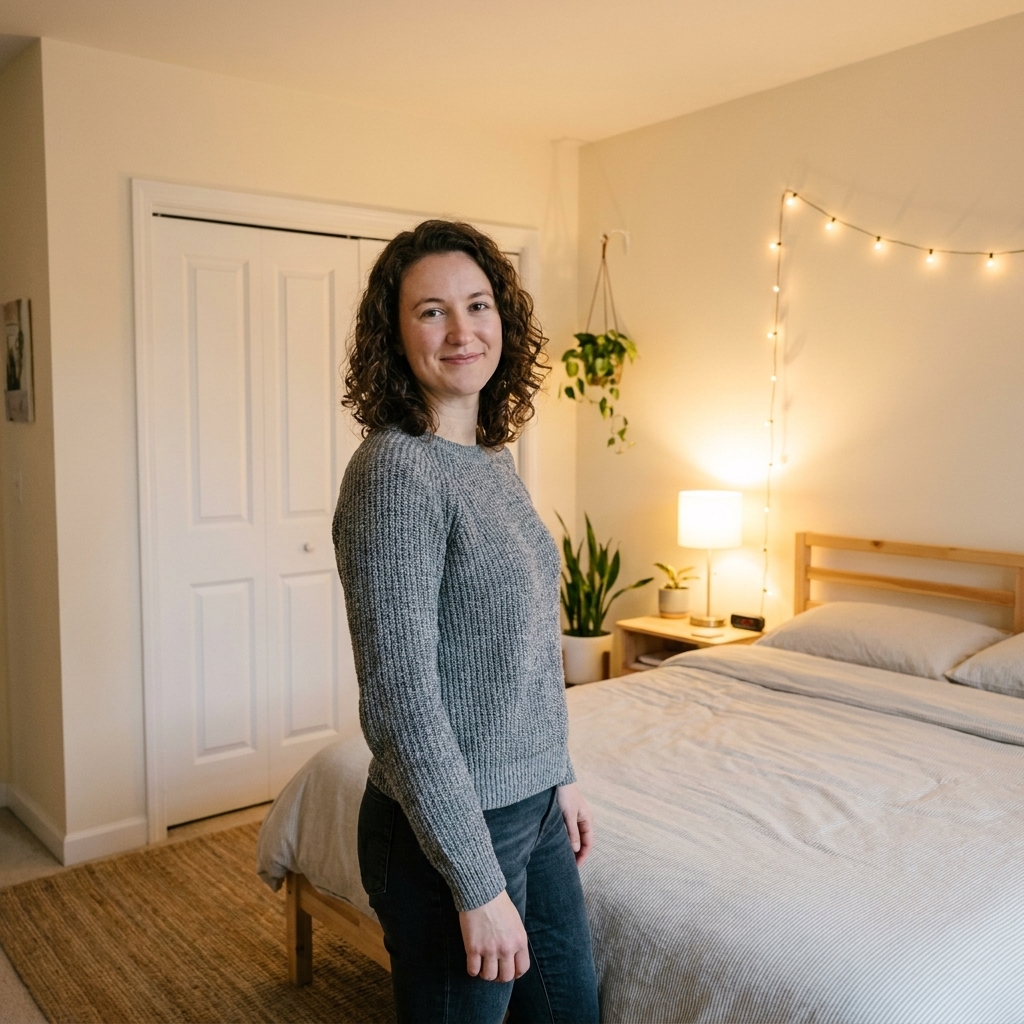
What “good flow” actually looks like
Traffic flow is simply how you move through the bedroom during real life: getting dressed, making the bed, grabbing a charger, carrying laundry, opening drawers, and heading to the bathroom half asleep.
In a bedroom with good flow, you can do three things easily:
- Enter the room without immediately bumping into a corner, chair, or bed edge.
- Access key zones like the bed, closet, dresser, and bathroom door without detours.
- Open doors and drawers without having to move something first.
Aim for these practical clearances (use them as targets, not moral rules):
- Main walkway: about 30 to 36 inches if you can manage it.
- Secondary paths: about 24 inches can work in tight rooms.
- In front of a dresser: about 36 inches is ideal so drawers open comfortably.
- Bed access: at least 24 inches on one side if you are working with a small room, more if two people use the bed daily.
The most common layout mistakes that cause bottlenecks
1) The bed is “floating” in the wrong place
A floating bed can look airy and designer, but if it steals the best walking lane from the door to the closet, it becomes a daily obstacle. The bed is the largest piece in the room, so it should not interrupt the natural path of travel.
Quick fix: Try anchoring the bed to a solid wall (usually the longest uninterrupted wall) and reserve the clearest line for walking. If you have a window wall, placing the headboard there can work if it does not block curtains or make you squeeze around corners.
2) A dresser is fighting the closet
This is a classic: the dresser sits directly opposite the closet, and suddenly two everyday actions collide. You cannot open drawers and closet doors at the same time, which makes mornings feel cramped even if the room is a decent size.
Quick fix: Move the dresser to a wall where it has a clean “landing zone” in front of it. If that is not possible, consider swapping to a taller, narrower dresser (or splitting storage into two smaller pieces) so you get clearance back.
3) Nightstands are too bulky for the footprint
I love a chunky vintage nightstand, but in a narrow bedroom it can pinch the walkway right where you step out of bed. That pinch point is what makes the whole room feel tight.
Quick fix: Replace one or both nightstands with a slimmer option, a wall-mounted shelf, or a small stool. You still get a spot for a book and water, but you win back inches where they matter most.
4) Door swings are blocked
If your bedroom door or closet door hits a hamper, chair, or the corner of the bed, you have created a bottleneck that will annoy you every single day.
Quick fix: Clear the arc of every door. If closet doors are the issue, you can often improve flow dramatically by switching to curtains or sliding solutions, but even a simple re-shuffle usually helps.
5) “Landing zones” are missing
When there is no intentional spot for daily clutter (bag, robe, tomorrow’s outfit), those items migrate into the walkway. That is how traffic flow problems are born, even in a well-planned layout.
Quick fix: Add a hook rail behind the door, a basket under a bench, or a slim hamper in a dead corner. Give your habits a home so your floor stays clear.
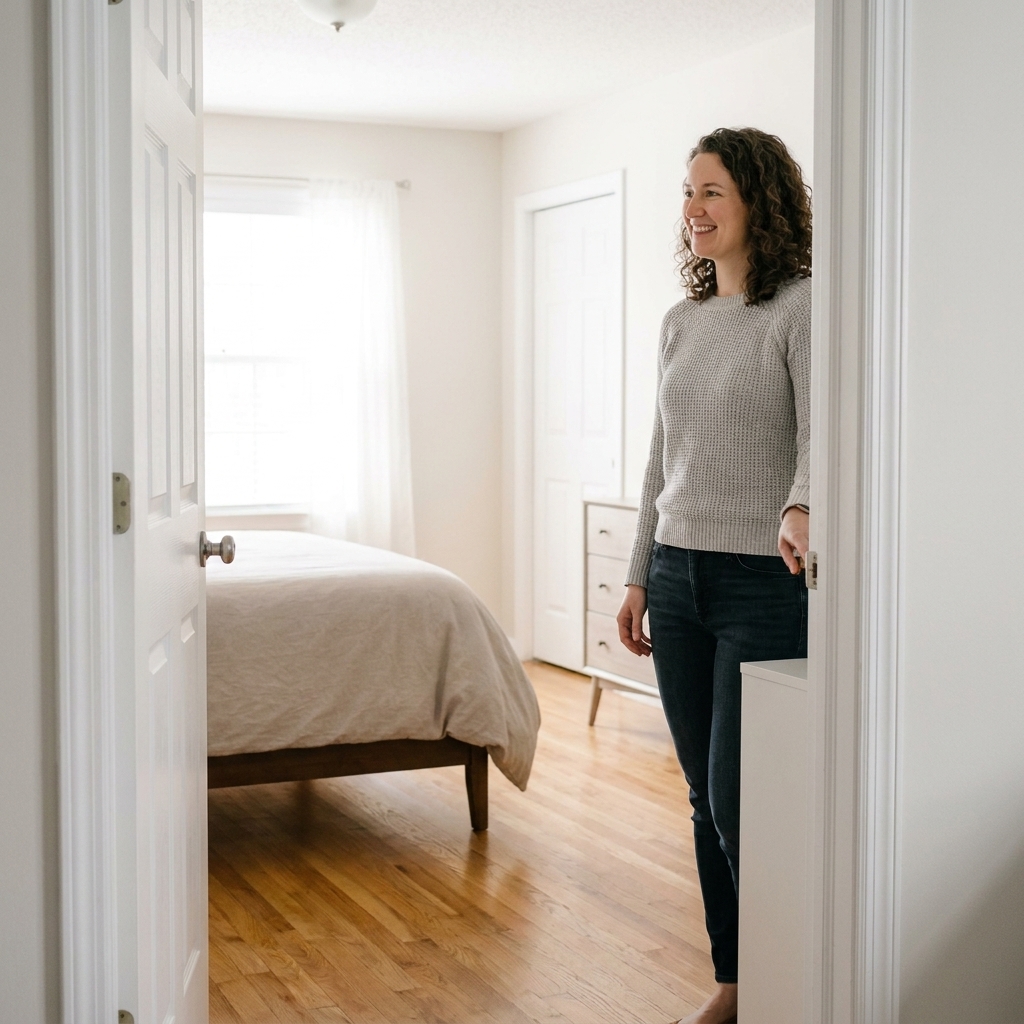
Do this first: map your “real life” paths
Before you start dragging furniture (and scratching floors, ask me how I know), do a quick traffic audit:
- Stand at the bedroom door. Where do you naturally walk first, to the bed, to the closet, to the bathroom?
- Trace the path with your eyes and look for pinch points, especially corners of the bed, chair legs, and dresser edges.
- Test the “open” moments. Open the closet, open the dresser, pull out a nightstand drawer. Notice what immediately feels crowded.
- Mark the problem zone. That zone is where you will get the biggest payoff by moving one piece.
My rule of thumb: fix the biggest bottleneck first. It is usually one major piece that is stealing the room’s best walkway.
Simple rearrangements that usually work
The “clear runway” layout (best for small rooms)
Goal: Create one clean lane from the door to the closet and bed.
- Place the bed against the longest wall you can.
- Keep one side of the bed as the primary access side if the room is very tight.
- Use a slim nightstand or wall shelf on the tight side.
- Move the dresser to the wall farthest from door swings.
This layout prioritizes movement over symmetry, and honestly, your nervous system will thank you.
The “balanced pathways” layout (best for couples)
Goal: Make both sides of the bed easy to access, without squeezing.
- Center the bed on a solid wall whenever possible.
- Use matching or similarly scaled nightstands to keep the walkways consistent.
- Keep at least one clear path to the closet that does not require walking around a chair or bench.
If you love a bench at the foot of the bed, choose one that leaves a comfortable pass-through. If it becomes a shin-bumper, it is too deep for the space.
The “dresser as anchor” layout (best when closet access is the issue)
Goal: Stop the dresser from blocking closet and drawer function.
- Put the dresser on a wall where it can have a clear zone in front.
- If you must place it near the closet, angle it so drawers open away from the closet doors.
- Consider a tallboy dresser to reduce how far the piece protrudes into the room.
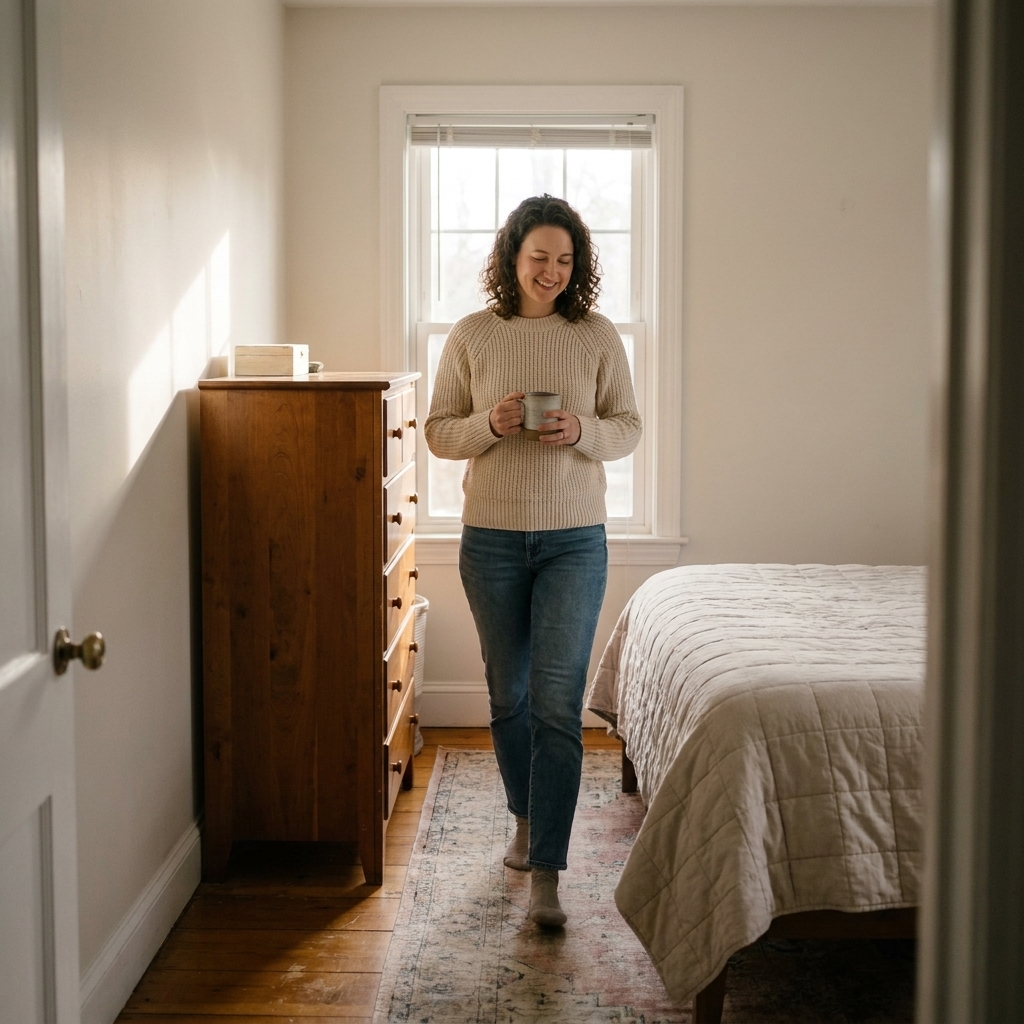
Small-room tricks that improve flow fast
Swap bulky pieces for “lighter” footprints
- Nightstands: try a narrow table, wall shelf, or a small vintage stool.
- Dressers: go vertical with a tall chest to free up floor space.
- Chairs: if it becomes a clothing pile, replace it with hooks plus a hamper.
Use under-bed storage instead of extra furniture
If you are adding a second dresser because storage is tight, check whether under-bed bins could replace that need. Fewer furniture pieces often means instantly better flow.
Keep the floor visually calm
Even when the measurements are fine, a bedroom can feel cramped if the floor looks busy.
- Choose one hamper, not three baskets.
- Hide cords with clips or a cable box near the nightstand.
- Use a bedskirt or low-profile storage bins if under-bed storage is visible.
Try a rug that guides the walkway
A properly placed rug can subtly “tell” your body where to walk. I love a runner beside the bed in tight layouts because it defines the lane and makes it feel intentional.
Checklist: fix your bottleneck in 20 minutes
- Clear the floor (temporarily move hampers, baskets, and chairs out of the way).
- Open every door fully and keep that swing zone free.
- Choose the main path from door to bed and door to closet.
- Move one large piece that blocks the path (usually the bed or dresser).
- Replace one bulky item if needed (often a nightstand or chair).
- Create a landing zone for daily items so clutter does not return to the walkway.
If you only do one thing today, make the path from the door to the bed feel smooth. It is the difference between a room that feels like an obstacle course and one that instantly signals rest.
FAQ
Where should the bed go for the best traffic flow?
Usually, the best spot is on the longest uninterrupted wall, positioned so you can walk from the door to the bed and closet without weaving. If centering the bed creates a pinch point, it is okay to shift it slightly or prioritize access on one side.
How do I fix a bedroom where the closet doors hit furniture?
First, pull furniture out of the door swing zone. If you are still stuck, swap a deep dresser for a taller, narrower one, or relocate storage to under-bed bins so the closet wall stays clear.
My bedroom is tiny. Do I really need two nightstands?
No. One nightstand plus a wall shelf on the other side is a great compromise. You get function without sacrificing the inches you need to move comfortably.
What is the biggest mistake that creates bottlenecks?
Placing a large piece (usually the bed or dresser) directly in the natural walking lane between the door and the closet or bathroom. Fix that one lane and the room almost always feels twice as usable.