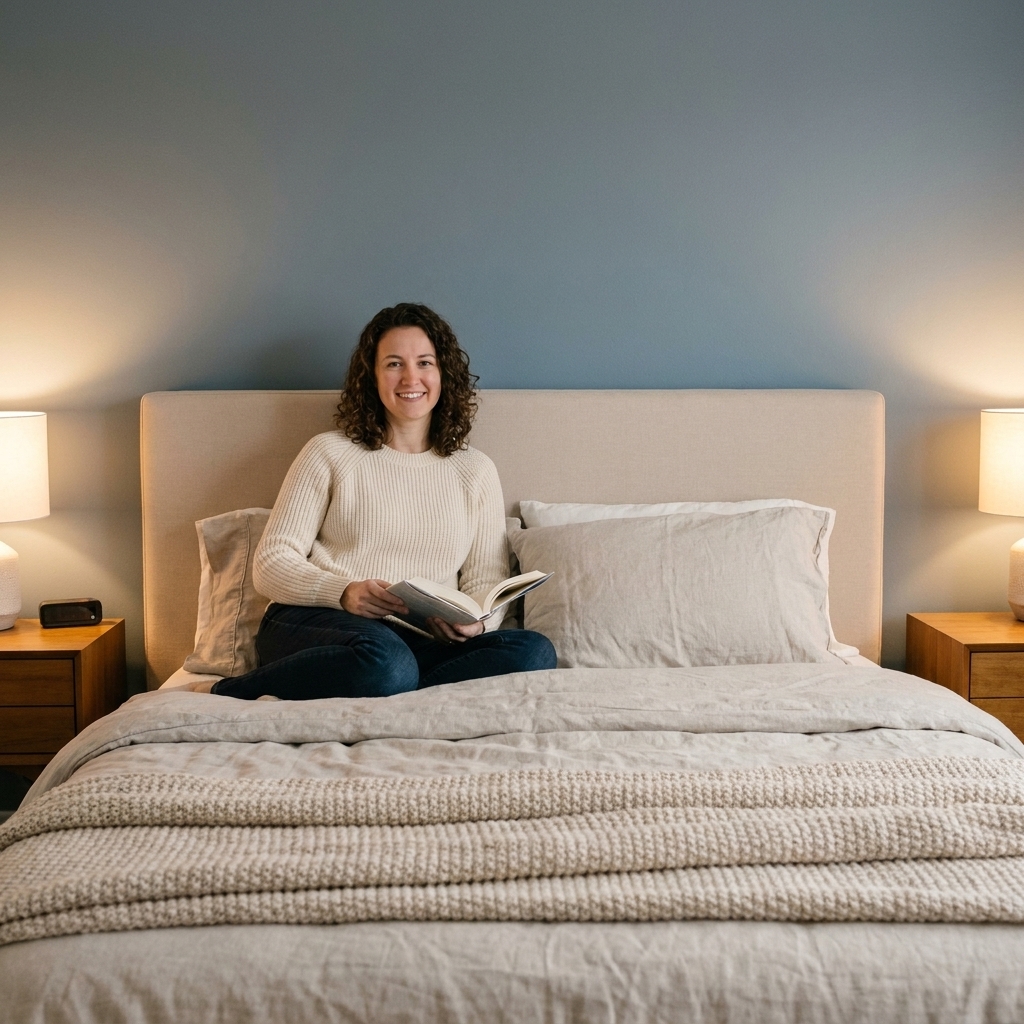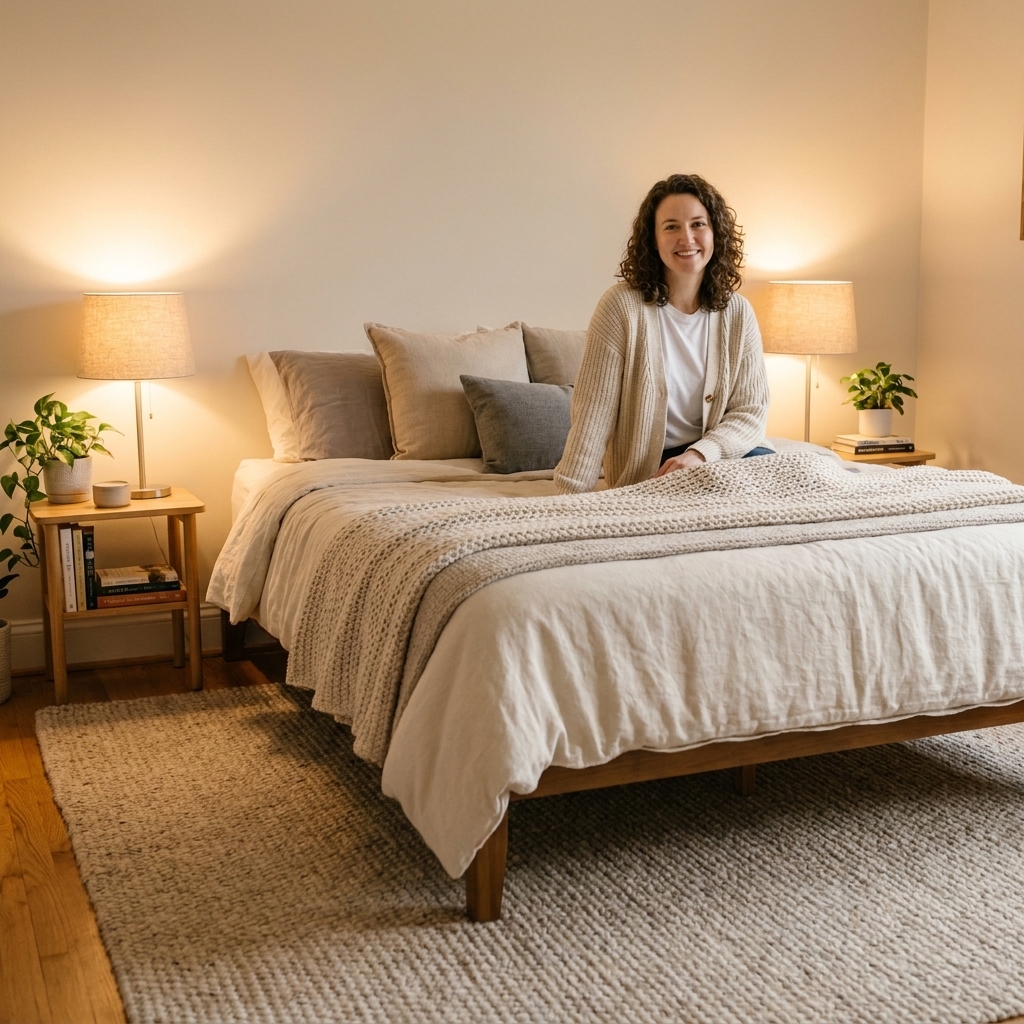
If your bed is the heart of the room, the wall above it is the spotlight. And yet it is also the place most people accidentally hang pieces too high, too small, or too far off-center. The good news: there are a few simple sizing and spacing rules that make it almost impossible to get wrong. I use these in tiny rentals, big primary bedrooms, and everything in between.

The three measurements you need
Before you shop or start hammering, grab a tape measure and jot down these three numbers. This is the little 2-minute step that saves you hours of re-hanging.
- Headboard (or bed) width: Measure the widest point. If you do not have a headboard, use the width of the bed frame or mattress.
- Headboard height: From the top of the mattress to the top of the headboard (or to the top of your stacked pillows when the bed is made if there is no headboard).
- Wall space above the headboard: From the top of the headboard to the ceiling or to any molding, picture rail, or sloped ceiling line.
These three numbers tell you the right scale and whether you should go with one statement piece, a pair, or a full gallery moment.
One piece: size and placement
Rule 1: Aim for 2/3 to 3/4 of the bed width
For a single piece above the bed, the easiest rule is this: the frame should be about 2/3 to 3/4 the width of your bed (or headboard).
- Queen bed (60 in wide): frame width target is about 40 to 45 in
- King bed (76 in wide): frame width target is about 50 to 57 in
- Full bed (54 in wide): frame width target is about 36 to 40 in
Quick note: mattress sizes can vary by region, and “king” can mean different things (for example, California king is narrower and longer). If your bed is not one of the widths above, use the ratio and you will land in the right place.
This is why tiny frames can feel lost above a bed. It is not that the piece is bad, it is just under-scaled for the visual weight of a big piece of furniture.
Rule 2: Leave 6 to 10 inches above the headboard
The sweet spot is usually 6 to 10 inches between the top of the headboard and the bottom of the frame. In small rooms, I lean closer to 6 inches. With tall headboards or very high ceilings, 8 to 10 inches often looks more relaxed.
Avoid: pushing the frame way up toward the ceiling. It makes the bed feel disconnected from the wall decor, like the piece is trying to escape.
Rule 3: Use eye level as a guide, not a law
You will often hear a common gallery guideline: hang the center of a piece around 57 to 60 inches from the floor. Over a bed, the headboard changes the math. In bedrooms, I prioritize relationship to the headboard over strict gallery height.
If you follow the 6 to 10 inch gap rule and the scale rule above, you will almost always land in a visually correct place.
What about a diptych or triptych?
Treat multiple panels as one unit. Measure the total width of the arrangement (including the gaps between panels) and keep that combined width in the 2/3 to 3/4 range of the bed width. Keep spacing between panels consistent for a calm, finished look.
Gallery walls that feel calm
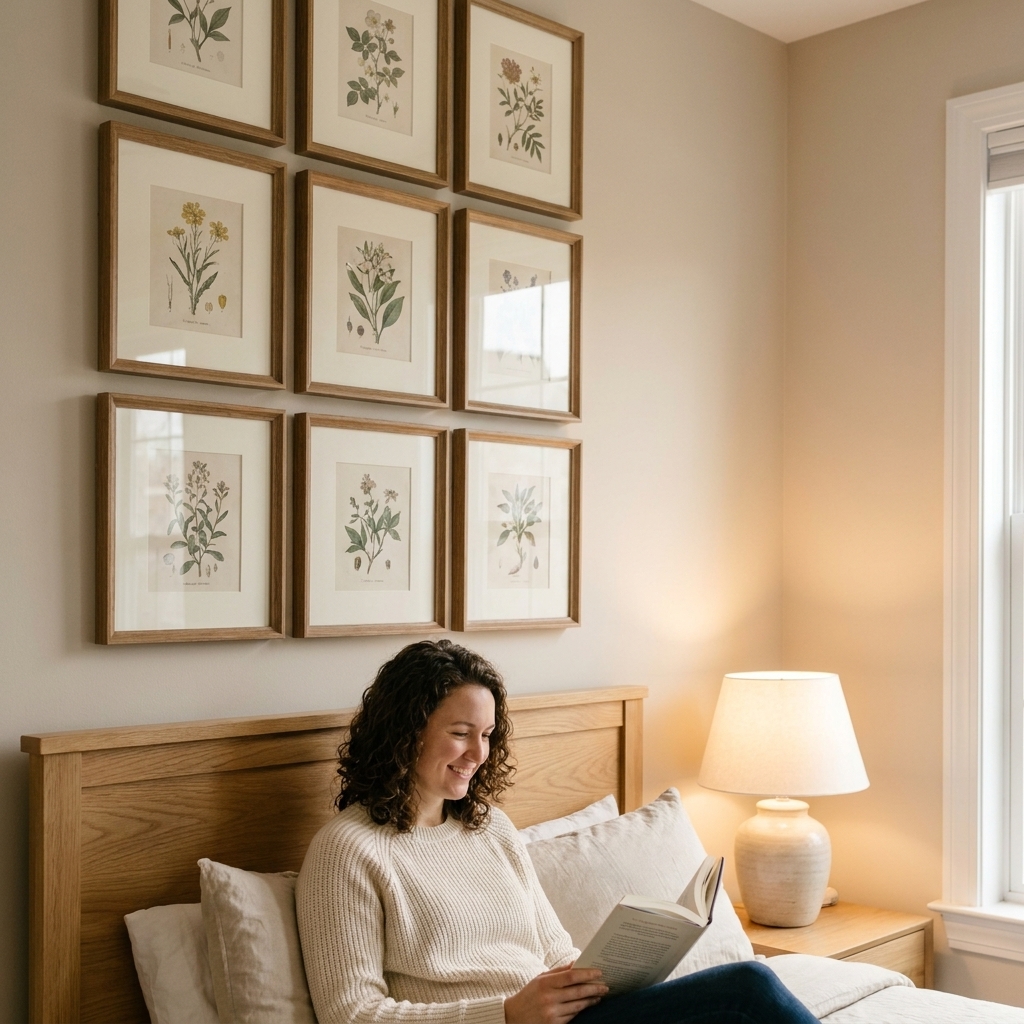
Gallery walls above beds can be incredibly cozy, but they need a little structure so they do not feel busy when you are trying to sleep. Think collected, not chaotic.
Rule 1: Treat the gallery as one rectangle
Measure the total width of your planned arrangement (left edge of the left frame to right edge of the right frame). Your target is the same as a single piece:
- Total gallery width: about 2/3 to 3/4 of the bed width
- Bottom edge of gallery: about 6 to 10 inches above the headboard
Rule 2: Keep spacing consistent
For bedrooms, I love 2 inches between frames for a tailored look, or 3 inches if your frames are chunky or you want it to feel airier. The key is consistency.
Tip: If you are mixing frame sizes, keep the spacing consistent even when frame widths change. That is what makes it feel intentional.
Rule 3: Start with a hero piece
Start with one larger piece as the anchor, usually in the center. Then add smaller pieces around it. This keeps the wall from turning into a polka-dot scatter.
Frames, mats, and glazing
Match the frame vibe to the headboard
This is my favorite shortcut. When frames relate to the headboard, the whole bed wall looks pulled together even if the prints vary.
- Warm wood headboard: oak, walnut, or brass frames feel cohesive
- Upholstered headboard: black, soft gold, or light wood frames add crisp structure
- Metal bed frame: repeat the metal finish in the frames if you can, or go black for a clean contrast
Use mats to upsize on a budget
One of the thriftiest styling tricks: a generous mat makes smaller pieces read bigger and more elevated. If you found a perfect little vintage print that is too small for the wall, do not ditch it. Give it breathing room.
- Good baseline: 2 to 4 inch mat for small to medium pieces
- Extra cozy and high-end: 4 to 6 inch mat for a more gallery feel
White or warm off-white mats are the easiest to live with in bedrooms because they keep the wall feeling light and calm.
Glass vs acrylic
Both standard glass and standard acrylic can reflect light. If glare is your issue, the real upgrade is anti-reflective or non-glare glazing (available in both glass and acrylic). Acrylic is lighter, which can be nice over a bed. Glass feels classic and crisp. Either way, make sure the hanging hardware is solid because the bed zone is not the place for wobbly frames.
Hang it without extra holes
Step 1: Make a paper template
Tape kraft paper or wrapping paper to the wall in the exact size of your frame, or trace the frame on paper and cut it out. This is the fastest way to test height and centering without commitment.
Step 2: Mark the center of the bed
Find the center of your headboard (or bed) and lightly mark a vertical line with painter’s tape. Centering to the bed, not the room, is usually what looks right.
Step 3: Measure from the hardware
Different frames hang differently depending on sawtooth hooks, D-rings, or wire. Measure from the top of the frame to the hanging point so you know exactly where the nail or hook needs to go.
Step 4: Use the right hardware
- Drywall: use drywall anchors or picture hooks rated for the frame weight
- Plaster: pre-drill carefully and use appropriate anchors
- Stud: best case scenario, use a screw into the stud
If you are renting and trying to minimize damage, choose high-quality picture hooks or rental-friendly hanging systems rated for the correct weight. The rated for part is not optional.
Step 5: Level, then step back
Use a level, then stand at the doorway and look at the bed wall as a whole. If something feels off, it is usually one of these:
- The piece is too high
- The piece is too small
- The piece is not centered to the bed
- The gallery spacing is inconsistent
A quick safety note
Anything above a bed should be mounted like you mean it. Use hardware and anchors rated for the weight, double-check that everything is seated properly, and avoid balancing heavy frames on tiny nails. If you are hanging a mirror or a particularly heavy frame, consider having a pro install it for peace of mind.
Common scenarios
No headboard
If you do not have a headboard, you can still hang a piece, just create an invisible headboard zone. Hang your frame so the bottom edge sits about 8 to 12 inches above your stacked pillows when the bed is made. You can also add a picture ledge above the bed, but mount it securely and keep the styling minimal.
Very tall headboard
Tall headboards do a lot of visual work already. Go for a shorter piece (or a wider landscape piece) and keep the gap tighter, around 6 to 8 inches, so the frame feels connected.
Low headboard and high ceilings
This is where frames can float away if you are not careful. Choose a larger piece or a gallery wall with more height, but still keep the bottom edge within that 6 to 10 inch zone above the headboard.
Wall sconces over nightstands
If you have sconces, make sure the frame does not visually collide with them. Keep a little breathing room:
- At least 3 to 6 inches between the edge of the frame and the sconce backplate or shade
Also watch the vertical relationship. If a sconce sits high, keeping the frame a touch lower (while staying in the 6 to 10 inch gap zone) helps the whole bed wall read as one composition instead of competing layers.
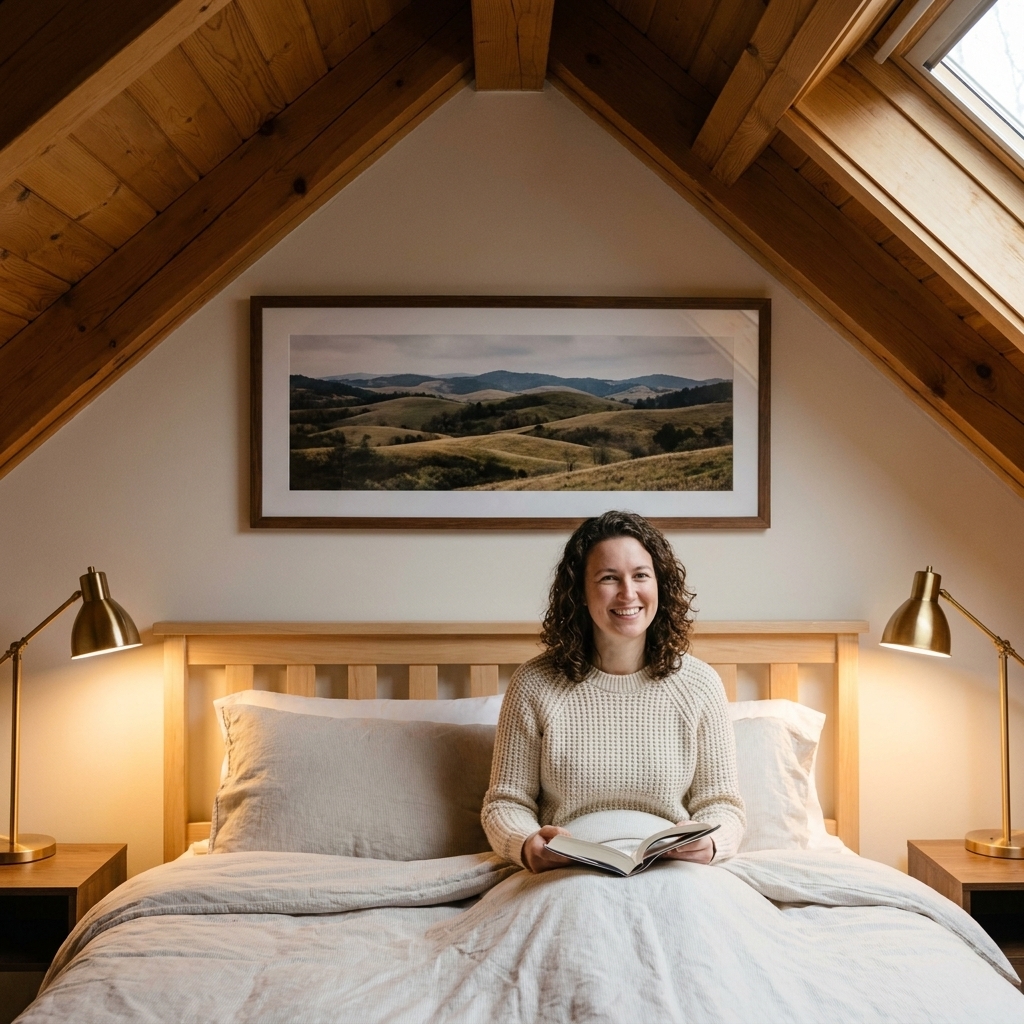
Sloped ceiling or awkward wall
Center the frame over the bed, then respect the slope. I like pieces that are wider rather than tall here. Another option is a small gallery that steps down with the slope while keeping consistent spacing.
Quick sizing cheat sheet
- Single frame width: 2/3 to 3/4 of bed width
- Gallery total width: 2/3 to 3/4 of bed width
- Space above headboard: 6 to 10 inches
- Frame spacing in gallery: 2 to 3 inches
- Center to bed: align to the bed, not the room
FAQ
Should a frame be wider than the headboard?
Usually, no. If it extends wider than the headboard, it can make the bed wall feel top-heavy. If you want extra width, consider a gallery arrangement that stays within the 2/3 to 3/4 width guideline, or add sconces to widen the composition instead of oversizing the frame.
Can I lean a frame on the headboard instead of hanging it?
You can, but be mindful of slipping and rattling. Use rubber bumpers on the frame corners, and if you are a toss-and-turn sleeper, secure it. Leaning works best with sturdy headboards and heavier frames that are not easily nudged.
What if my piece is too small but I love it?
Mat it larger, choose a larger frame, and consider pairing it with a second piece to create a balanced set. You can also layer it on a picture ledge with one or two other frames to build presence without buying a huge new print.
Is it okay to hang a mirror above the bed?
Design-wise, yes, it can look gorgeous. Practically, it must be mounted extremely securely with the right anchors for the weight and wall type. If you are at all unsure, choose a lighter piece instead.
The doorway test
When you think you are done, stand in the doorway and ask: does it feel like it belongs to the bed, or does it feel like it belongs to the wall? The goal is for your bed and wall decor to read as one cozy, grounded moment. Get the scale right, keep the spacing tight, and you will have that finished, hotel-level calm without spending a fortune.