Floating shelves in a bedroom are one of my favorite renter-friendly tricks. They give you personality and function without eating up floor space. The catch is that a shelf can go from curated to chaotic fast, especially in a room that is supposed to help you unwind.
Below is the exact approach I use when I style shelves for friends, clients, and my own tiny bedrooms. You will end up with shelves that feel lived in and meaningful, not like a storage unit hovering over your bed.
One quick safety note before we style: always follow the shelf manufacturer’s weight limits, and install into studs or use the right wall anchors for your wall type. If a shelf is going above your bed, treat secure installation as non-negotiable.
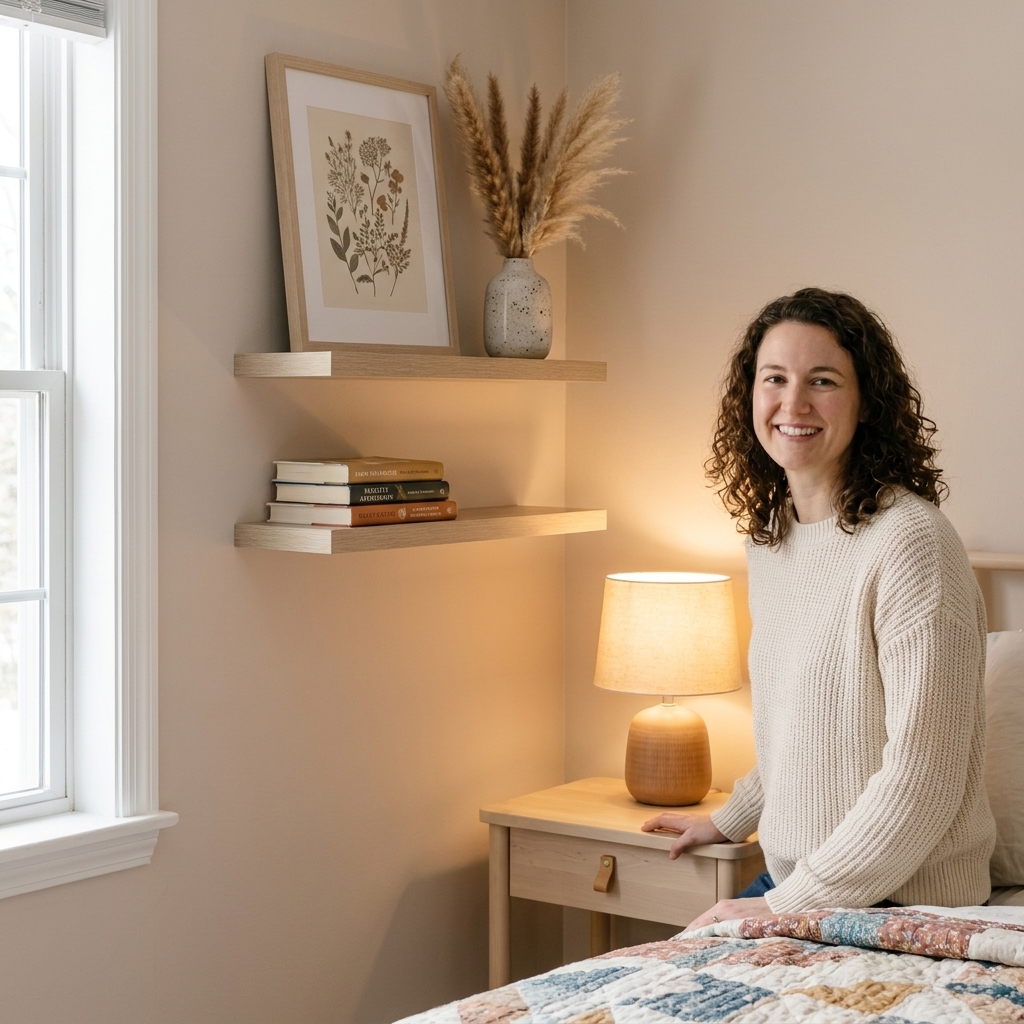
Start with the calm rule: shelves are not storage
If you only remember one thing, make it this: your bedroom shelves should hold a few favorite pieces, not everything you own. The bedroom is where visual noise shows up as mental noise.
My quick test is the “sleep glance.” Stand in your doorway at night with only your bedside lamp on. If your eye pings around the shelf like it is looking for an exit sign, it is too busy. Calm shelves feel like one soft exhale.
- Display: items you would choose again if you had to start over.
- Store elsewhere: duplicates, paperwork, extra candles, backup toiletries, tangled chargers.
- Leave breathing room: empty space is part of the styling, not a failure to fill.
Step 1: Decide what the shelf needs to do
Before you style, pick a job for each shelf. When shelves try to do everything, they look like clutter even if the objects are pretty.
Choose one main purpose
- Display shelf: art, mementos, small sculptural objects.
- Reading shelf: a short row of current reads plus a bookend object.
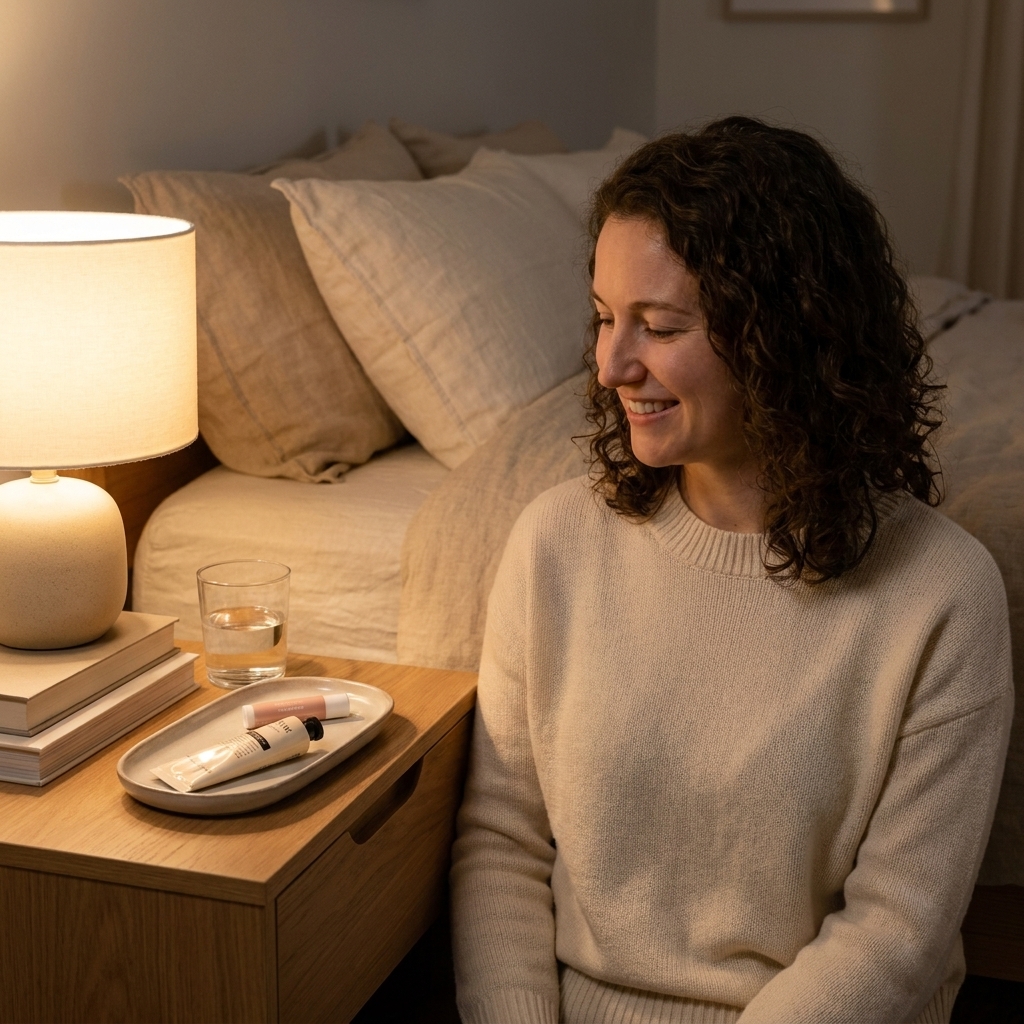
- Get-ready shelf: a small tray for daily items like hand cream, perfume, lip balm.
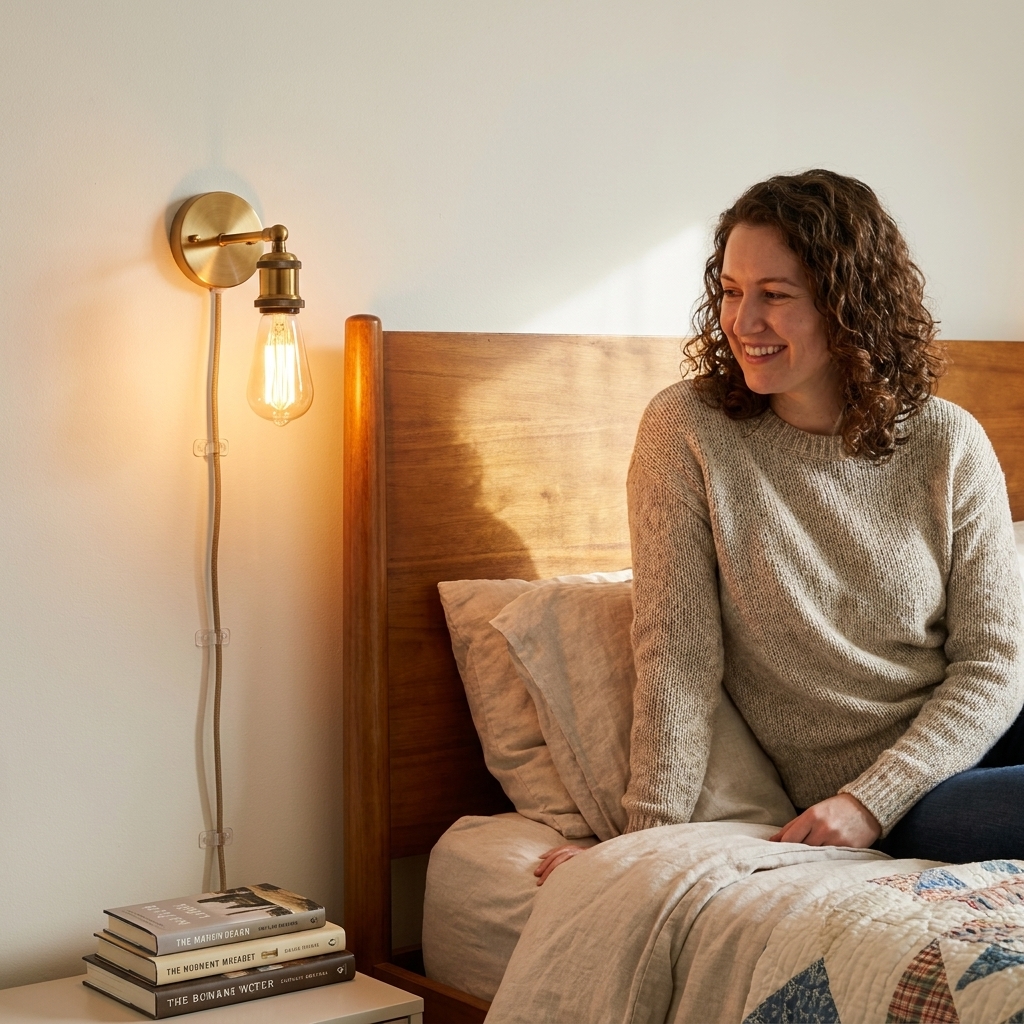
- Light shelf: a plug-in sconce (with cord management) or a small rechargeable lamp plus a couple calm accessories.
If you have two shelves stacked, I like to give the top shelf the pretty job and the bottom shelf the useful job. That balance feels collected, not crowded.
Step 2: Pick a palette
Clutter often feels like a color problem, not a quantity problem. A calm shelf usually sticks to a tight palette with a couple intentional pops.
An easy bedroom-friendly formula
- Base: warm white, oatmeal, soft beige, greige, or muted blush.
- Wood tone: pick one dominant wood family (light oak, walnut, painted).
- Accent: one deeper shade (ink blue, forest green, terracotta, matte black).
- Metal: keep it consistent if you can (all brass or all black).
If your books are loud, you have two options: turn some spines inward for a softer look, or group the colorful spines into one intentional block so it looks designed.
Step 3: Edit your objects
When I thrift, I am picky because I have learned the hard way that sort of cute becomes why do I own this in about a month. Use the same energy here.
Pull everything off and build a shortlist
Lay your potential shelf items on your bed and choose:
- 2 to 4 books you actually want near you
- 1 to 2 framed pieces (prints, photos, or postcards)
- 1 living or organic element (plant, dried stems, a shell, a smooth stone)
- 1 personal memento (travel item, heirloom, something handmade)
- 1 functional piece (small tray, lidded box, catchall bowl)
Anything that does not fit those roles goes back in a drawer, basket, or another room. Your shelf should not be the miscellaneous zone.
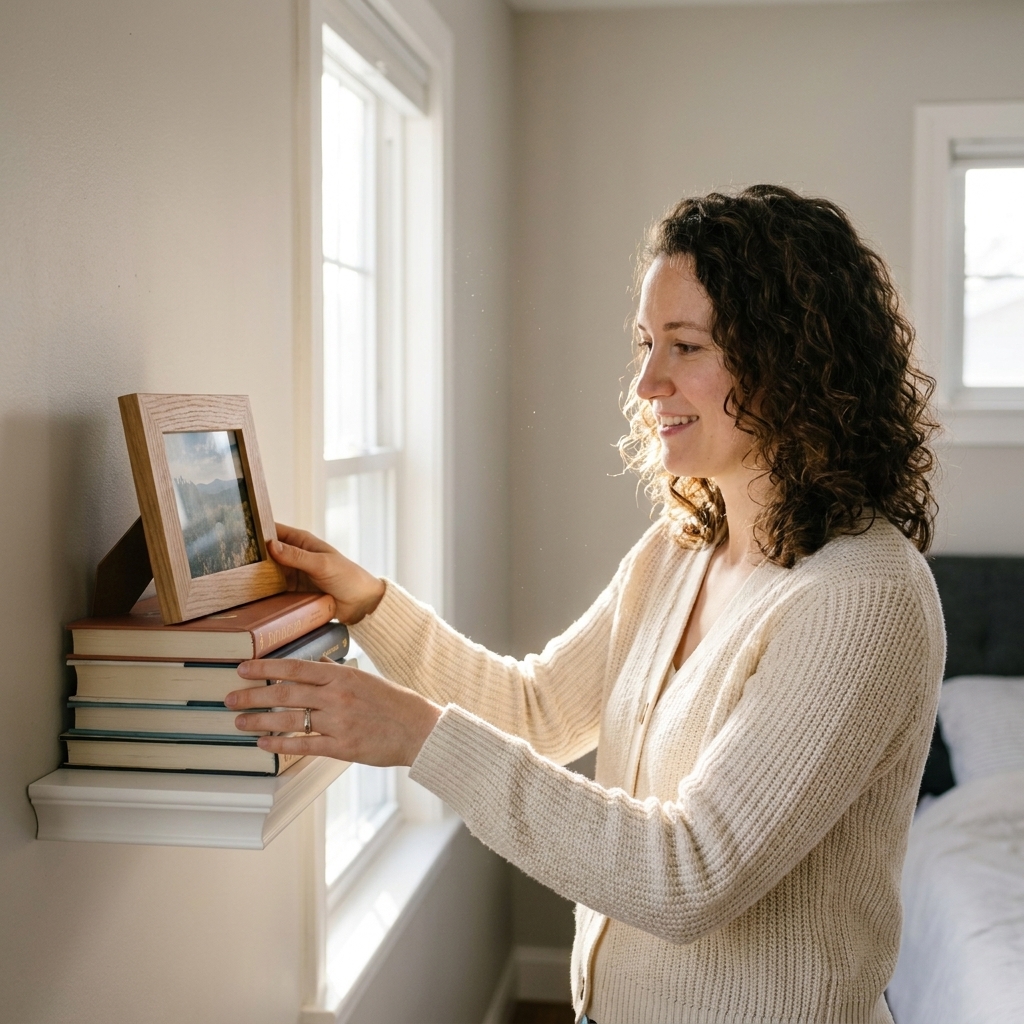
Step 4: Use the 3-layer method
Most cluttered shelves are missing depth. Everything sits in one line and competes. The fix is layering, which gives your eye a place to rest.
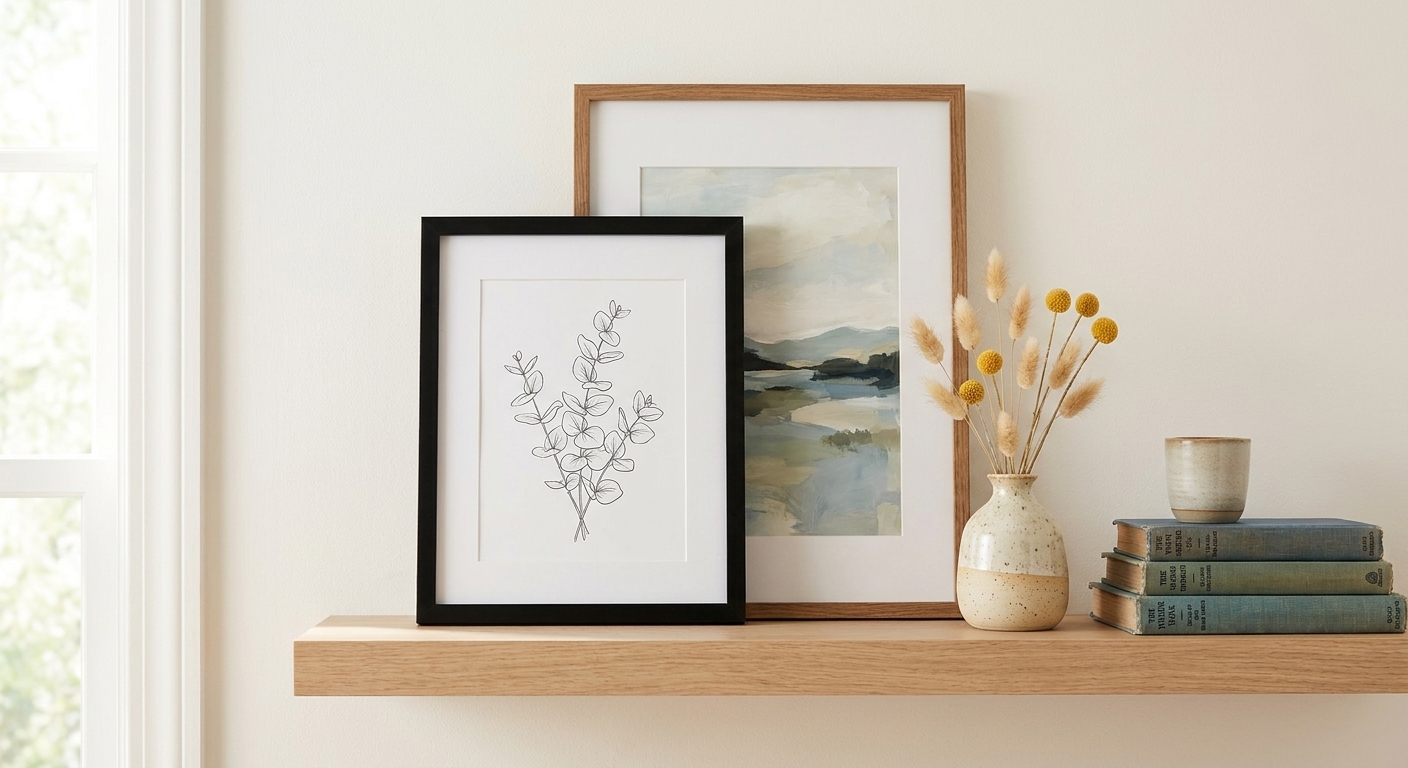
Layer 1: back (tall and flat)
- Leaning art print or framed photo
- Small mirror
- Thin cutting-board-style object (yes, even in a bedroom, it reads like warm wood)
Layer 2: middle (medium height)
- Vase, candle, small lamp, planter
- Book stack with a small object on top
Layer 3: front (small and grounding)
- Matchbox, tiny bowl, trinket dish
- Small stone, shell, bud vase
Keep the front layer minimal. One or two small pieces is usually enough. Too many tiny items is where the shelf starts to feel dusty and fussy.
Step 5: Build in rest space
This is the difference between a shelf that feels calm and one that feels like a to-do list. I aim for about one third of the shelf to be open space, give or take.
Simple spacing rules that work
- Limit groups: 2 to 3 clusters per shelf is plenty.
- Keep gaps: leave a visible gap between clusters so they read as separate moments.
- Vary height: avoid lining everything up at the same height like a parade.
- Repeat a shape: two round items or two black accents makes it feel intentional.
If you tend to overfill, try the one-in, one-out rule. Every time a new treasure comes home, something leaves the shelf.
Step 6: Get the scale right
Even pretty objects look messy when they are the wrong size for the shelf. This is the quick proportion check I use so the whole thing reads like one scene.
Easy proportion guidelines
- Leave edges: try to keep about 2 to 4 inches of open space at each end of the shelf, if the length allows.
- Pick a hero height: choose one tall item (frame, vase, lamp) that is roughly two thirds of the height from the shelf to whatever is above it (ceiling, next shelf, or wall art).
- Keep depth comfortable: avoid objects deeper than the shelf itself, especially above a bed. Flush and stable looks calmer and is safer.
Step 7: Arrange books
Books are cozy. Books scattered everywhere are not. On bedroom shelves, I like books to feel like a soft textile, not a school assignment.
My favorite book layouts
- Short row + bookend object: 6 to 12 books upright, then a vase or sculpture to stop the line.
- Two stacks: one stack of 2 to 4, another stack of 3 to 5, with space between.
- Current reads only: rotate seasonally and store the rest elsewhere.
Top a book stack with something tactile: a small bowl, a candle, or a smooth stone. It turns the stack into a vignette instead of a pile.
Step 8: Style art on a shelf
Leaning frames are the easiest way to get that relaxed, gallery-like look without committing to more wall holes.
How to lean art without the slip risk
- Use frames with a wide base, or add a small museum putty dot under the bottom corners.
- Lean the largest piece first, then layer a smaller one slightly in front.
- Keep frames to 1 or 2 per shelf unless they are tiny and cohesive.
If your shelf is above the bed, skip glass if you are worried about safety. Acrylic-front frames are lighter and less stressful.
Step 9: Add mementos
Mementos are what make a bedroom feel like yours. The trick is to choose a few meaningful pieces and give them room.
My clutter-proof memento moves
- Contain the small stuff: put tiny keepsakes in a lidded box or a shallow tray.
- Choose one hero item: one special photo, one inherited piece, one travel object with a story.
- Keep it tonal: if your mementos are colorful, group them into one cluster so it reads intentional.
If you have lots of sentimental items, rotate them. Seasonal shelf styling is not just for living rooms. It keeps your space feeling fresh without adding more objects.
Step 10: Add soft lighting
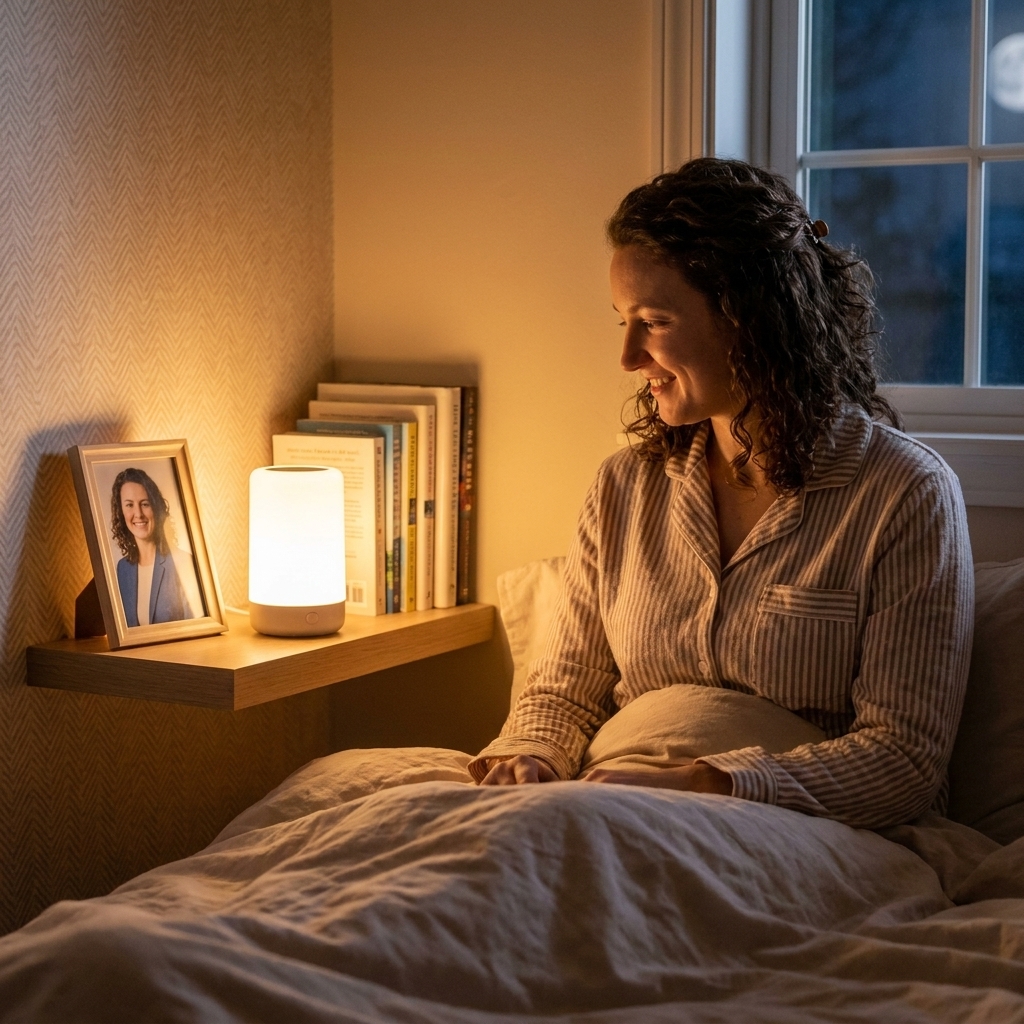
Lighting is the quickest way to make shelves feel cozy instead of busy. Harsh overhead light makes every object scream for attention. Warm, low lighting makes the shelf read as one gentle scene.
Easy shelf lighting options
- Rechargeable mini lamp: perfect for shelves with no outlet nearby.
- Plug-in picture light: warms up leaning art and makes it feel curated.
- LED strip in a diffuser channel: placed under the shelf for a soft wash of light.
For a bedroom, 2700K to 3000K is a common warm range. I lean toward the warmer end because I want the light to feel like honey, not a dentist office.
Bonus: hide cords
If cords are visible, your shelf will read as clutter no matter how beautiful the decor is. A two-minute cord fix makes everything feel calmer.
Simple cord-management ideas
- Use clear adhesive cord clips to guide the cord straight down the wall.
- Add a paintable cord cover if the cord is in a high-visibility spot.
- Coil extra length and secure it behind the shelf with a Velcro tie.
Plant note
Plants are instant life, but bedrooms can be lower light than you think. If your shelf is far from a window, choose a low-light option (like a snake plant) or go faux and call it self-care.
Either way, protect the shelf: use a saucer or a liner under real plants so water does not warp wood or stain paint.
Three shelf layouts you can copy
If you like a clear plan, here are three arrangements that work in most bedrooms. Adjust the scale to fit your shelf length.
Layout 1: The calm classic
- Left: leaning frame (tall)
- Center: small stack of books + candle on top
- Right: vase with simple stems
Layout 2: The reader’s shelf
- Left: short row of books upright
- Middle: bookend object (planter or sculpture)
- Right: shallow tray with one personal item
Layout 3: The minimalist memory shelf
- Left: one framed photo
- Center: lidded box (to hide tiny mementos)
- Right: small bowl or bud vase
What to avoid
- Tiny clutter clusters: lots of mini objects with no tray or box.
- Too many words: multiple quote signs, letter boards, or book spines with loud titles can feel mentally busy.
- Strong scent overload: five candles and three reed diffusers on one shelf is not relaxing.
- Wobbly items above the bed: skip heavy frames and unstable ceramics where you sleep.
- Every shelf packed edge to edge: open space is part of the design.
Quick refresh routine
I do this in under five minutes when my shelves start collecting random extras:
- Remove anything that does not belong in a bedroom (mail, cords, receipts).
- Put all small loose items into one tray or box.
- Pick one object to remove entirely if it feels crowded.
- Wipe the shelf and reset the clusters with a little breathing room.
The goal is not perfection. The goal is to walk in at the end of the day and feel your shoulders drop.
FAQ
How high should floating shelves be in a bedroom?
It depends on placement, but I like shelves to feel visually connected to the furniture below. Above a nightstand, start around 18 to 24 inches above the tabletop and adjust so taller items do not feel like they are looming. If a shelf is above the bed, make sure it is high enough that you will never bump it when sitting up.
How do I keep floating shelves from looking messy?
Use fewer categories (books, art, one memento, one functional piece), create 2 to 3 clusters max, and leave open space. Messy usually comes from too many small items and no containment, so add a tray or lidded box.
Should I match my shelf decor to my bedding?
You do not need a perfect match, but repeating one or two tones from your bedding on the shelf helps the room feel calm. For example, if you have oatmeal linen bedding, add one warm ceramic and a natural wood frame.