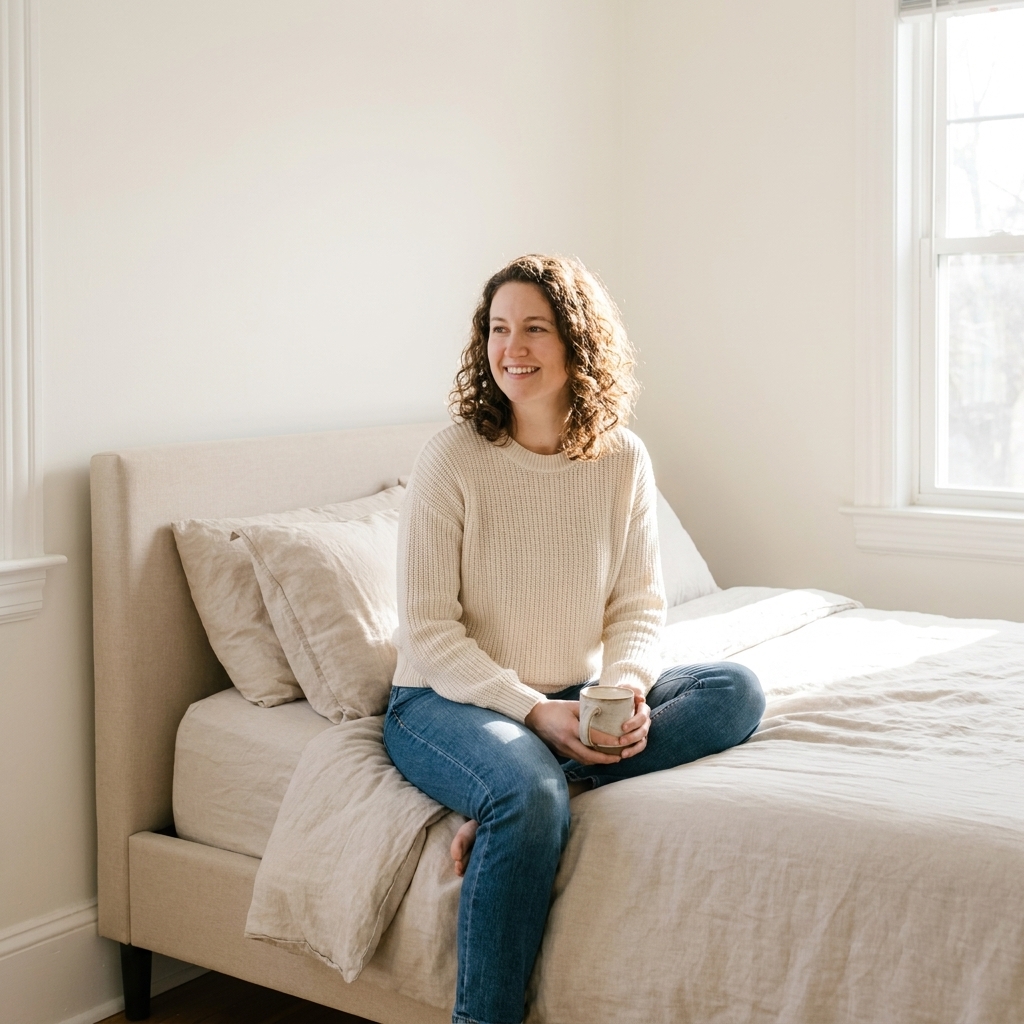
If your bedroom feels a little too close for comfort, paint is one of the fastest, most cost-effective ways to make it feel larger without changing anything structural. I have styled plenty of tiny rentals where the right color choice made the room feel calmer, brighter, and noticeably more open. The trick is not just “paint it white” (although white can be lovely). It is choosing a color that works with your light, your floors, and your furniture, then using a couple of optical moves so the edges of the room do not visually stop your eye.
Start with light first
Before you pick a paint chip, stand in your room at three times: morning, late afternoon, and at night with your lamps on. Compact rooms feel cramped when the light is muddy or the wall color reads heavier than you expected.
- North-facing or shaded rooms often look cooler and grayer. They usually do best with warmer undertones.
- South-facing rooms can handle cooler or crisper shades because the light is generous.
- Low natural light tends to look best with light-reflective colors and forgiving finishes so the room does not feel cave-like.
Quick stylist trick: tape 2 or 3 large paint swatches (not tiny chips) to different walls. Your best pick is the one that stays pleasant in all three lighting moments.
Wall colors that help a room feel bigger
What you want is a color that reflects light, softens corners, and feels continuous. These families work because they keep contrast low, which helps your eye move around the space.
Soft whites
Soft whites blur edges and bounce light, which can visually expand the perimeter. Skip anything too stark if your room is dim, because bright white can look cold and emphasize shadows.
- Best for: Very small rooms, low ceilings, rooms with lots of visual clutter.
- Look for: “Warm white,” “creamy,” “cotton,” “ivory,” or “off-white.”
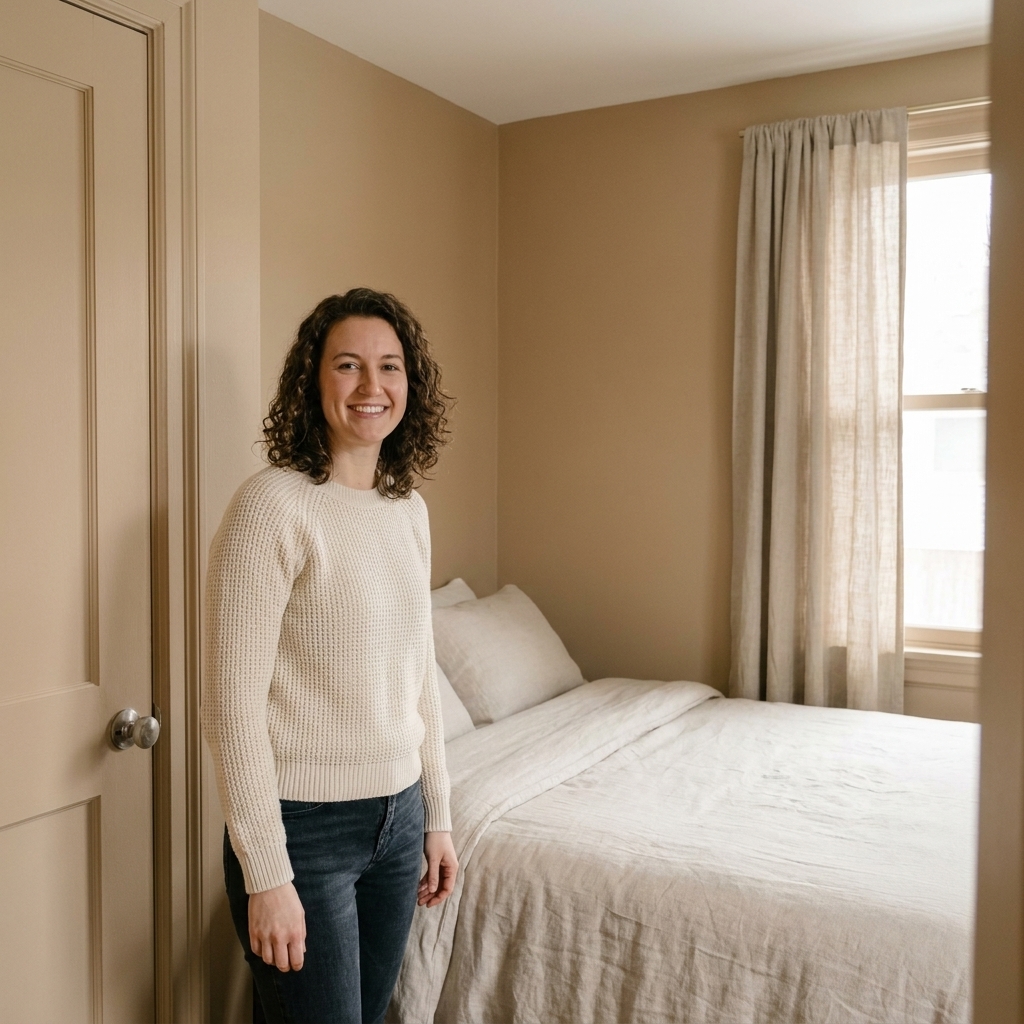
Light greige and warm taupe
If you want a bedroom that feels bigger and softer than white, greige is a reliable choice. It reads neutral, hides bumps well, and pairs beautifully with thrifted wood tones.
- Best for: Medium-light rooms, rentals with beige carpet, warm wood floors.
- Undertone tip: Choose a greige that leans warm, not purple.
Pale blue-gray and misty blue
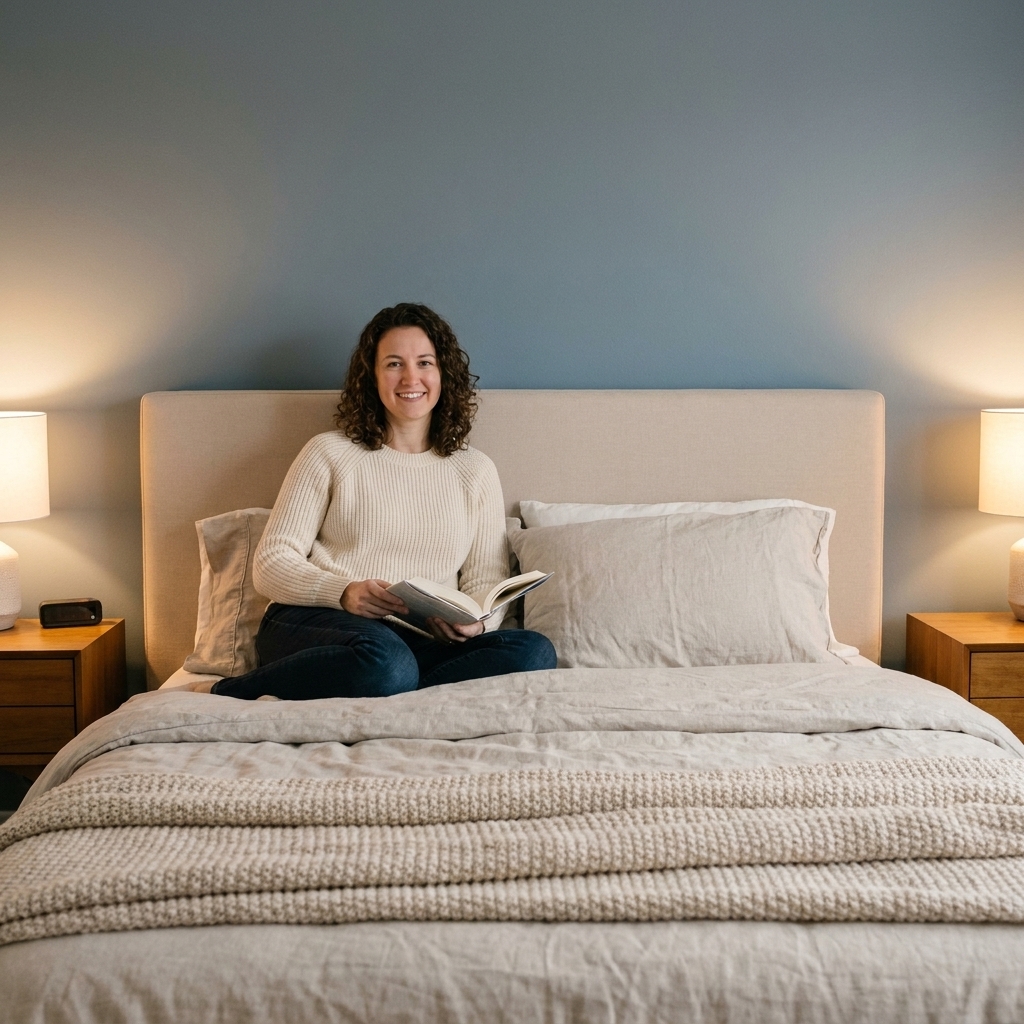
Cool, pale blues can feel like distance, like the sky. In a small bedroom, they can make the walls feel farther away, especially when you keep the trim and ceiling light. As always, it depends on contrast and your lighting.
- Best for: Bright rooms, south-facing light, minimalist or coastal looks.
- Avoid: Strong, saturated navy on all walls if the room is short on light.
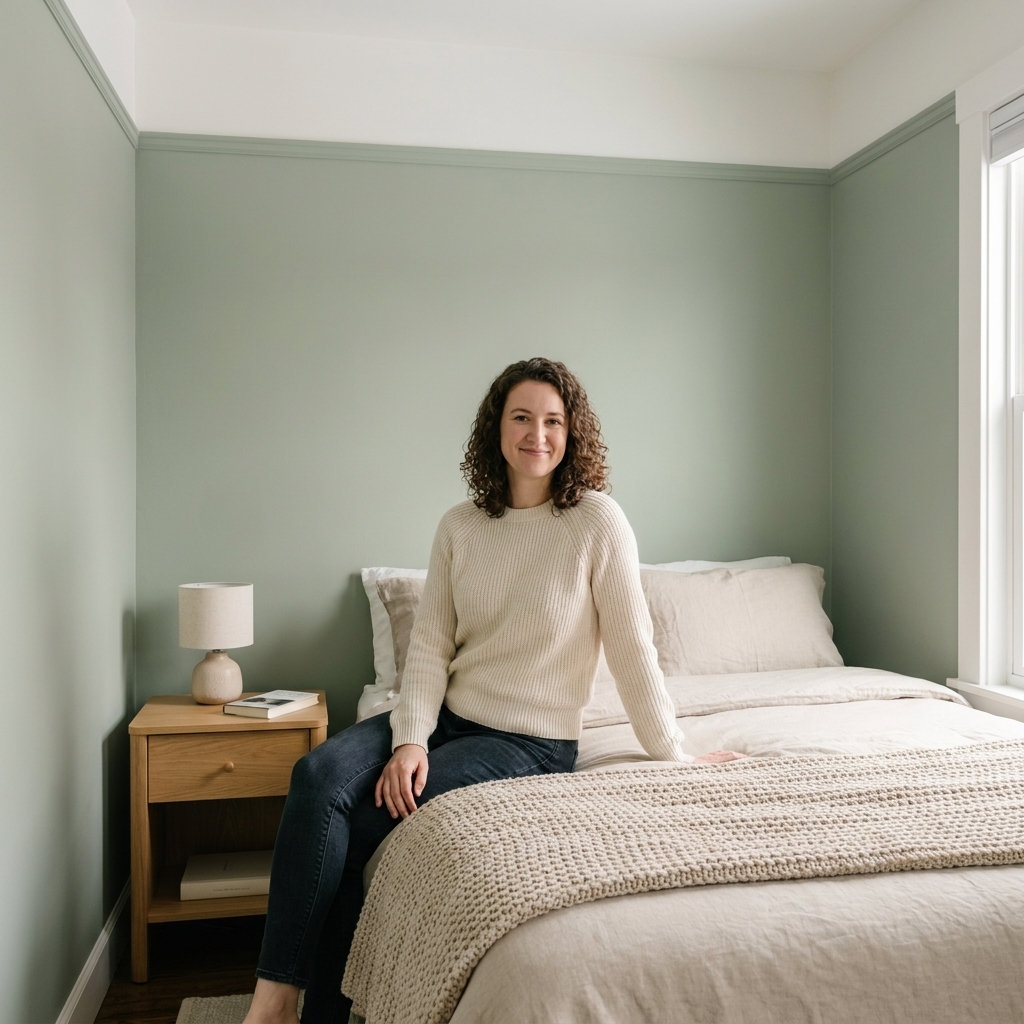
Soft sage and muted green
A muted green with plenty of gray or beige in it feels grounded and restful without necessarily shrinking the room. The key word is muted.
- Best for: Bedrooms with plants, natural textures, warm woods, brass accents.
- Undertone tip: If your room is dim, choose a sage with a warmer base so it does not go swampy.
Blush-beige and warm pinky neutrals
Not bubblegum, not rose. Think barely-there blush mixed with beige. These shades brighten skin tones, flatter wood furniture, and help a tight room feel gentle instead of pinched.
- Best for: North-facing rooms that need warmth, romantic and vintage styles.
Optional nerdy metric: If you like something more objective, check the paint’s LRV (Light Reflectance Value). Higher LRV paints generally reflect more light and often feel airier. It is not the whole story, but it is a helpful filter when you are comparing similar shades.
Choose the right finish
Finish affects how light bounces and how much wall texture you notice. In a smaller room, that can change the vibe dramatically.
- Eggshell: My go-to for most bedrooms. It reflects a bit of light without looking shiny.
- Satin: Slightly more reflective. Helpful if your room is dark and you want more bounce, but it can highlight wall imperfections.
- Matte/flat: Gorgeous and velvety, but can absorb light. I use it when the room is already bright and I want the walls to feel soft, not reflective.
In general, I avoid semi-gloss on bedroom walls in small spaces. It tends to spotlight every bump and patch.
If you rent, check your lease or ask your landlord before changing sheen or color. Some rentals require flat paint or a specific brand for easier touch-ups.
Optical tricks that help
Once you have a light, friendly color, these small tweaks can amplify the “bigger room” effect.
Go low contrast on trim and doors
High-contrast trim creates hard outlines, which can make a room feel more boxed in. For a small bedroom, I like either:
- Same-color trim (walls, trim, and door all one color) for a seamless look.
- One shade lighter trim to keep edges soft.
Keep the ceiling brighter
When ceilings feel low, keep them bright. A simple ceiling white can make the top of the room feel higher and cleaner. If you want a subtle designer trick, use the same wall color on the ceiling but have it tinted one to two shades lighter.
Use one deeper accent strategically
In a narrow room, a slightly deeper shade on the short wall can sometimes make the space feel longer by pulling your eye forward. Keep it in the same color family so it still feels calm and cohesive, and test it in your lighting first.
Lighten the most shadowed wall
Every room has a wall that reads the darkest during the day, often because it faces away from the window or is blocked by furniture. Painting that wall your lightest color can reduce shadows, which is one of the quickest ways to make the space feel more open.
Undertones matter
Two paint colors can look identical on the sample card and totally different on your wall. That is undertones at work, and in a smaller room it is extra noticeable.
- Warm undertones (yellow, red, beige) make a room feel inviting and often help in cool light.
- Cool undertones (blue, green, violet) feel crisp and airy but can look chilly in low light.
- Gray-heavy colors can read darker once they cover four walls, especially at night.
My thrift-shop test: hold a white sheet or pillowcase up to your wall. If your paint sample suddenly looks green, pink, or purple next to it, that undertone will show up in the full room.
Solutions for common issues
Tiny and dark
- Choose a warm off-white or a light creamy greige.
- Use eggshell or satin for a little extra bounce.
- Keep trim low contrast so shadows are not outlined.
Tiny but bright
- Try misty blue, pale sage, or soft greige.
- Matte can work beautifully if the walls are in good shape.
Low ceiling
- Paint the ceiling brighter than the walls.
- Consider painting the top 2 to 4 inches of wall the ceiling color to blur the line.
Lots of warm wood furniture
- Go for warm whites, greige, or a warm-leaning sage.
- Avoid icy whites that can make wood look orange by contrast.
A simple paint plan
- Pick one light wall color (soft white, greige, misty blue, or muted sage).
- Keep trim either the same color or one shade lighter.
- Paint the ceiling bright to lift the room.
- Limit high-contrast accents to bedding and art, not the wall perimeter.
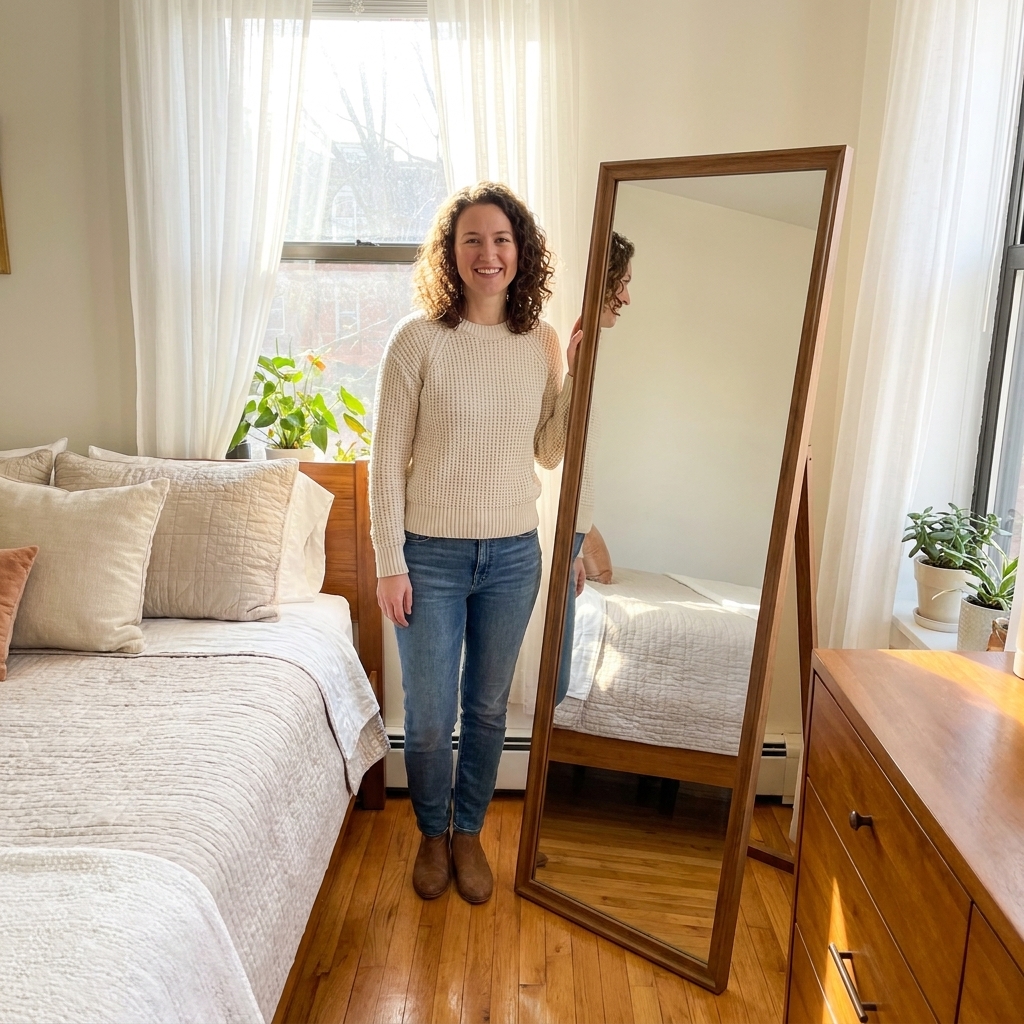
- Add one mirror where it reflects a window or lamp, because paint loves a little help.
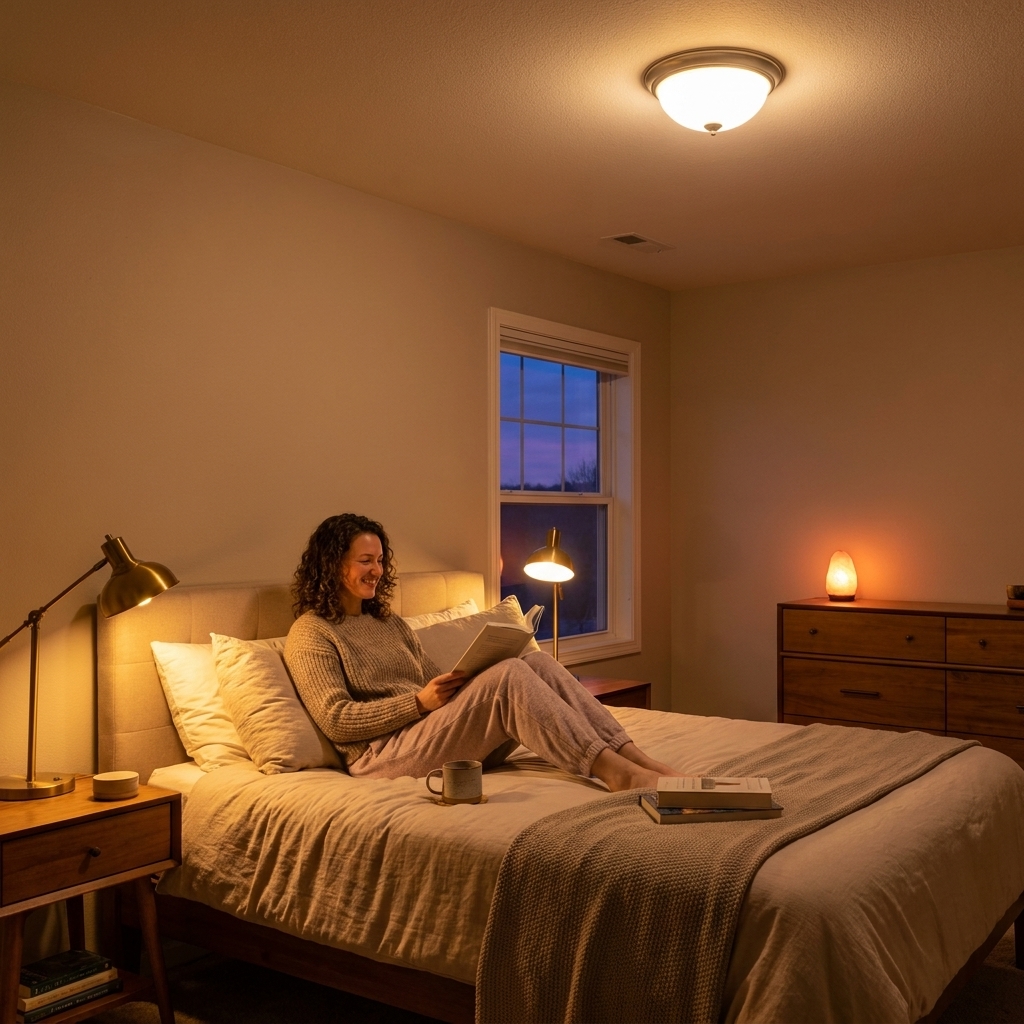
Paint does the expanding, then good lighting and a mirror keep the illusion going at night when small rooms tend to feel tight.
Quick FAQs
Does painting a small bedroom one color make it look bigger?
Often, yes. Painting walls and trim the same color reduces visual breaks, so your eye reads the room as one continuous space. It is one of my favorite rental-friendly tricks for tight bedrooms.
Are dark colors always bad in a small bedroom?
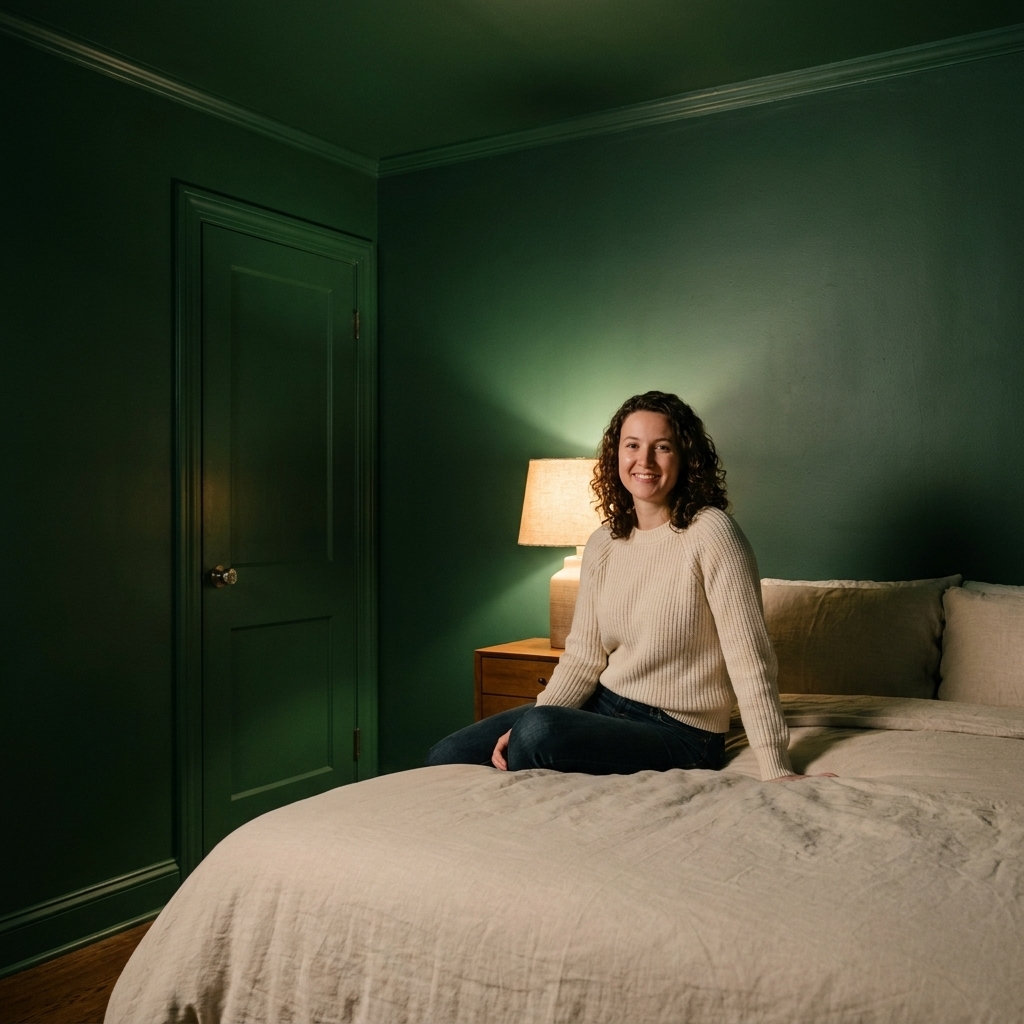
Not always. Deep colors can feel cozy and intentional, but they usually do not read “bigger.” If you love dark walls, balance them with a lighter ceiling, light bedding, and layered lighting so the room still feels breathable.
Should I use pure white to make the room look larger?
Pure white can work in a bright room, but in low light it can look cold and emphasize shadows. Most small bedrooms do better with a soft warm white or a pale neutral with gentle undertones.
What about stripes or patterns?
Subtle vertical stripes can make a ceiling feel higher, and wide horizontal stripes can visually widen a room. Keep contrast low, or it can look busy and make the room feel smaller.
Paint is only half the magic
Once your walls are doing the heavy lifting, keep the rest of the room from crowding them. Light curtains hung high, a rug that reaches under the bed, and warm, layered lamps make your new color look intentional and the whole space feel bigger.