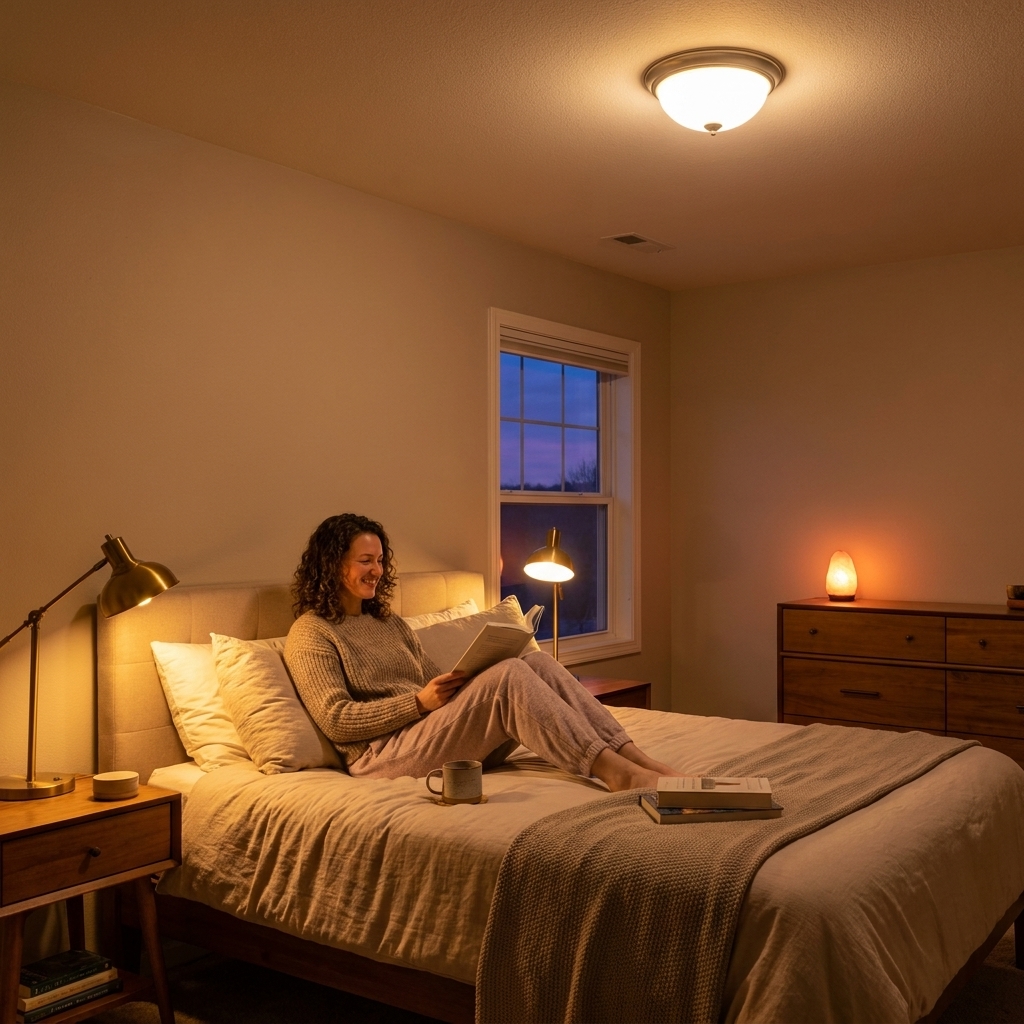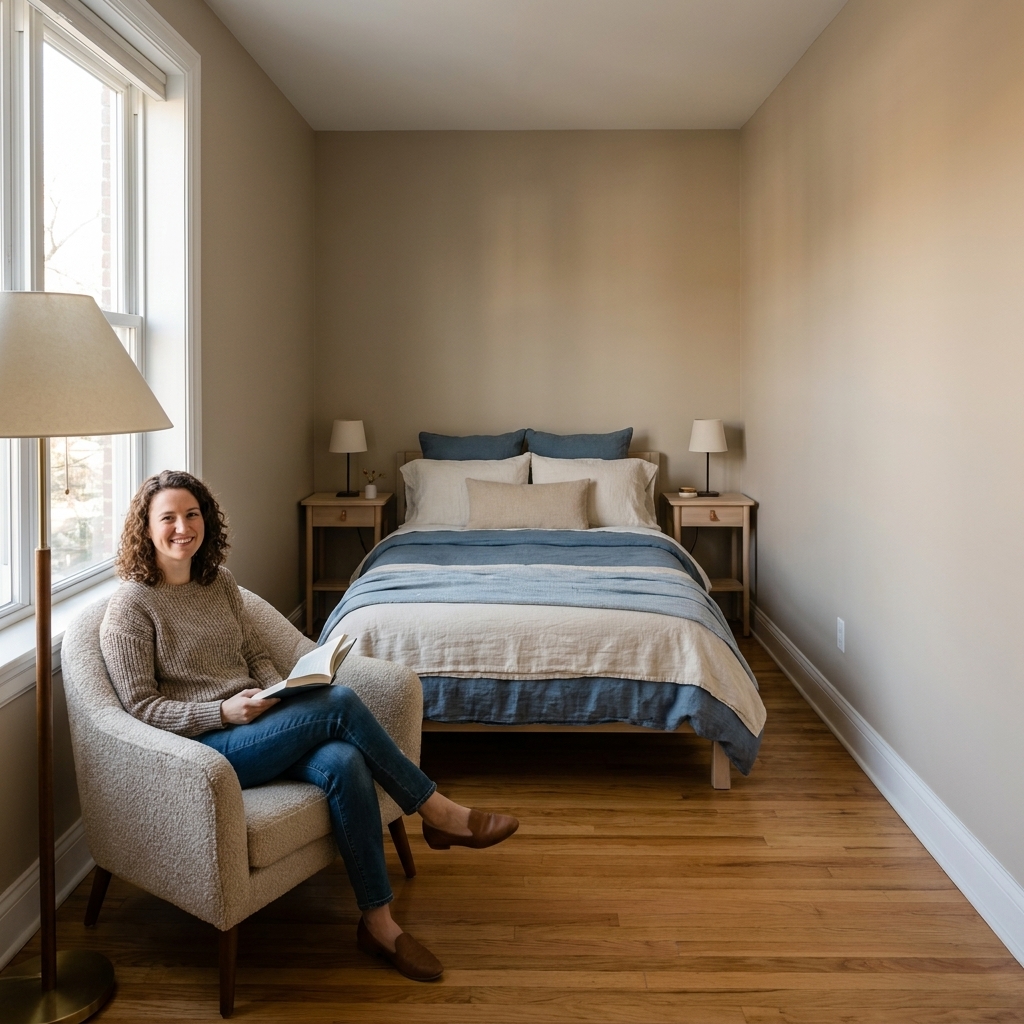
I love a bedroom that feels like a deep exhale. But sometimes real life says, “Also, you need a place to answer emails.” The good news is you can sneak a workspace into your bedroom layout without turning your sleep sanctuary into a tiny corporate cubicle. The secret is treating the desk like a guest: it gets a clear boundary, good manners, and a designated place to leave its mess.
Start with the sleep-first rule
Before you move a single thing, decide what your bedroom is for. Mine is always: sleep, unwind, then everything else. Design around that, and the office becomes a quiet add-on instead of the main character.
- Protect your bed zone. If you can, avoid positioning your chair so it faces the bed head-on. That sightline can make it harder for your brain to switch off.
- Keep clear pathways. Aim for an easy walk to the bed, closet, and door without weaving around a chair or cords.
- Limit what lives on the desk. The bedroom can handle a laptop, notebook, and lamp. It usually cannot handle a printer, three monitors, and an avalanche of paper.
Pick the right spot
If you are working with a small room, placement matters more than the desk itself. Here are my go-to setups, from “barely there” to “full WFH.”
1) The nightstand swap
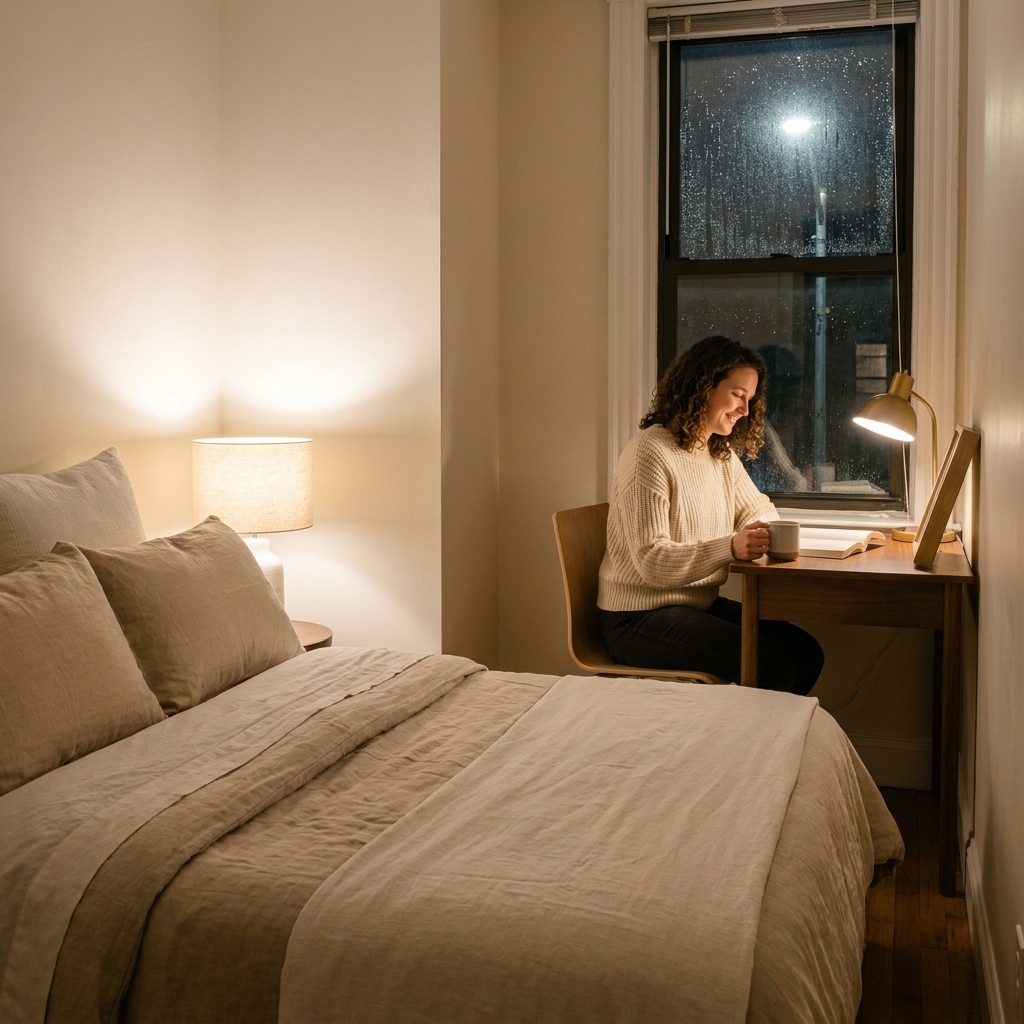
This is the easiest trick for tiny rooms: replace one nightstand with a small writing desk that still feels bedside-friendly. Look for something around nightstand height with a shallow drawer.
- Best for: laptop work, journaling, light admin
- Make it feel cozy: choose a desk with warm wood or a vintage finish, and add a petite lamp with a soft shade

2) The window perch
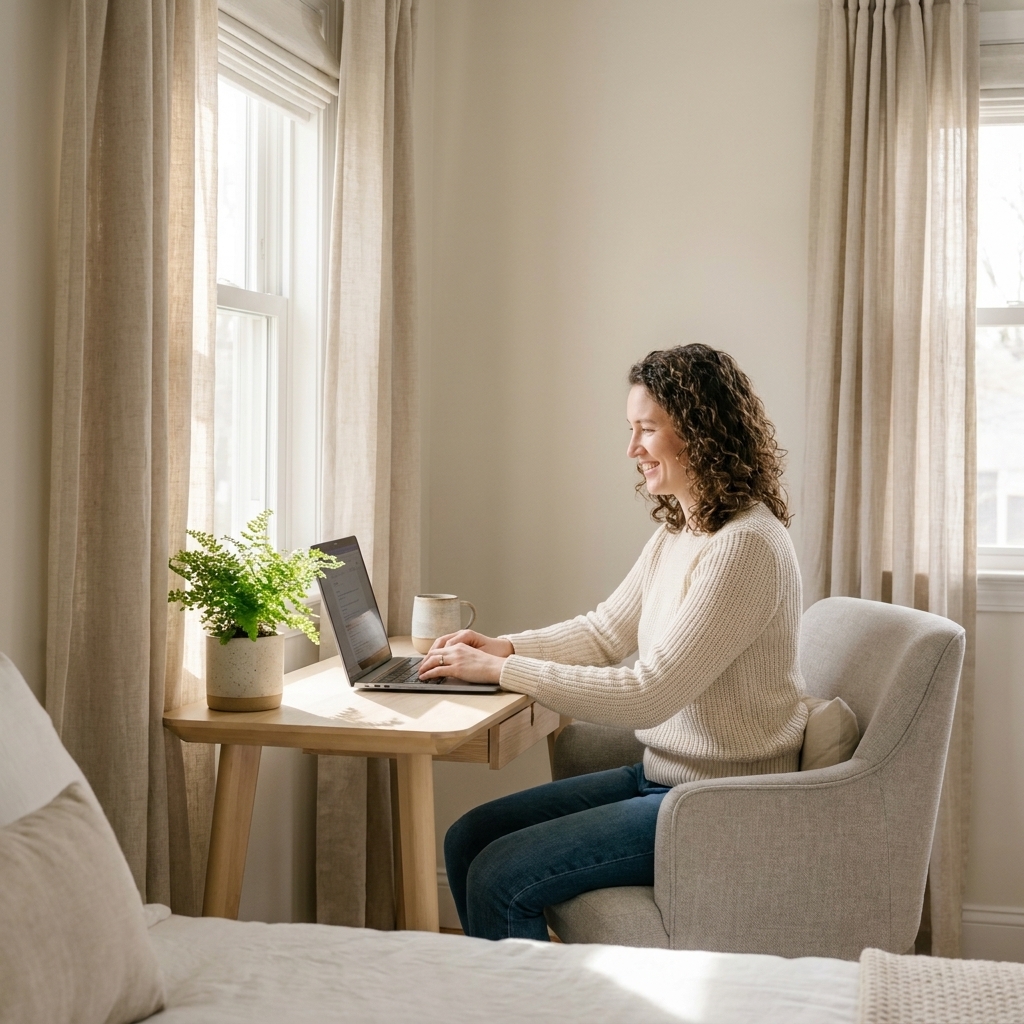
If you have a window, it is prime real estate for daytime work. Natural light can help you feel more awake, and it gives your brain a clear “day mode” cue. Just watch for glare on your screen.
- Best for: long work sessions, video calls (soft daylight can be very forgiving)
- Quick fix: hang simple curtains or add a light-filtering shade to control brightness
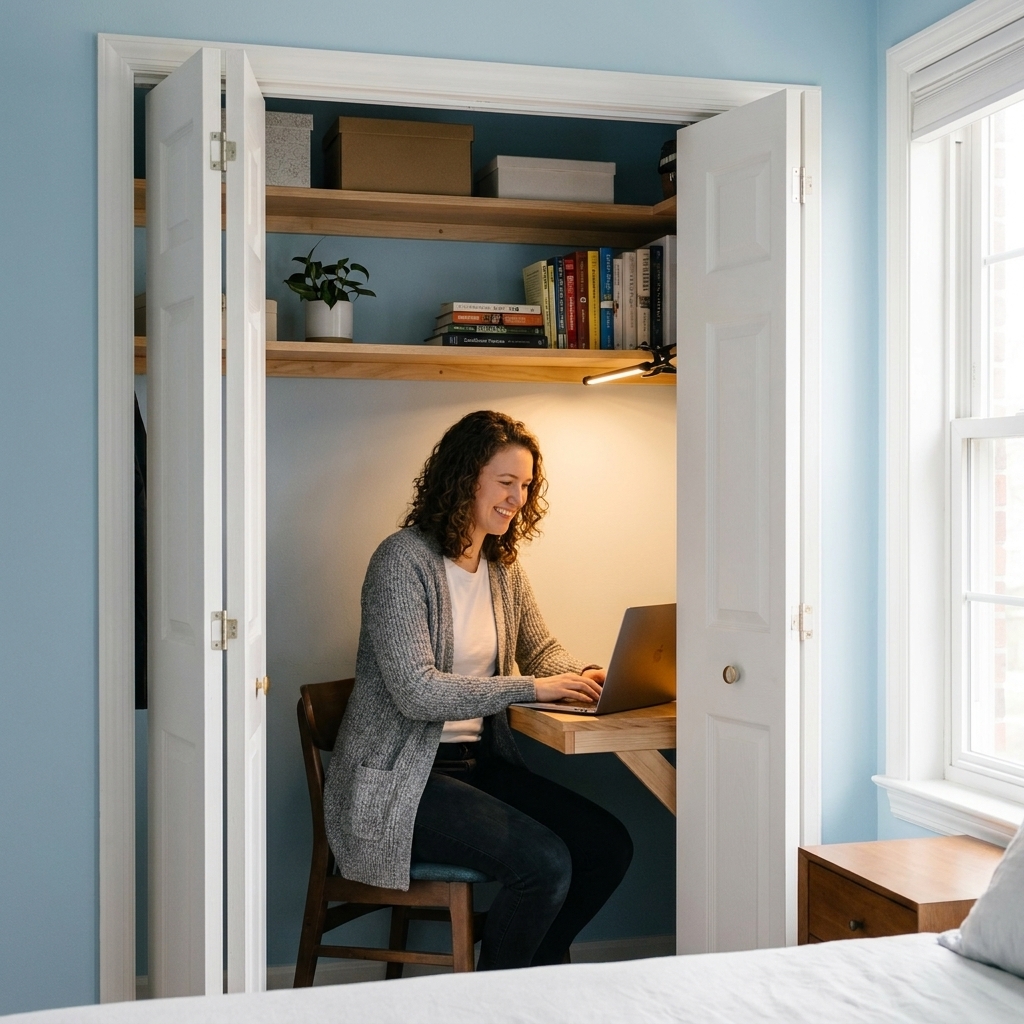
3) The closet office
If you can spare a closet, this is my favorite way to keep work from visually taking over. Remove the doors, or keep them and close up shop at the end of the day.
- Best for: people who want strong separation between work and sleep
- Measure first: depth for your knees and chair clearance matters more than desk width
4) The dresser top workstation
When floor space is tight, go up. A sturdy dresser can become a standing desk or a sit-down spot with a tall stool, depending on height. Just make sure the surface is stable, the stool is secure, and nothing wobbles when you type.
- Best for: short bursts of work, minimal gear
- Make it comfortable: match stool height to the surface and keep a small footrest nearby
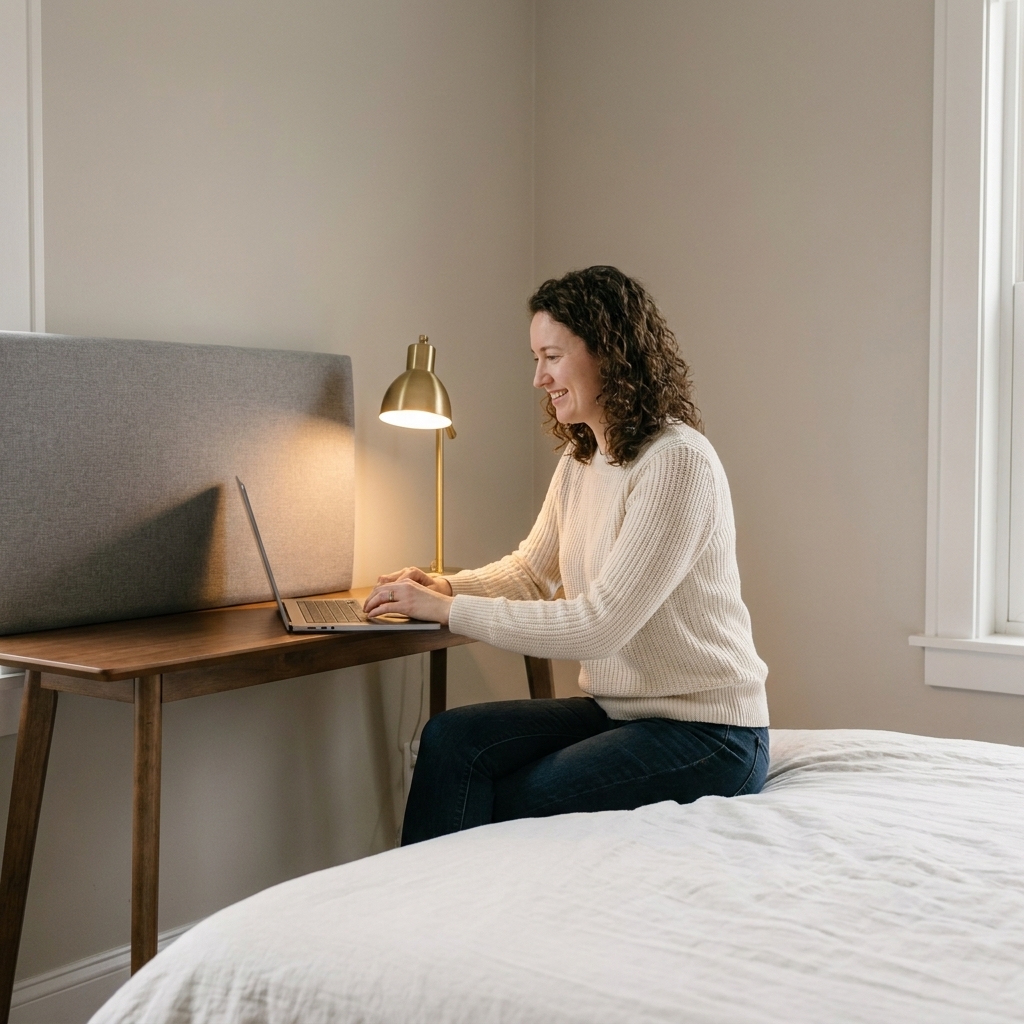
5) The behind-the-bed slim console
If your bed floats (even a little) away from the wall, a narrow console table behind the headboard can double as a desk. It is sneaky, chic, and great for narrow rooms.
- Best for: laptop-only setups
- Styling tip: use two baskets underneath to hide a power strip and supplies
6) The room divider zone
If you truly need a dedicated work corner, create a visual boundary with a folding screen, curtain track, or tall open shelving. It is not about building a wall. It is about giving your brain a cue.
- Best for: shared bedrooms, studio-like layouts, strong work-life separation
- Bonus: a divider helps hide cables and paper piles fast
Choose a desk that disappears
Bedroom workspaces succeed when they are compact and closable. These desk styles are made for that.
- Wall-mounted drop-leaf desk: folds down when you are off the clock.
- Secretary desk: the ultimate “shut the door on it” option.
- Floating shelf as a micro desk: works with a laptop and one small drawer unit.
- Thin writing desk: 16 to 20 inches deep is often enough and keeps the footprint light.
- Rolling cart desk: ideal if you need flexibility. Lock the wheels so it does not drift.
Thrift tip: look for a sturdy side table or console and add a simple slide-under keyboard tray if you need it. Older furniture can be more solid than budget flat-pack, especially if the joints are tight and the piece feels heavy.
Make it calm, not clinical
Most bedroom offices fail because they look like an office. Bring the desk into your bedroom’s design language so it feels intentional.
Match color and materials
- Echo one finish you already have: wood tone, black metal, brass, or painted cream.
- Choose a desk chair that reads “accent chair” more than “conference room.” Upholstered seats help.
- Add one soft element nearby: a small rug under the desk, a linen pinboard, or a fabric lamp shade.
Keep tech visually quiet
- Swap bright plastic bins for lidded baskets or a vintage drawer organizer.
- Use a neutral desk mat to soften the look of a laptop and mouse.
- Limit desktop items to a “pretty trio”: lamp, catchall tray, one container for pens.
Lighting for work and sleep
Lighting is where you win or lose the cozy factor. Your eyes need clarity for tasks and warmth for winding down, and those are two different moods.
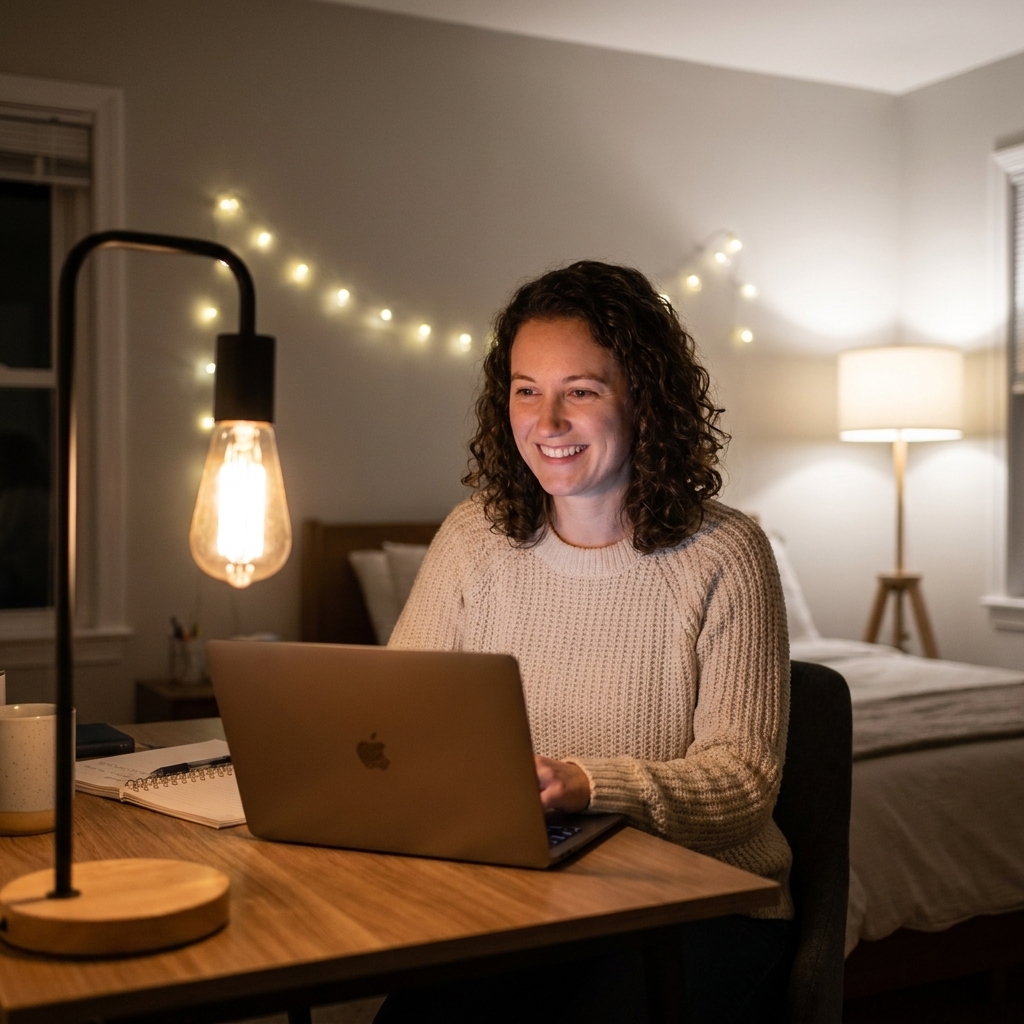
- Use two light sources: a task lamp for the desk and a separate ambient lamp for the room. This keeps work light from flooding your entire bedroom.
- Go warm at night: in the evening, warm white bulbs (around 2700K to 3000K) tend to feel softer and less harsh.
- Skip overhead glare late: if you can, rely on lamps after dinner. Many people find it easier to wind down.
- Video call upgrade: place a small lamp slightly in front of you, not behind you, so your face is not shadowy.
Cable control that keeps the vibe
Cables are the fastest way for a bedroom office to start feeling chaotic. Give them a system once, and the room stays calmer every day.
- Mount the power strip: attach it to the underside of the desk or the back of a dresser so it is not on the floor. Use surge protection when you are plugging in pricier electronics.
- Try one cord spine: a cable sleeve or simple cord cover gathers everything into a single line.
- Label chargers subtly: a tiny tag helps you avoid the nightly unplugging puzzle.
- Hide the extras: store spare cords in a small pouch in a drawer, not in a visible pile.
If you rent, stick with removable options like adhesive cable clips, Command-style hooks, or paintable surface raceways.
Storage that prevents spread
Your goal is a desk that can be cleared in under two minutes. If that sounds impossible, you just need better nearby storage.
- Under-desk drawer unit: perfect for notebooks, chargers, and paper.
- Pretty lidded box: toss in mouse, headset, and sticky notes at the end of the day.
- Wall shelf above the desk: lifts supplies off the desktop without taking floor space.
- Bedside basket rule: if you work near the bed, use a basket for work items so they do not migrate onto your duvet.
My personal rule: nothing work-related gets stored on the bed, ever. Not even “just for a second.” That is how spreadsheets end up next to your pillow.
Ergonomics in a small space
You do not need a full corporate setup, but a few small tweaks can make bedroom work feel better on your body.
- Get the screen up: if you use a laptop daily, a simple stand plus an external keyboard and mouse can help your neck and shoulders.
- Support matters: pick a chair that feels stable and supportive, even if it looks like an accent chair.
- Skip working in bed: it blurs the sleep boundary and usually puts your body in a weird hunch.
Set boundaries with closing time
This is the part people skip, and it matters as much as layout. A bedroom office needs a clear ending so your brain can step into rest mode.
- Shut it down physically: close the laptop, slide it into a drawer, or cover it with a cloth or basket tray.
- Reset the surface: clear cups, stack papers, return pens to one container.
- Change the lighting: turn off the task lamp, turn on softer bedside lighting.
- Add a scent cue: a chamomile candle or linen spray signals “work is done.”
Common problems and fixes
“My chair makes the room feel cluttered.”
Choose a chair with lighter visual weight: slim legs, an upholstered seat, or a chair that can double as a vanity chair. If it tucks fully under the desk, the room instantly feels calmer.
“I only have space at the foot of the bed.”
Go with a shallow desk or console and keep the chair armless so it slides in. Leave enough clearance so you can still walk around the bed comfortably.
“My partner sleeps while I work.”
Use a focused task lamp aimed at your desk and keep the rest of the room dim. A soft rug under your chair helps reduce rolling noise. For calls, wired earbuds or soft over-ear headphones can keep your voice lower and your typing less distracting.
“I can’t stop thinking about work at night.”
Make the desk closable if possible and keep work items out of sight. Even a curtain on a ceiling track can create that mental separation in seconds.
A quick checklist
- Desk placed with a clear walkway and minimal bed-facing sightline
- Task lamp plus warm ambient light (2700K to 3000K for evenings)
- Surge-protected power strip mounted and cables gathered into one sleeve
- One lidded container for daily work items
- Optional comfort add-ons: laptop stand, external keyboard, supportive chair
- End-of-day reset routine that takes two minutes
If you want the coziest possible outcome, remember this: your bedroom office should feel like it belongs in your room when it is not in use. Make it easy to put away, easy to soften, and easy to ignore at bedtime.