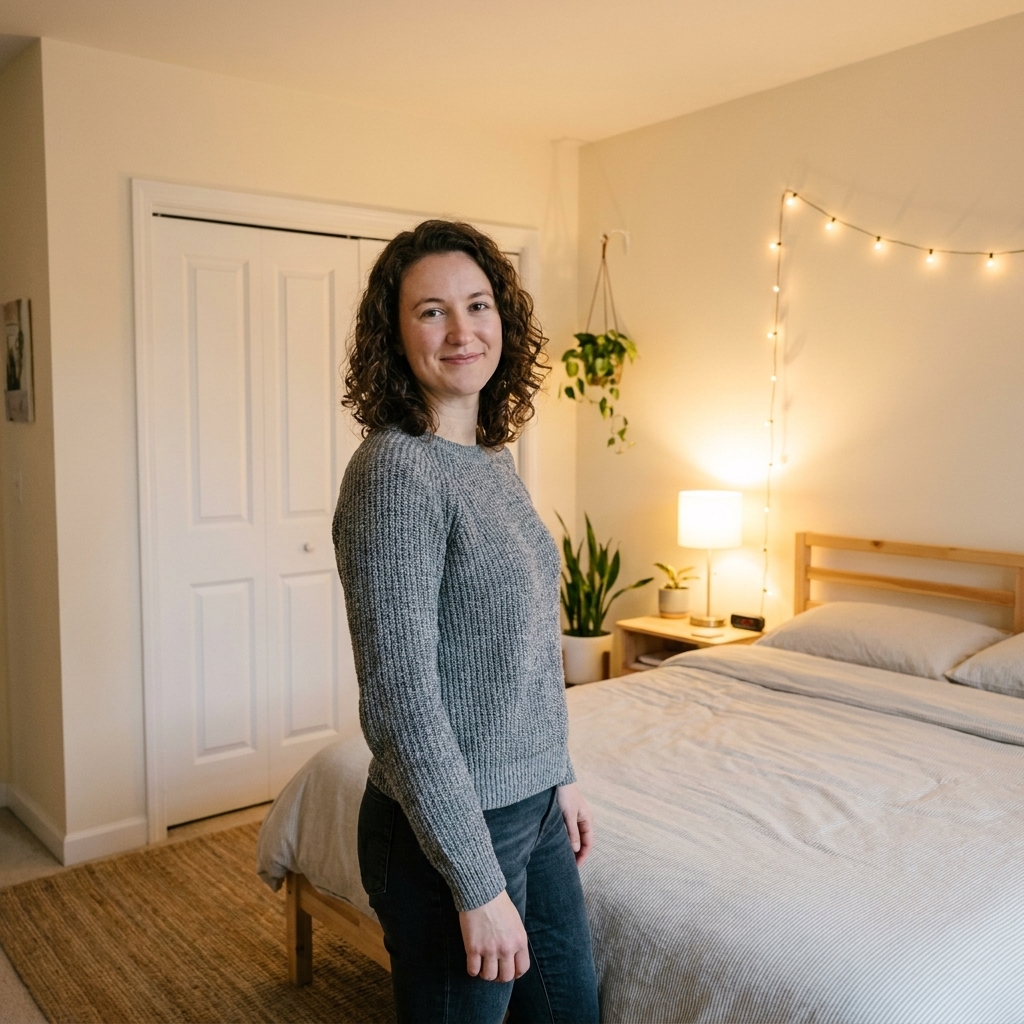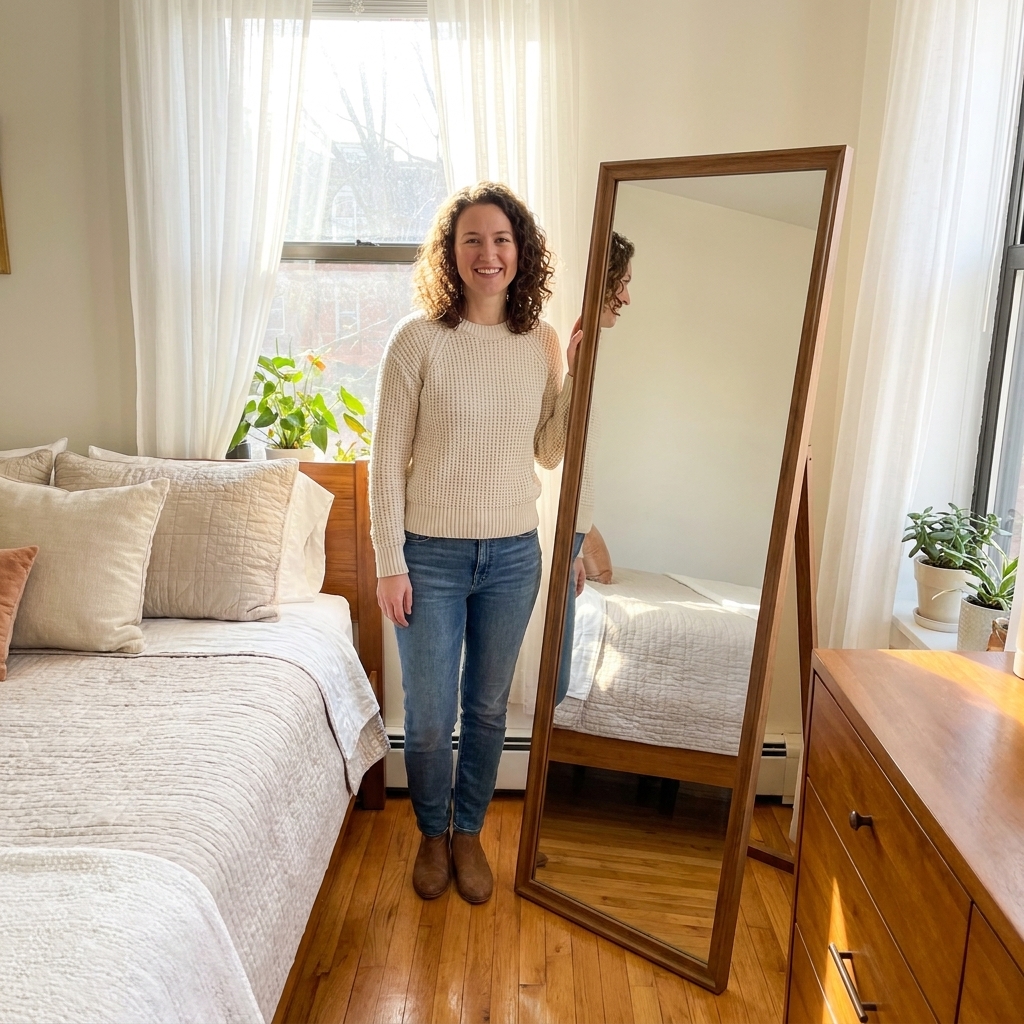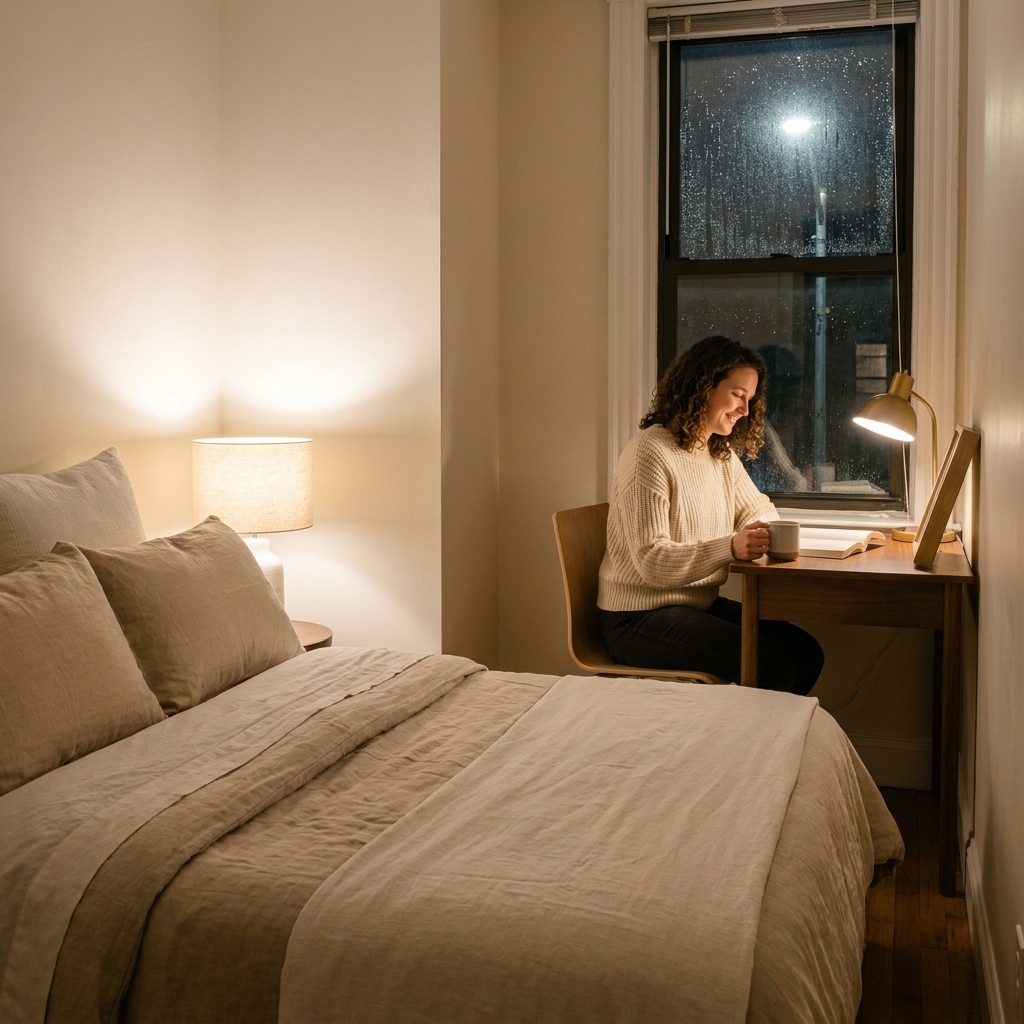
If your bedroom looks cute but still feels a little… buzzy, feng shui is one of my favorite ways to troubleshoot. It is less about superstition and more about how your body reacts to placement, pathways, light, and what you see the moment you open your eyes. A layout that feels protective and balanced can help many people settle down faster, even if it is not a clinical sleep prescription.
Below are feng shui bedroom layout rules I actually use when I am rearranging a rental, styling a tiny room, or helping a friend stop sleeping like a pretzel. We will start with the bed, then build the room outward.
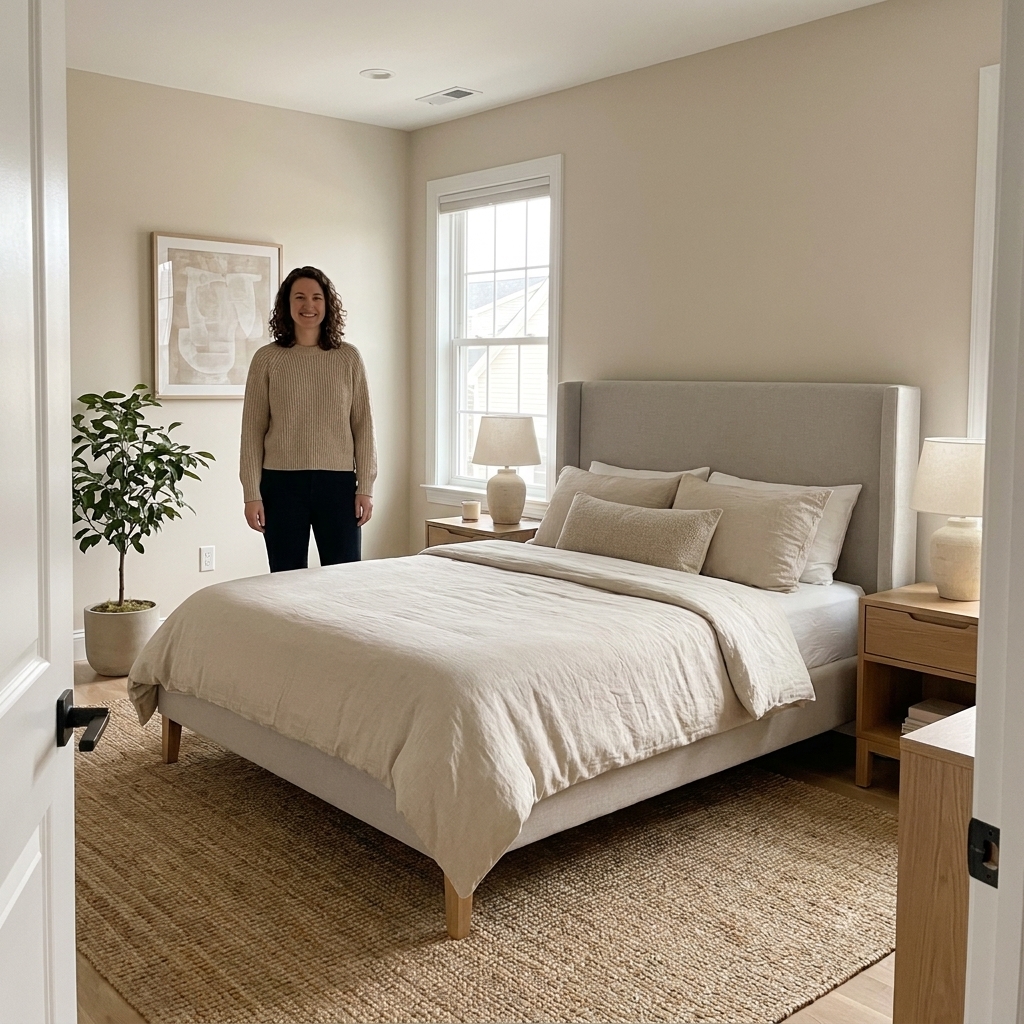
Before you move anything: a quick feng shui cheat sheet
Traditional feng shui talks about chi, often translated as life energy or vital breath. In bedrooms, we want chi to be soft, steady, and settling, not fast and sharp.
- Command position: You can see the door from the bed, but you are not directly in line with it.
- Support: A solid wall and sturdy headboard behind you, like a gentle backing.
- Balance: Symmetry and pairs where possible, especially on either side of the bed.
- Flow: Clear pathways so you are not squeezing, hopping, or sidestepping around furniture.
- Calm visuals: What you see from bed should soothe you, not kick your brain into planning mode.
Step 1: Put the bed in the command position
If you do only one feng shui thing, do this. The bed is the anchor of the room, and command position is the foundation for feeling safe and relaxed.
How to find it
- Stand in your doorway and look into the room.
- The best bed spot is usually on the wall farthest from the door, placed so you can see the door while lying down.
- Aim for a diagonal view of the door, not straight-on.
What to avoid
- Feet pointing directly at the door (often called the “coffin position”). Many people find it feels exposed, which can make it harder to fully relax.
- Headboard on the wall with the door if it puts you right next to the entry or makes you feel like someone could “come up behind” your sleep zone.
- Bed floating in the middle with no wall support, unless your room truly demands it.
Rental-friendly fix: If the only option puts you too close to the door, use a tall headboard, a substantial bench at the foot, or a soft room divider screen to create separation.
Step 2: Give your headboard real support
In feng shui, your headboard is like your mountain. In real life, it is also what keeps the bed from feeling wobbly and temporary.
- Place the headboard on a solid wall whenever possible.
- Choose a sturdy headboard (upholstered or wood both work) instead of a flimsy metal frame that rattles when you roll over.
- Avoid placing the headboard on a wall that backs onto a noisy space if you can, like a living room TV wall or a busy hallway.
If your bed must go under a window: It is not ideal in classical feng shui, but it is common in small rooms. Make it feel grounded with a solid headboard that rises above the sill, full curtains, and a substantial curtain rod. You are creating a wall effect with textiles.
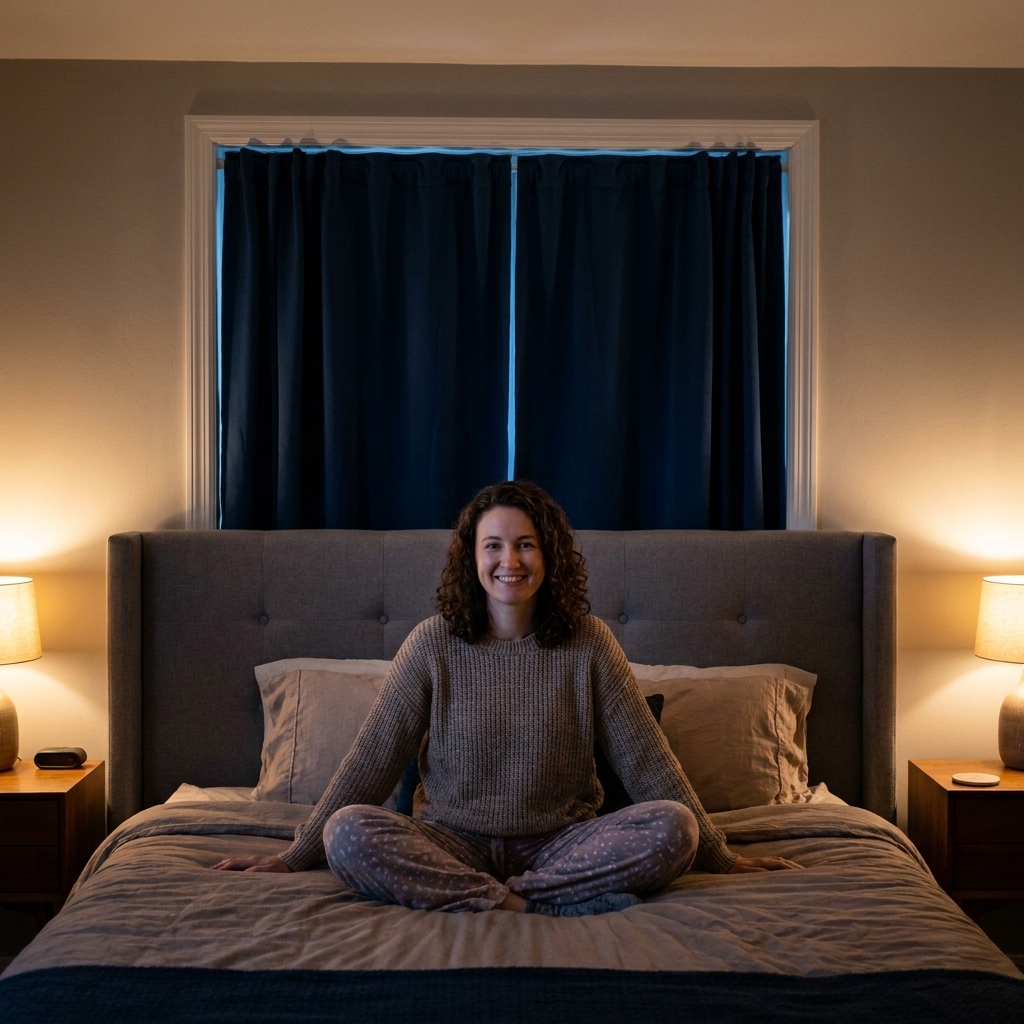
Step 3: Create balance with space on both sides
Feng shui loves pairs because they represent equal access, harmony, and ease. Practically, it also means no one is shimmying sideways into bed.
Ideal setup
- Leave 18 to 24 inches of walkway on each side if you can.
- Add two nightstands (even small ones).
- Use two lamps or matching wall sconces for soft symmetry.
Shared bedroom reality check
- If one side must be against a wall, prioritize easy access for the person who gets up more often, then balance the look with lighting and decor.
- Keep the tight side visually lighter with a floating shelf nightstand or a slim ledge.
- Repeat shapes instead of matching furniture perfectly. For example, a round lamp on one side and a round tray on the other still reads balanced.
Step 4: Keep pathways clear
I call this the midnight test: can you walk from the door to the bed half-asleep without bruising your shin? Feng shui and basic comfort both improve when the room has an easy, gentle walking line.
- Do not block the bedroom door swing with a dresser or hamper.
- Avoid sharp corners pointed at the bed. If you cannot, soften them with a plant, a textile, or a rounded object.
- Try not to place a tall piece (like a wardrobe) so it feels like it is looming right next to where you sleep.
Quick win: If your room always feels chaotic, it is often because the walking line is messy. Move the hamper, swap a chair for wall hooks, or rotate a dresser so the route is smooth.
Step 5: Be intentional with mirrors
Mirrors are powerful in feng shui because they reflect light and visually double whatever they face. That can be wonderful, or it can make the room feel too active when you are trying to wind down.
Mirror rules that matter in real life
- Do not place a mirror directly facing the bed if it startles you at night or makes the room feel busy.
- Avoid reflecting the door if possible. Some people find it creates a ping-pong feeling in the room.
- Best placements: inside a closet door, on a wall that reflects something soothing (curtains, calm art), or angled so you do not see your reflection from bed.
Rental-friendly fix: If your closet doors are mirrored and you cannot change them, use curtain panels on a tension rod, peel-and-stick window film, or keep them covered at night with a fabric screen.

Step 6: Place the dresser and desk for rest
Bedrooms often pull double duty. Feng shui does not forbid that, it just asks you to keep your awake energy from taking over the room.
Dresser placement
- Keep the dresser where it does not crowd the bed or block the closet.
- If the dresser has a mirror, follow the mirror rules above.
- Avoid placing a tall dresser so it feels like it is towering over the bed.
Desk placement (if you must have one)
- Do not put the desk right beside the bed if you can avoid it. It blurs the boundary between rest and productivity.
- If the desk must be in the bedroom, try placing it so you can see the door while seated, similar to command position.
- At night, visually close work with a lidded box, a basket for the laptop, or a fabric cover over the monitor.
Step 7: Check what is above and below the bed
This is the part where feng shui lines up with common sense. Anything heavy, sharp, or unstable around your sleeping area can make the space feel less secure.
Avoid overhead heaviness
- No heavy shelves above the headboard.
- If you have a ceiling fan, keep it clean and use a gentle setting, or skip it at night if it feels drafty.
- If there are beams, you cannot always change them, but you can soften them with fabric canopies or visually minimize them with paint that matches the ceiling.
Under-bed energy
- Clear is best. If you need storage, choose soft items like extra linens.
- Avoid stuffing under-bed space with workout gear, paperwork, or anything emotionally charged.
- Use bins with lids so the space feels tidy, not chaotic.
Feng shui-friendly lighting for sleep
Layout is step one. Lighting is what seals the deal. Harsh overhead light can make even the best furniture arrangement feel jittery.
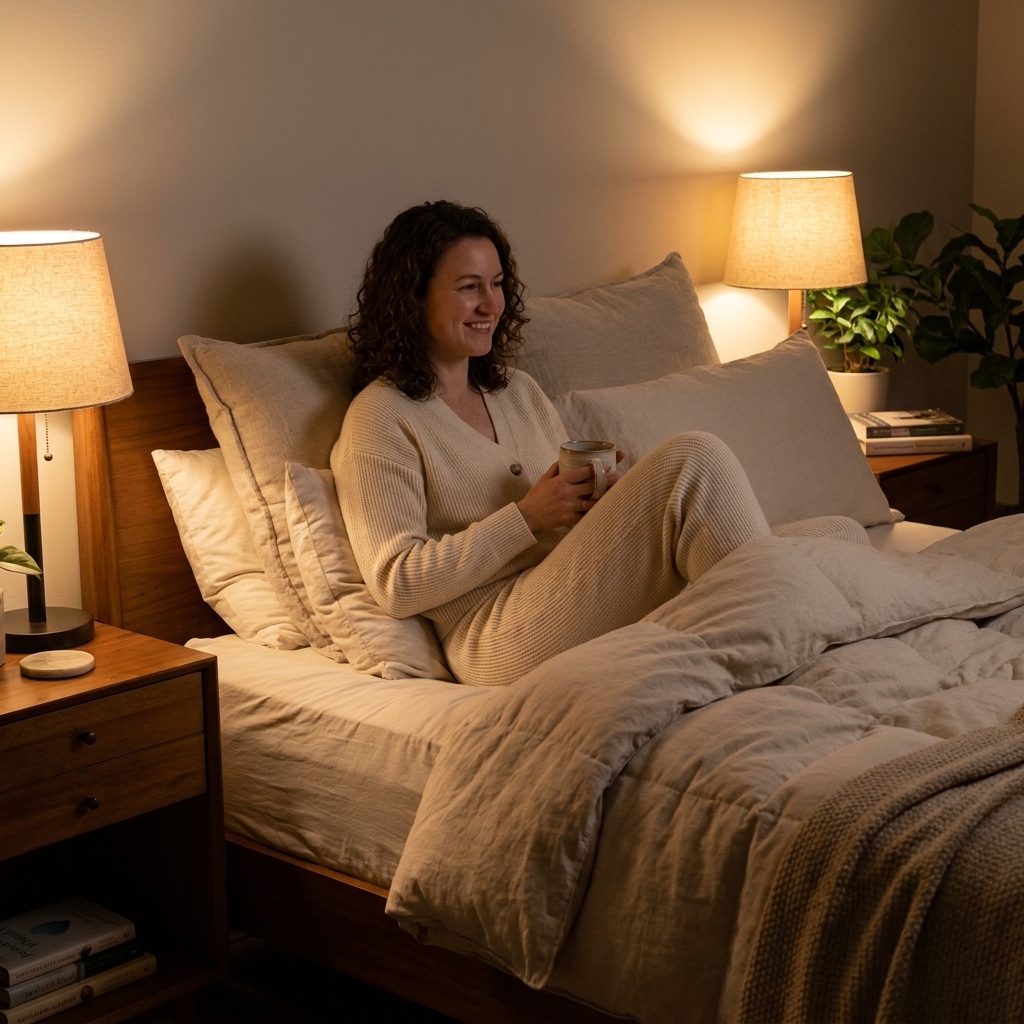
- Use two warm lamps near the bed instead of relying on a ceiling fixture.
- Aim for 2700K warm bulbs for that soft, cozy glow.
- Add a dimmer plug or smart bulb for a slow wind-down routine.
- If you wake up at night, use a low amber night light to reduce sleep disruption.
Common layout problems and fixes
The bed can only face the door
- Shift the bed slightly off-center if possible so your feet do not point straight at the door.
- Add a bench, trunk, or upholstered ottoman at the foot of the bed to create a gentle buffer.
- Use a rug to slow the pathway visually between door and bed.
The bed has to go under a window
- Use a tall, solid headboard and full-length curtains.
- Choose heavier curtain fabric or add a blackout liner for a more protected feeling.
- Anchor the bed with substantial pillows and layered bedding so it does not feel exposed.
The room is long and narrow
- Float a narrow bench or a pair of poufs near the foot of the bed to break up the bowling-alley vibe.
- Use a wide rug under the bed to visually widen the space.
- Keep tall furniture to one end so the bed zone feels calmer.
The door opens right into the bed area
- Add a slim console, screen, or tall plant near the entry to soften the direct line of sight.
- Hang a curtain panel on a ceiling track to create a gentle division if the room is studio-style.
Quick feng shui bedroom layout checklist
- Bed in command position when possible
- Solid headboard against a solid wall
- Not directly in line with the door
- Clear access on both sides of the bed
- Balanced nightstands and lighting
- Mirrors not reflecting the bed
- Pathways open and uncluttered
- No heavy items above your head
- Under-bed storage kept tidy and calm
- Nightstands kept visually calm (limit clutter and chargers)
FAQs
What direction should your bed face in feng shui?
There are traditions that assign directions to different goals, but I find direction is less important than command position, support, and calm. If you have a choice, prioritize a solid wall behind the headboard and a view of the door that is not directly aligned.
Is it bad to sleep with your feet toward the door?
In feng shui, it is considered less restful because it can feel exposed. If your room forces it, add a bench or trunk at the foot of the bed, and keep the walkway between door and bed soft with a rug and warm lighting.
Can I have a TV in the bedroom?
Feng shui traditionally discourages it because screens bring active energy. If you love your bedtime show, make it less stimulating: place the TV inside a cabinet, cover it with a fabric panel when not in use, and avoid having it directly opposite the bed if it feels visually on all night.
What about phones, chargers, and nightstand clutter?
This is where feng shui and sleep hygiene overlap. Visually busy nightstands can keep your brain “on.” If you can, keep only the essentials on top (lamp, book, water). Corral chargers in a box or basket, and consider charging your phone across the room.
Are plants in the bedroom bad feng shui?
It depends on the tradition, and honestly, on your own nervous system and allergies. If plants make you feel calm, a small, healthy plant is usually fine. I would skip anything huge, spiky, or high-maintenance right next to the bed.
What is the most important feng shui rule for sleep?
A supported bed in command position, with a calm view and clear pathways. When your sleep zone feels protected and easy to move around, most people find it is easier to unwind.